Bò Kho (Vietnamese Beef Stew)


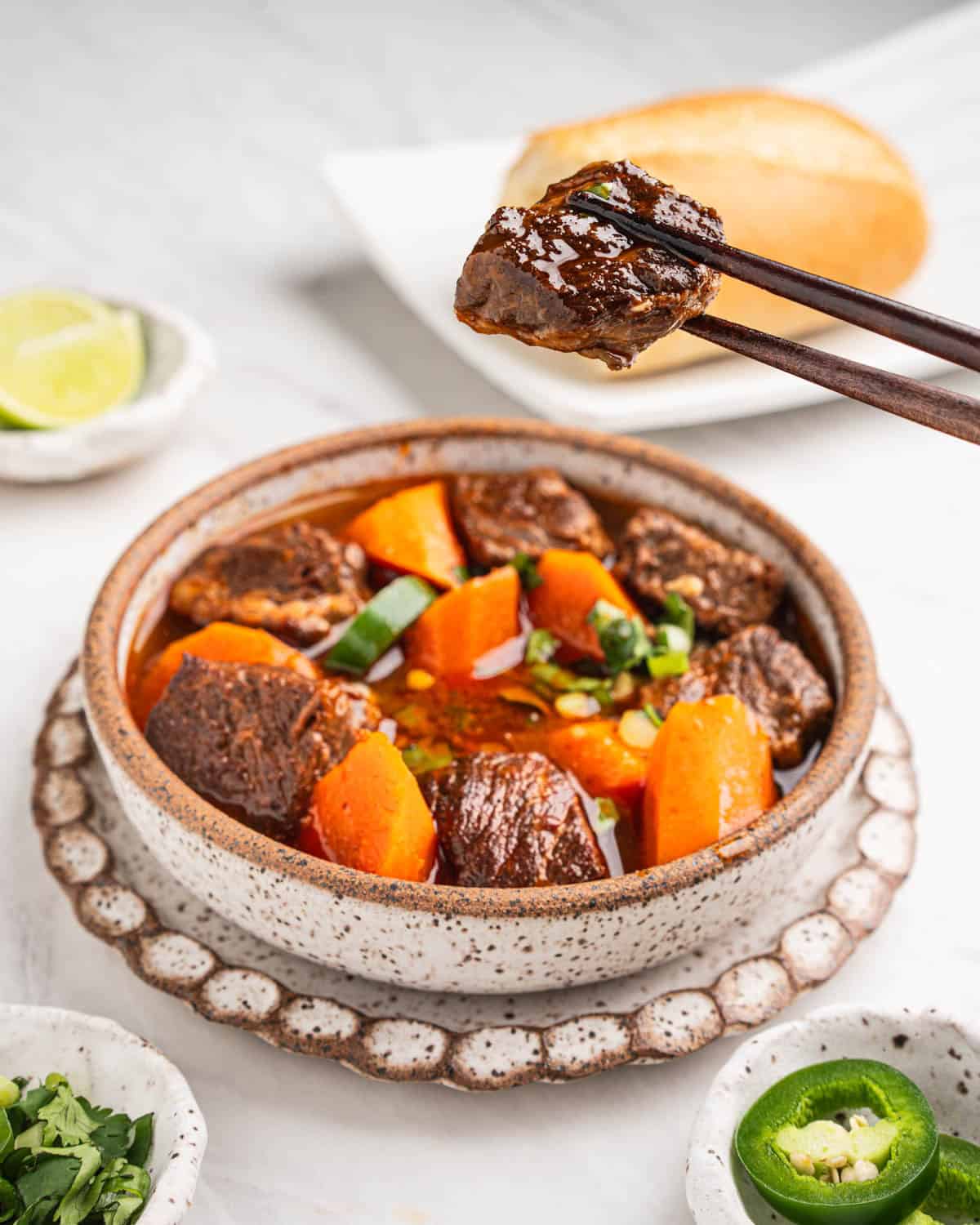
Bò kho is a Vietnamese beef stew made with tender beef, carrots, lemongrass, and warm spices simmered in a flavorful broth. I grew up eating bo kho often, usually with Vietnamese baguette for dipping into all that broth, and that’s still my favorite way to eat it today.
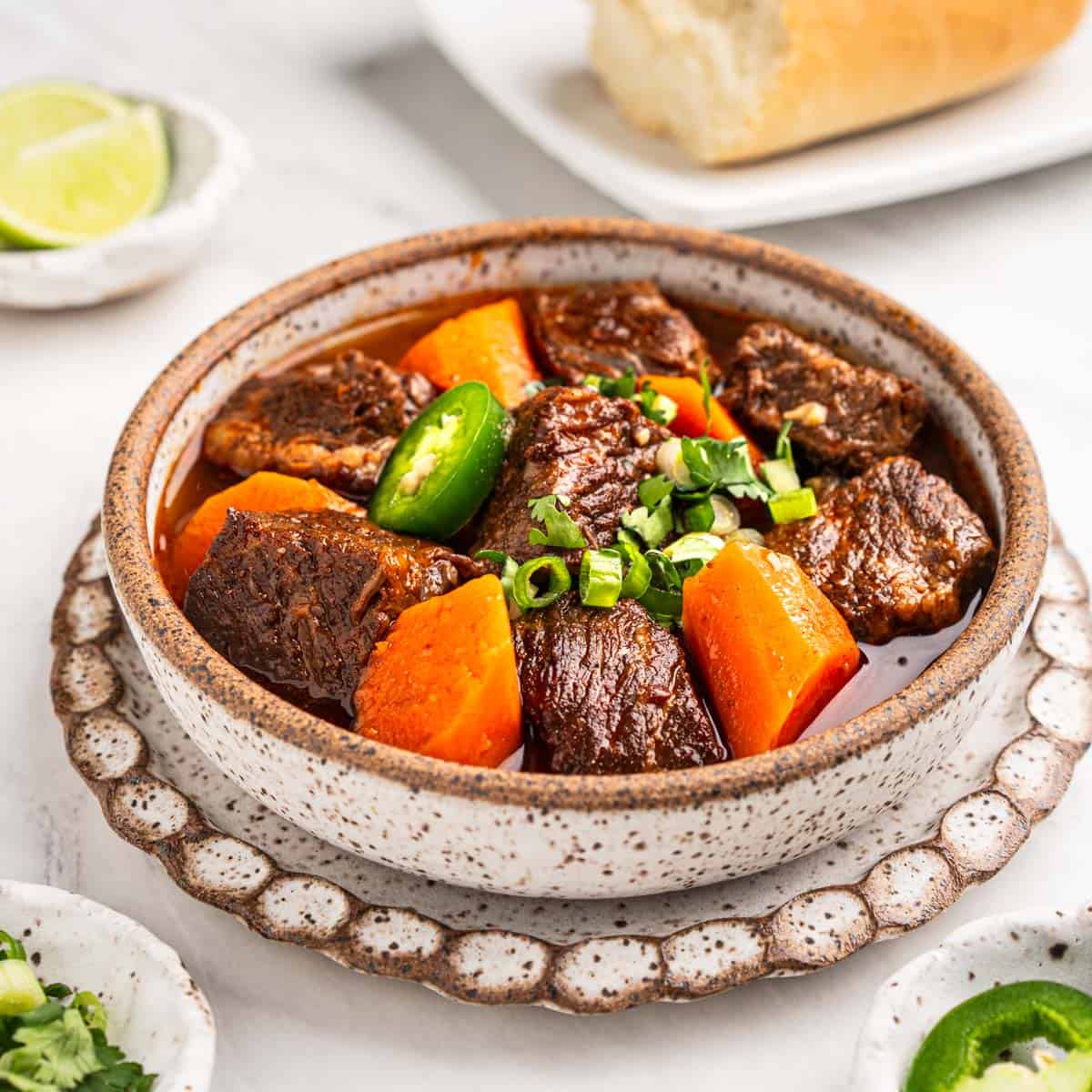
I learned to make bo kho a few years ago and have made it with beef chuck, shank, and a combination of the two. I usually use chuck roast because it’s easy to find and becomes tender enough to pull apart after a couple of hours of simmering without drying out.
My family also likes our bo kho with lots of broth and plenty of carrots. The extra broth is perfect for dipping bread, and the carrots make it feel more like a complete meal. I use a prepared bo kho seasoning blend along with fresh lemongrass, star anise, cinnamon, and bay leaves, so you still get plenty of that warm, aromatic flavor without needing a long list of specialty ingredients.
What is Bo Kho?
Bo kho is a Vietnamese beef stew with a fragrant broth flavored with lemongrass and warm spices. The beef is slowly simmered until tender, with carrots added toward the end so they soften without falling apart.
There are several ways to serve this, which is one of the things I love about it. You can eat it with rice noodles and fresh herbs, spoon it over rice, or serve it with bread for dipping.
At our house, we like eating it with bread. I purposely make it fairly brothy because we love tearing off pieces of bread and soaking up the broth as we eat.
What Kind of Beef Should I Use for Bo Kho?
I’ve made this beef stew with chuck roast, beef shank, and a combination of the two, but chuck is what I usually like to use.
Chuck has plenty of connective tissue and marbling, so it becomes tender during the long simmer while still holding together in the stew. It’s also affordable and easy for me to find at the grocery store. I cut it into about 1½-inch pieces, which gives the beef enough time to become tender without the pieces disappearing into the broth.
Beef shank also works and has a slightly different texture. Other cuts such as brisket, tendon, and oxtail are also used in different versions of bo kho, but I haven’t personally tested those in this recipe.
For my everyday version, I stick with chuck roast.
Bo Kho Seasoning
If you’ve never made bo kho before, the seasoning blend is probably the ingredient you’ll be least familiar with. There are several types sold at Asian grocery stores, including seasoning powders, spice packets, and concentrated seasoning cubes.

My first choice is Quoc Viet Foods Cốt Bò Kho (Beef Flavored Stew Base), which comes in a 10-ounce container. For 3 pounds of beef, I use 3 tablespoons total. I season the beef with 1 tablespoon before cooking, then add the remaining 2 tablespoons to the broth.
If I can’t find the Quoc Viet seasoning, I like Bao Long Bò Kho seasoning cubes. They’re concentrated cubes that dissolve right into the broth and are an easy alternative. You’ll also find packets of bo kho spice powder, like the one shown in the photo. Since the strength and ingredients can vary between brands and types, follow the package directions if you’re substituting one for another rather than using the same amount.
Using a prepared seasoning blend makes bo kho much more practical for me because I don’t have to buy and measure a long list of individual spices every time. I still add fresh lemongrass, star anise, cinnamon, and bay leaves because I like a stronger, more aromatic spice flavor in the broth.
Please scroll ⬇️ to the recipe card for the full ingredient amounts and instructions.
A Few More Ingredients to Know
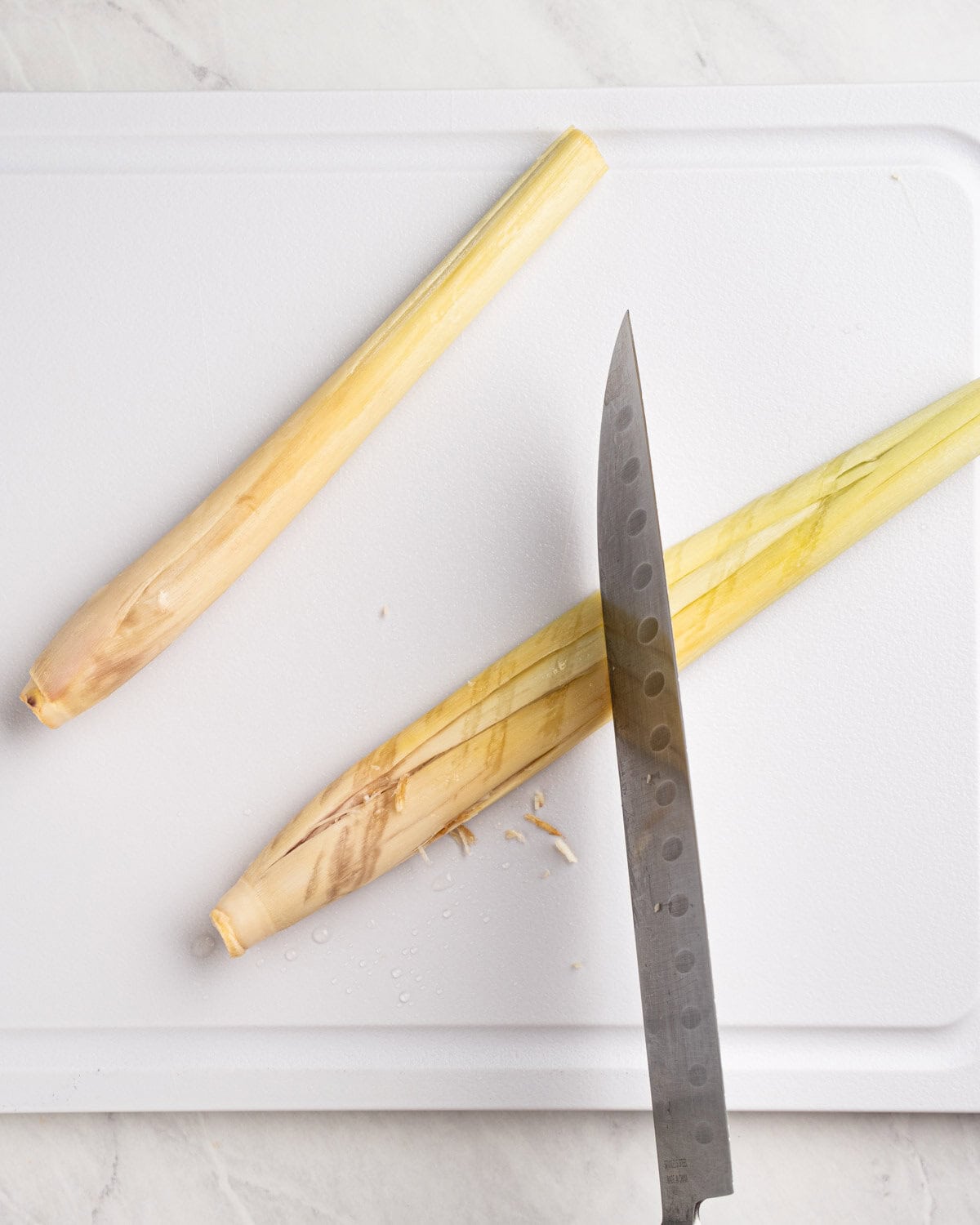
Lemongrass: I leave the stalks in roughly 4 to 5-inch pieces and bruise them to help release their flavor. Keeping them large also makes them easy to find and remove before serving. If they’re too long to fit comfortably in your pot, just cut them into shorter pieces.
Star anise and cinnamon: I use 4 whole star anise and 1 cinnamon stick. I toast them briefly before adding the liquid. Heating the whole spices helps release their aromatic oils, and you’ll notice that they become much more fragrant after a short time in the hot pot. Just watch them closely so they don’t burn.

Coconut soda: Coco Rico is my preference. It adds a subtle sweetness to the broth without making the stew taste strongly of coconut. Coconut water works too, but you may need a little more sugar to get the balance you want.
Beef broth: I usually make mine with Better Than Bouillon because that’s what we keep at home, but regular beef broth works just fine.
Fish sauce: Three Crabs is the fish sauce I normally use. Different brands can vary in saltiness, so taste the broth before adding more seasoning.
Soy sauce: I use Kikkoman soy sauce here, but any soy sauce will do.
Tomato paste: I prefer tomato paste rather than fresh tomatoes. It adds tomato flavor and richness without adding a lot of extra liquid to what is already a brothy stew.
Carrots: We like a lot of carrots in our bo kho. Cut them into fairly large 1 to 1½-inch pieces so they can simmer without becoming too soft.
How to Make Bo Kho
Season the beef first. I toss the beef with 1 tablespoon of the bo kho seasoning, salt, and pepper before cooking. Cutting the chuck into roughly equal 1½-inch pieces helps everything cook at about the same rate.

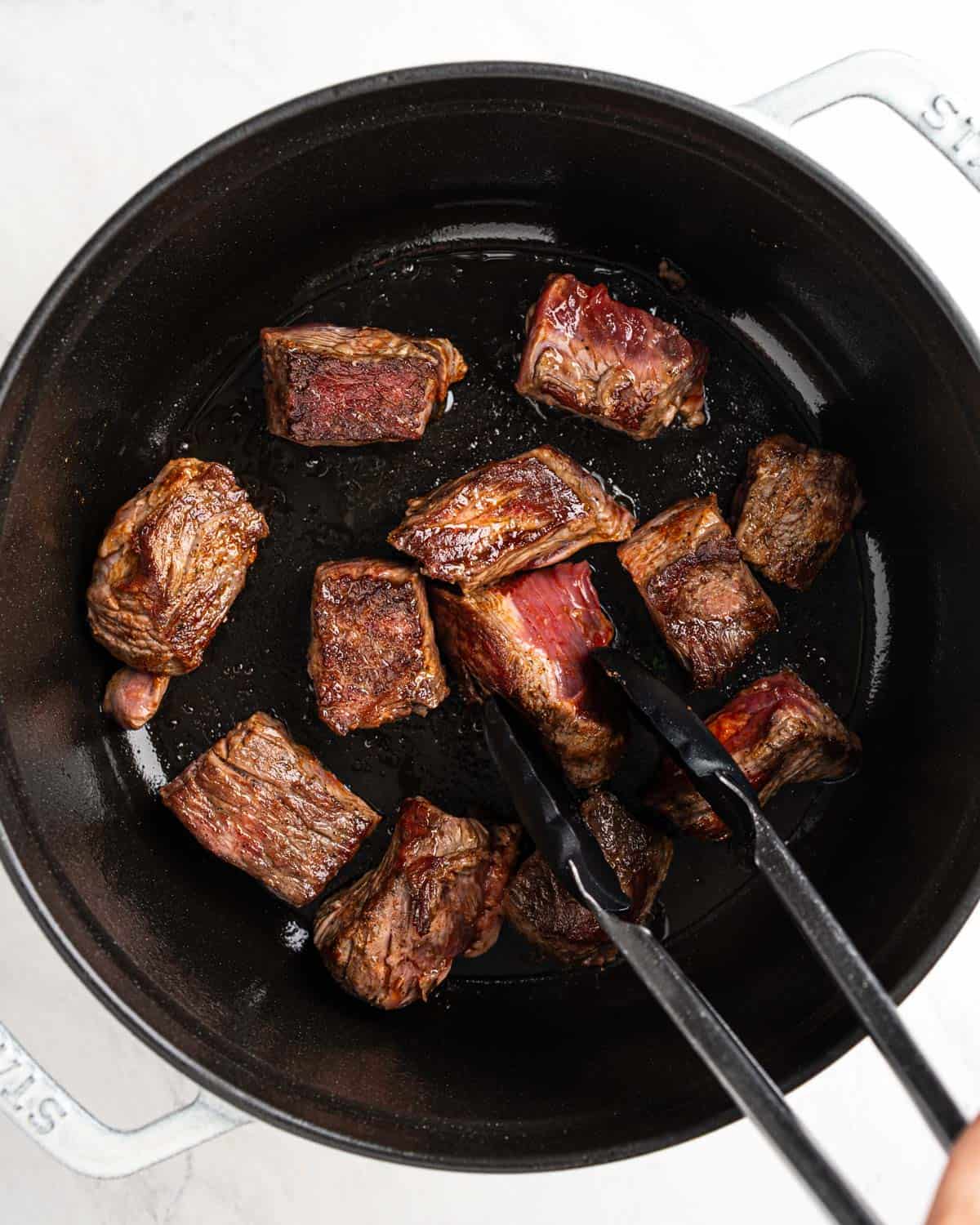
Sear the beef for more flavor. I like to brown the beef before adding the broth rather than putting everything straight into the pot. You don’t need to cook the beef through. You’re just looking for good browning on the outside, which builds another layer of savory flavor in the stew.
If your pot is crowded, work in batches. Giving the beef some room makes it much easier to brown instead of steam.
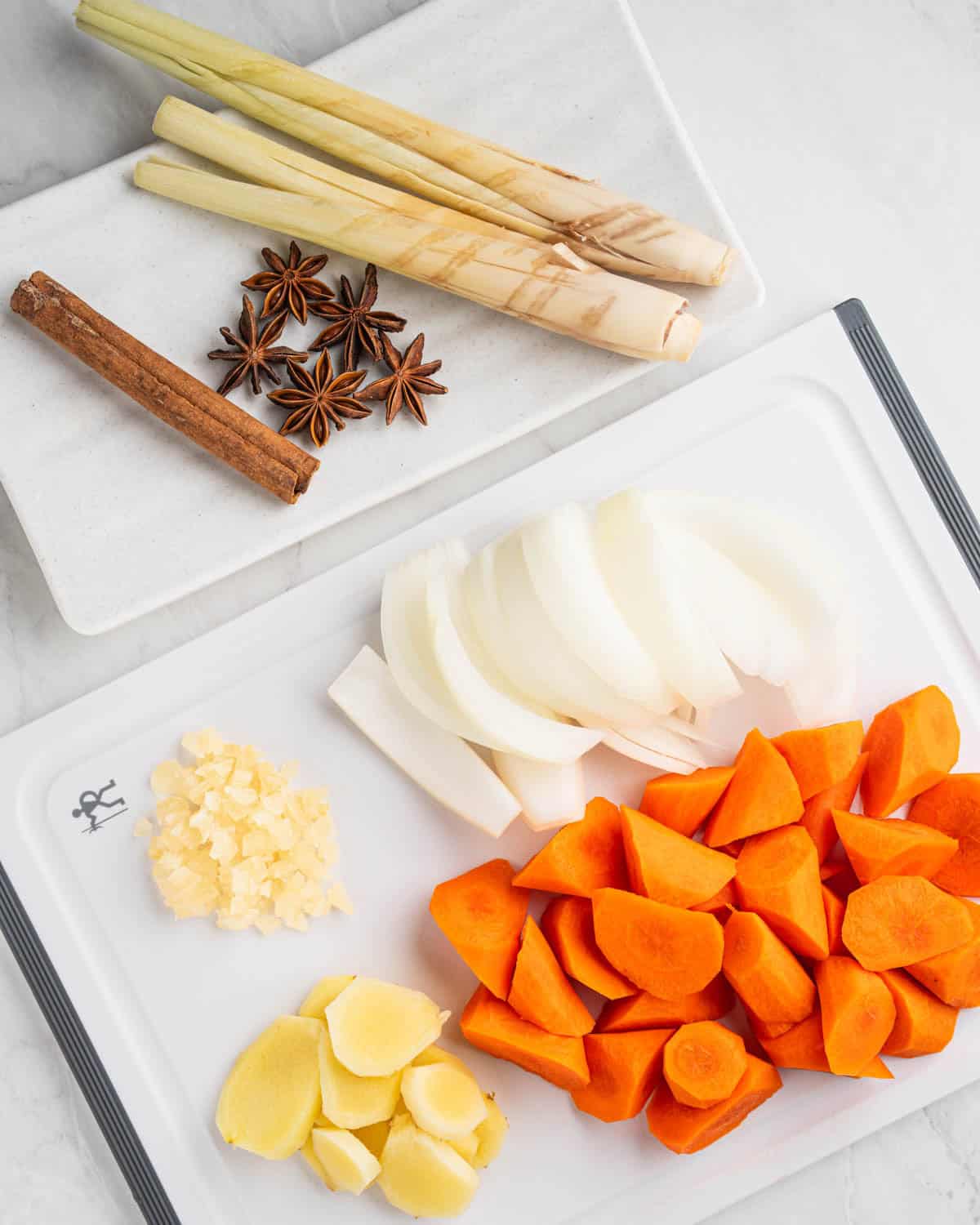
Toast the spices until you can smell them. Add the lemongrass, star anise, cinnamon, and aromatics according to the recipe directions. I give the whole spices a little time in the hot pot before adding the liquid. You’ll know they’re ready when they become noticeably fragrant.
Be careful not to take them too far. You’re warming and toasting them, not trying to deeply brown them.
Build the broth. Add the beef broth, coconut soda, remaining bo kho seasoning, tomato paste, fish sauce, soy sauce, and the rest of the seasonings.
I start with 1 tablespoon of sugar when I’m using Coco Rico. The coconut soda already brings sweetness to the broth, so taste before adding more. If you’re using unsweetened coconut water instead, you may find that the broth needs a little more sugar.

Let the beef simmer slowly. Return the beef to the pot and keep the stew at a gentle simmer rather than a hard boil. Chuck usually needs about 1½ to 2 hours.
I don’t rely only on the clock. The beef is ready when you can press it lightly with a fork and it begins to pull apart without much resistance.
Keep an eye on the amount of broth as it cooks. My family likes the stew more brothy, so if too much liquid evaporates during the simmer, I add a little water as needed.
If you notice a lot of foam or excess fat collecting on top, you can skim it off. I usually only bother with this when there’s quite a bit.
Save the carrots for the end. I add the carrots during the last 30 minutes rather than at the beginning. That’s enough time for large pieces to become tender without turning overly soft while you’re waiting for the beef.

Getting the Broth Just Right
Bo kho shouldn’t have the same consistency as a thick American beef stew. My version is deliberately brothy, especially because we usually eat it with bread or noodles.
Once the beef is tender, taste the broth and adjust it before serving. You’re looking for a balance of savory, slightly sweet, aromatic, and salty flavors, with the lemongrass and warm spices coming through.
If you’re using Coco Rico, be careful not to automatically add more sugar. If you’re using coconut water, you may want a little extra sweetness.
And if your broth reduces more than you’d like during the long simmer, add a little water. I’d rather adjust the liquid toward the end than start with so much that the flavors become diluted.
Can I Add Potatoes?
Carrots are the vegetable I always put in bo kho, but you can add potatoes if you want to turn it into an even heartier one-pot meal.
Keep in mind that bo kho is commonly served with bread, rice, or noodles, so you’re already getting a starch if you’re serving it one of those ways. I usually skip the potatoes because we love ours with bread.
If you do add potatoes, add them later in the cooking process rather than letting them simmer for the full 1½ to 2 hours with the beef.

What to Serve With Bo Kho
My favorite way to eat bo kho is still the way I grew up eating it: with bread for dipping. We make ours with plenty of broth specifically so there is enough to soak up with each piece of bread.
You can also serve it with rice.
For a noodle bowl, serve the beef and broth with rice noodles and add toppings such as Thai basil, sliced onion, bean sprouts, cilantro, and fresh lime. The herbs and lime are especially good against the rich, warmly spiced broth.
If you prefer making bo kho in a pressure cooker, try my Instant Pot Bo Kho. It’s a good option when you want the same type of dinner without waiting for the beef to slowly simmer on the stove.
Does Bo Kho Taste Better the Next Day?
I think it does.
After a night in the refrigerator, the spices have more time to mingle with the broth, and I find the overall flavor even better the next day. That makes this a good dinner to make ahead when you have the time.
It also gives you an easy opportunity to remove excess fat. Once the stew is cold, the fat rises and solidifies on top, so you can remove as much as you’d like before reheating.
Storing and Freezing
Store leftovers in an airtight container in the refrigerator for up to 4 days. Reheat it gently on the stovetop until hot, adding a little water or broth if it has thickened or reduced more than you’d like.
I’ve also frozen this stew, and both the beef and carrots held up well. Let the stew cool before freezing it in an airtight freezer-safe container. Thaw it in the refrigerator before reheating.
Serve with fresh bread and lime, and it’s almost as easy as dinner on the first night.
If you make this Bò Kho, I’d love to hear how it turned out! Leave a comment and rating below.
RECIPE

Bò Kho (Vietnamese Beef Stew)
Ingredients
For the Beef
- 3 pounds beef chuck cut into 1½ inch cubes
- 1 tablespoon Quoc Viet Foods bo kho seasoning
- 1 teaspoon salt
- 1 teaspoon ground pepper
- 2 tablespoons avocado oil
For the Broth
- 1 large onion, cut into wedges
- 4 garlic cloves, minced
- 1 (2-inch) piece ginger, sliced
- 2 tablespoons tomato paste
- 2 stalks lemongrass, bruised and left in 4-5 inch pieces
- 4 whole star anise
- 1 cinnamon stick
- 2 bay leaves
- 2 tablespoons Quoc Viet Foods bo kho seasoning
- 1 tablespoon fish sauce
- 2 tablespoon soy sauce
- 1 tablespoon sugar or palm sugar, plus more to taste
- 1 cup Coco Rico coconut soda (or coconut water)
- 3 cups beef broth
- 5 carrots, cut into 1–1½ inch pieces
- salt and ground black pepper, to taste
- Water, as needed if the broth reduces too much
For Serving
- Fresh cilantro
- Lime wedges
- Crusty baguette, steamed rice, or cooked rice noodles
For noodle bowls (optional)
- Thai basil
- Thinly sliced onion
- Bean sprouts
Instructions
- Season the beef. Pat the beef dry, then toss with 1 tablespoon bo kho seasoning, salt, and pepper.
- Sear the beef. Heat the avocado oil in a large Dutch oven or heavy pot over medium-high heat. Brown the beef in batches, leaving enough room between the pieces so they sear instead of steam. Transfer the browned beef to a plate.
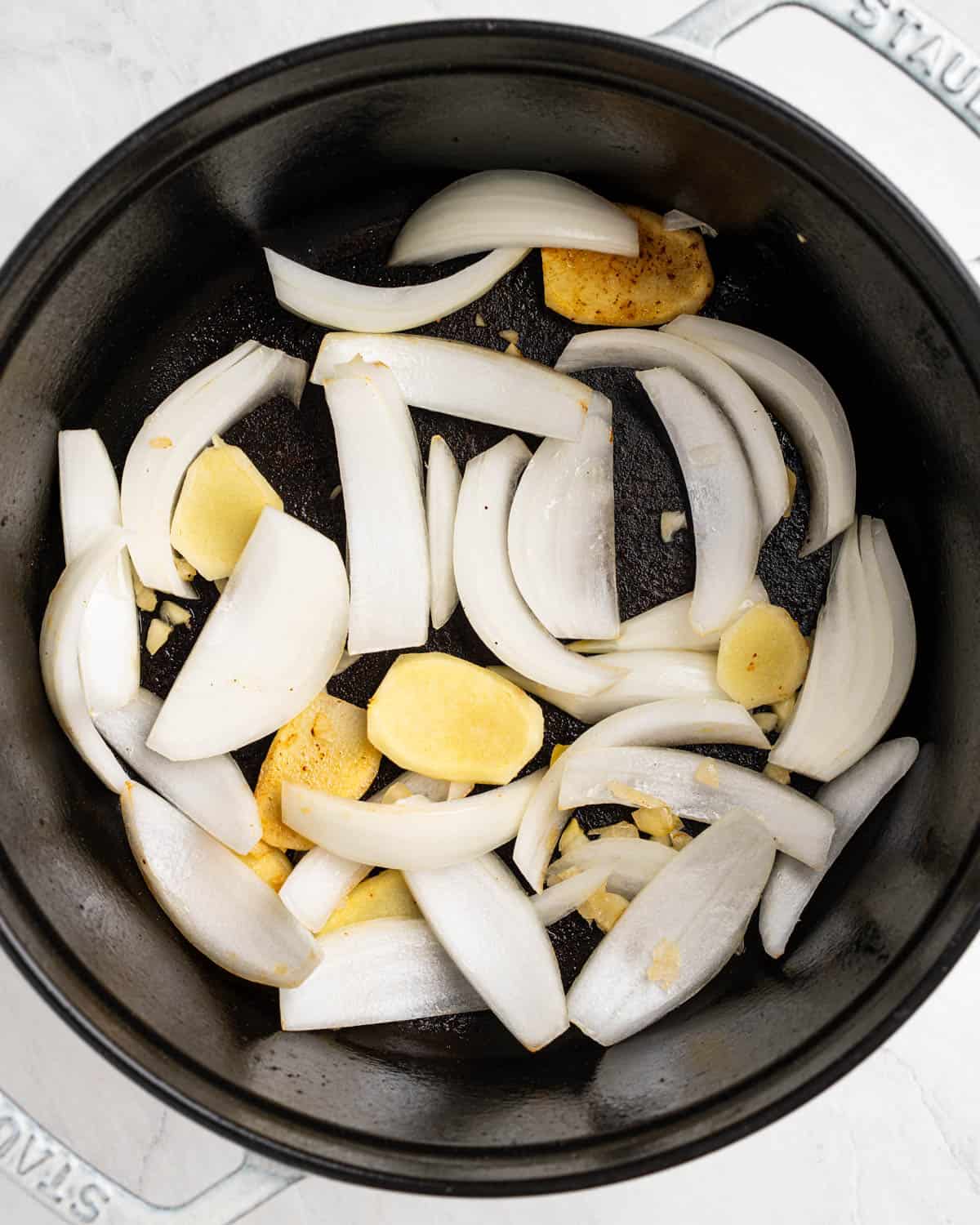
- Cook the aromatics. Reduce the heat to medium. Add the onion, garlic, and ginger and cook for about 2–3 minutes, until fragrant. Stir in the tomato paste and cook for another minute.
- Toast the spices. Add the lemongrass, star anise, cinnamon stick, and bay leaves. Cook briefly, stirring, until the spices become noticeably fragrant. This helps release their aromatic oils before the liquid goes into the pot.
- Build the broth. Return the beef to the pot. Add the remaining 2 tablespoons bo kho seasoning, fish sauce, soy sauce, sugar, coconut soda, and beef broth. Stir well and bring to a boil.
- Simmer until tender. Reduce the heat to a gentle simmer and cover. Cook for 1½–2 hours, stirring occasionally, until the beef is tender enough to pull apart with light pressure. Skim off excess foam or fat if needed. If the broth reduces more than you like, add a little water.
- Add the carrots. Add the carrots during the final 30 minutes of cooking. This gives them enough time to become tender without getting too soft.
- Taste and adjust. Taste the broth and adjust with additional fish sauce, soy sauce, sugar, salt, or pepper as needed. If you're using Coco Rico, start with the 1 tablespoon sugar listed above since the soda already adds sweetness. Coconut water may need a little more sugar.
- Serve. Remove the lemongrass, star anise, cinnamon stick, and bay leaves. Ladle the bo kho into bowls and finish with cilantro and fresh lime.
Notes
Tips & Notes
- Best beef: I prefer chuck roast because it’s easy to find, has enough marbling to stay tender, and pulls apart nicely after simmering. Beef shank or a mix of chuck and shank also works.
- Bò kho seasoning: I use Quoc Viet Foods Bò Kho seasoning. If you can’t find it, Bao Long bò kho seasoning cubes are another good option. Follow the package directions when substituting brands since the strength can vary.
- Coconut soda: Coco Rico is my preference because it adds a subtle sweetness to the broth. If you use coconut water instead, you may need a little more sugar.
- Keep it brothy: My family likes plenty of broth for dipping bread. If the liquid reduces too much while simmering, add a little water as needed.
- Carrots: Add them during the last 30 minutes so they become tender without getting too soft.
- Storage: Store leftovers in an airtight container in the refrigerator for up to 4 days.
- Freezing: Bò kho freezes well. I’ve frozen it with the beef and carrots, and both hold up nicely after reheating.



Made this dish and the whole family loved it. My sister wants me to make it again for her and her friends at work. I was just curious though as to how much coconut water to use the recipe didn’t say, I ended up using a soda can size for a double batch.
Hi, Melissa! So happy to hear your family loved it! For the recipe, you’ll want to use 1 cup of coconut water (or soda), and 2 cups if doubling. Just keep in mind that coconut soda is sweeter, so you may want to adjust the sugar to taste. Hope your sister and her friends love it too! 😊