Mango Sticky Rice


Mango sticky rice is a classic Thai dessert with warm, chewy coconut sticky rice, sweet ripe mango, and a creamy coconut sauce spooned over the top. It’s the same kind of simple dessert you’ll find at Thai restaurants, and it’s surprisingly easy to make at home with just a few ingredients and no oven.
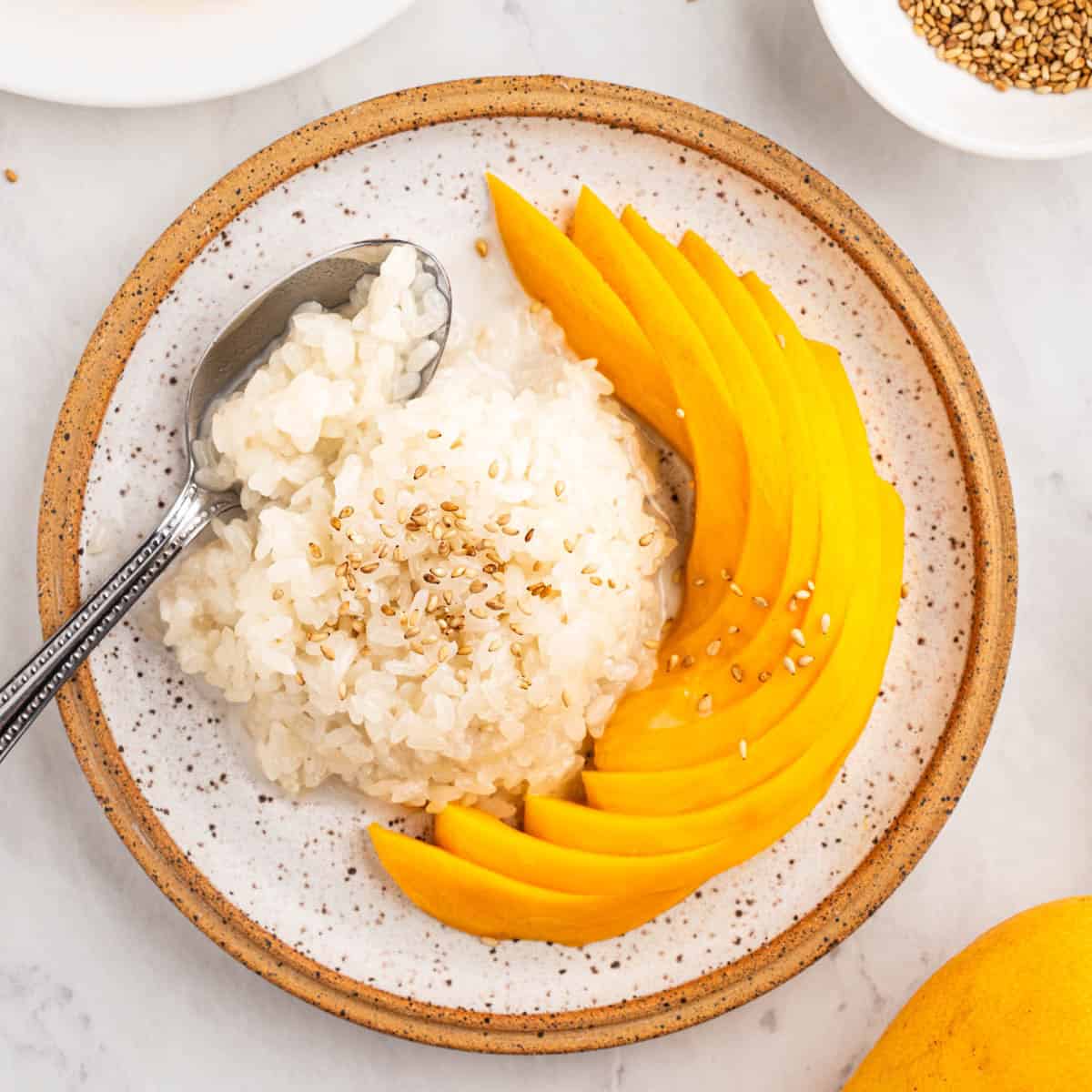
Mango sticky rice has always been one of those desserts I order without thinking twice. I love the combination of warm coconut rice with cold, juicy mango, especially when mangoes are in season.
The only part that takes some planning is soaking the rice. I usually soak it earlier in the day or overnight, then steam it when I’m ready to make dessert. Once the rice is cooked, everything else comes together pretty quickly.
If you like chilled or coconut-based Asian desserts, Vietnamese Fruit Cocktail (Che Thai) and Vietnamese Banana Coconut Pudding (Che Chuoi) are two other good ones to try.
What Is Mango Sticky Rice?
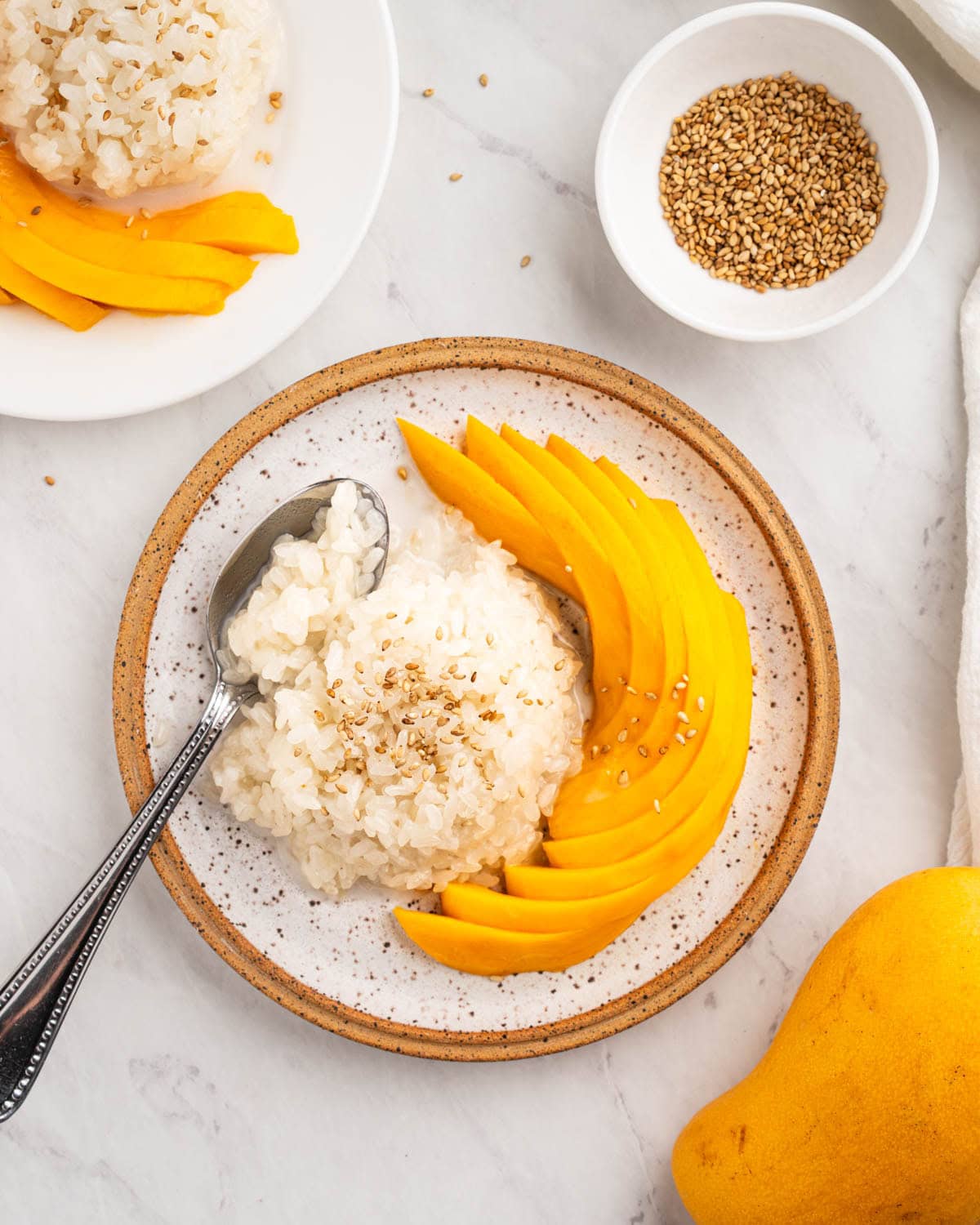
Mango sticky rice is a Thai dessert made with glutinous rice that is steamed, soaked in sweetened coconut milk, and served with fresh mango.
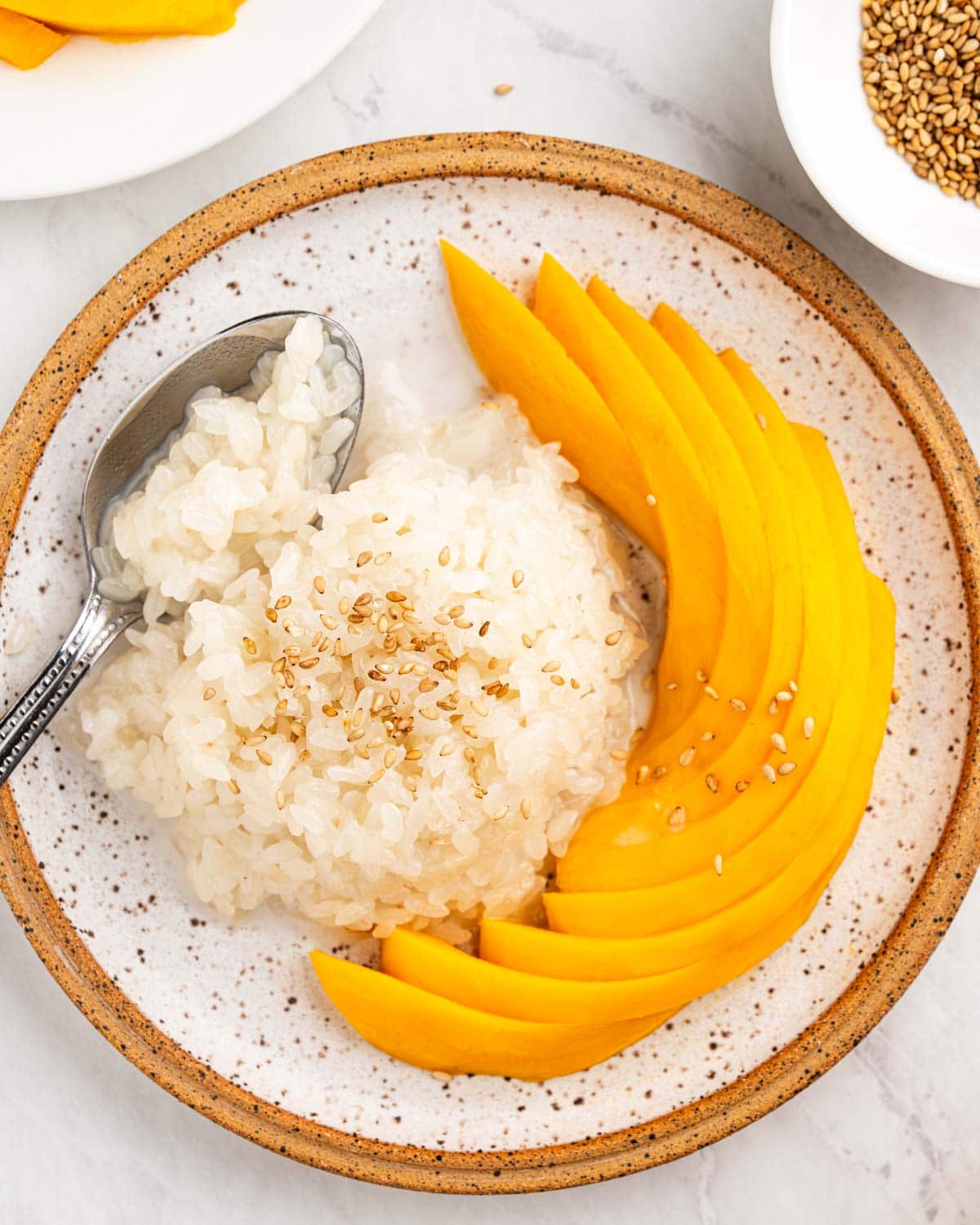
The rice should be soft and chewy rather than mushy, with a rich coconut flavor and just enough sweetness to balance the mango. A lightly thickened coconut sauce gets spooned over the top right before serving.
What Kind of Rice Should I Use?
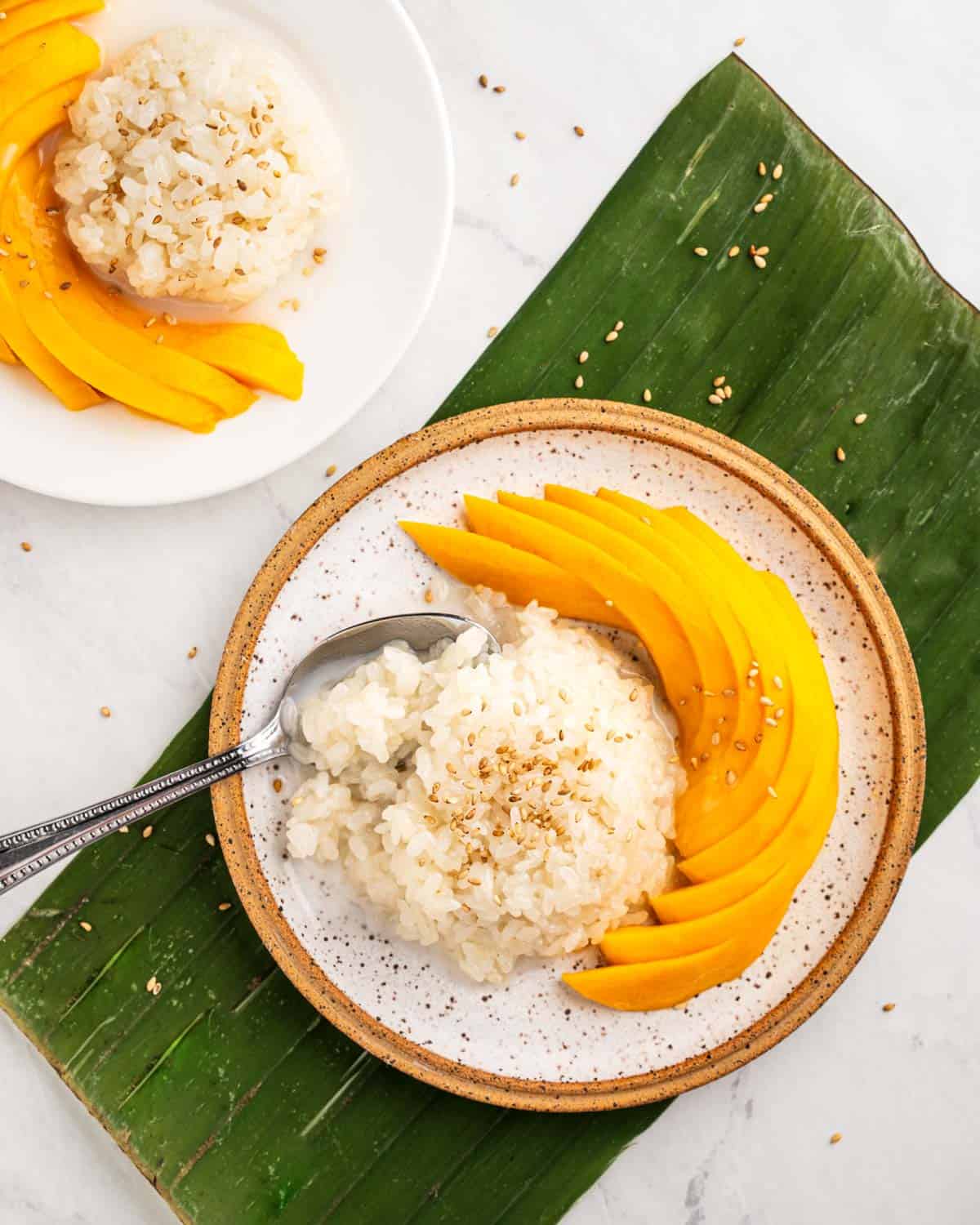
Use Thai glutinous rice, which may also be labeled sticky rice or sweet rice.
Despite the name, glutinous rice does not contain gluten. “Glutinous” refers to the sticky, chewy texture the rice develops after cooking.
Regular jasmine rice, long-grain white rice, or sushi rice won’t give you the same texture.
If you’re shopping at an Asian grocery store, look for bags labeled Thai sweet rice or glutinous rice.
A Few Things to Know Before You Start
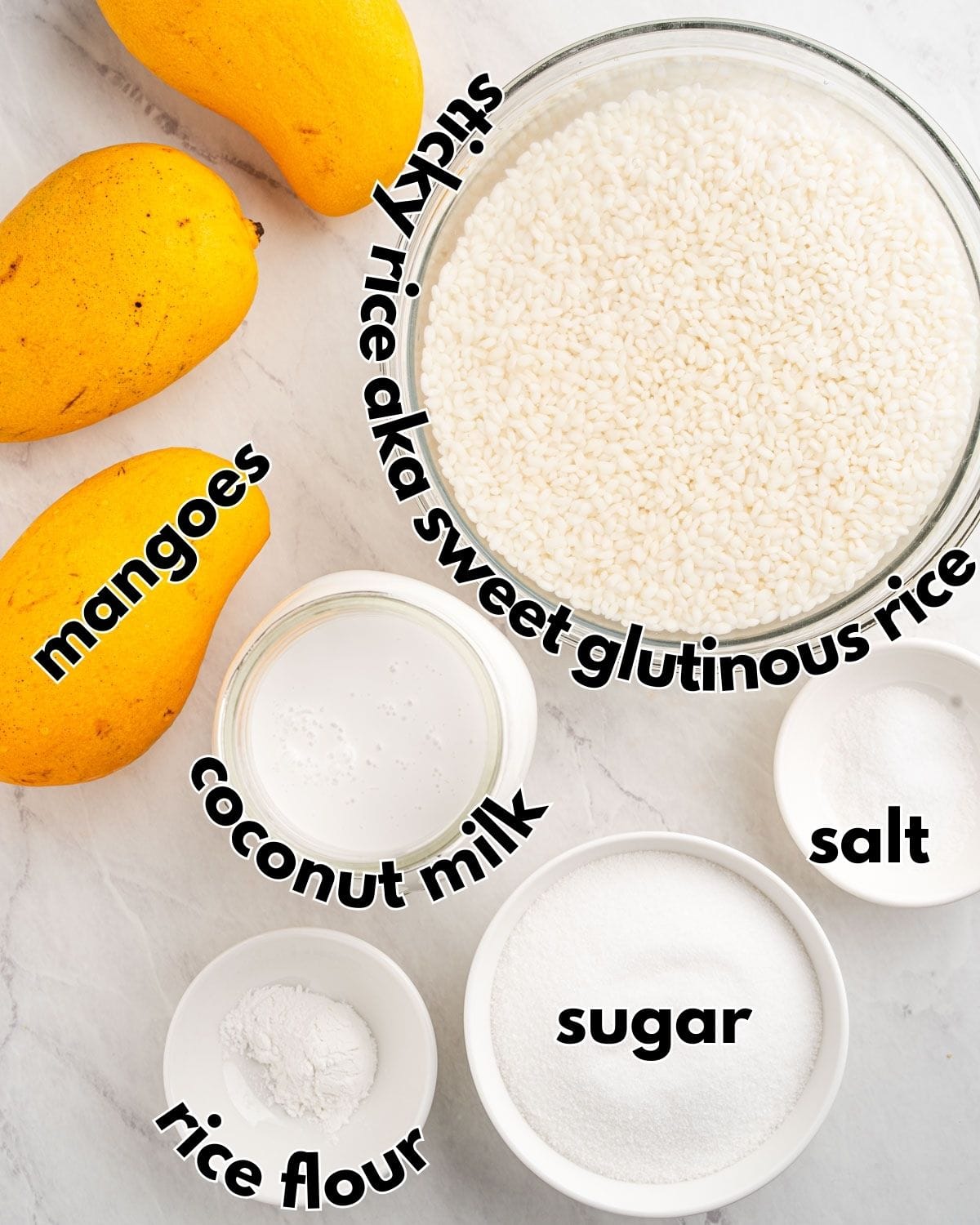
Sticky rice: Soak the rice for at least 4 hours or overnight. Soaking hydrates the grains so they steam evenly and become tender all the way through.
Coconut milk: Use canned full-fat coconut milk for the richest flavor and creamiest sauce.
Sugar: I use ¼ to ½ cup depending on how sweet the mangoes are. Start with less and adjust to taste.
Rice flour: A small amount thickens the coconut sauce without making it too heavy. Cornstarch can also be used if needed.
Mangoes: Ataulfo or Champagne mangoes work especially well because they’re sweet, creamy, and less fibrous than many larger varieties. Choose mangoes that smell fragrant and give slightly when gently pressed.
Please scroll ⬇️ to the recipe card for the full ingredient amounts and instructions.
How to Make Mango Sticky Rice
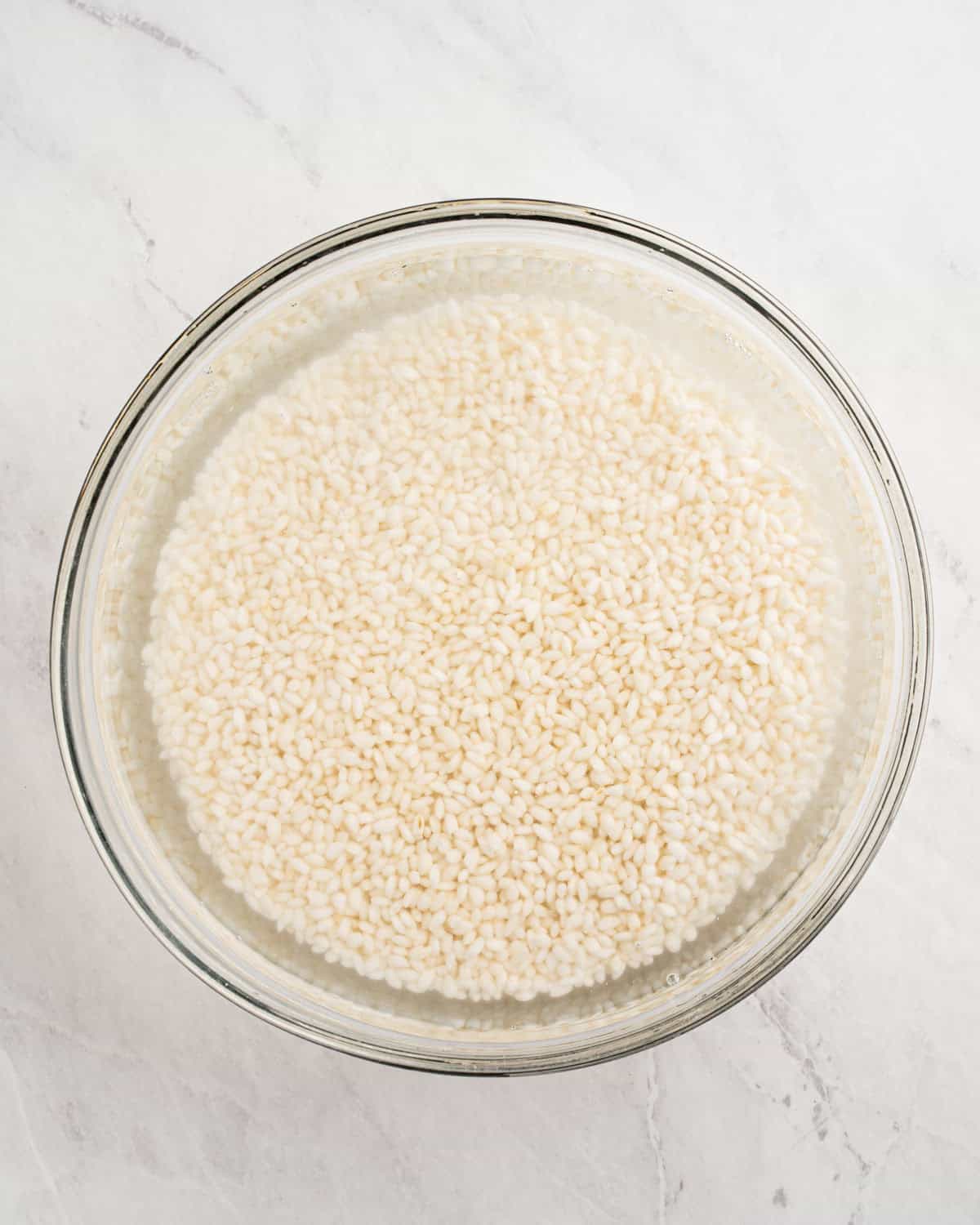
Start by rinsing the glutinous rice several times until the water runs mostly clear. Cover it with water and soak for at least 4 hours or overnight.
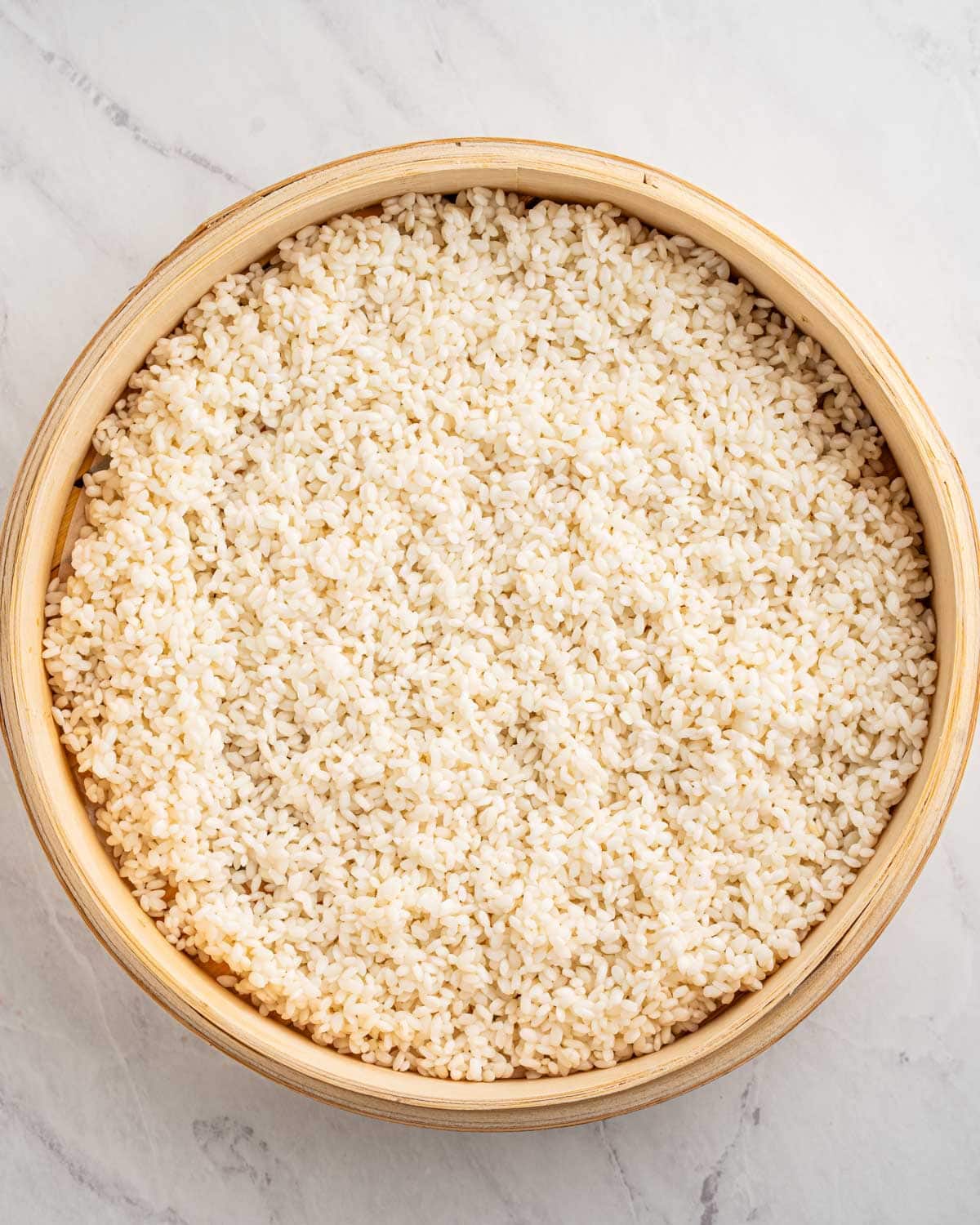
Drain the rice well, then place it in a steamer lined with cheesecloth or parchment. Steam for 25–30 minutes, until the grains are tender, slightly translucent, and sticky.
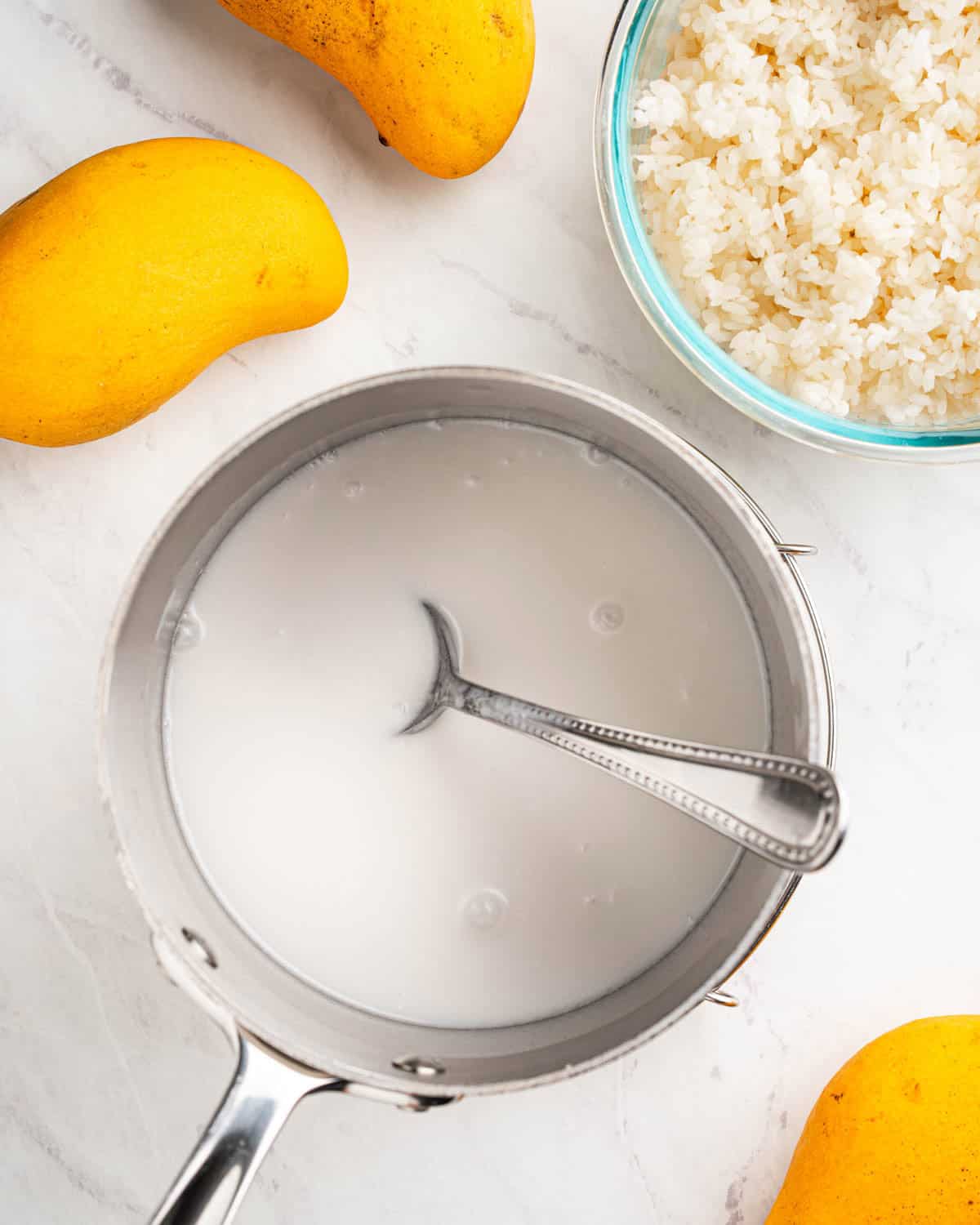
While the rice steams, warm the coconut milk with the sugar and salt over medium-low heat. Stir just until the sugar dissolves.
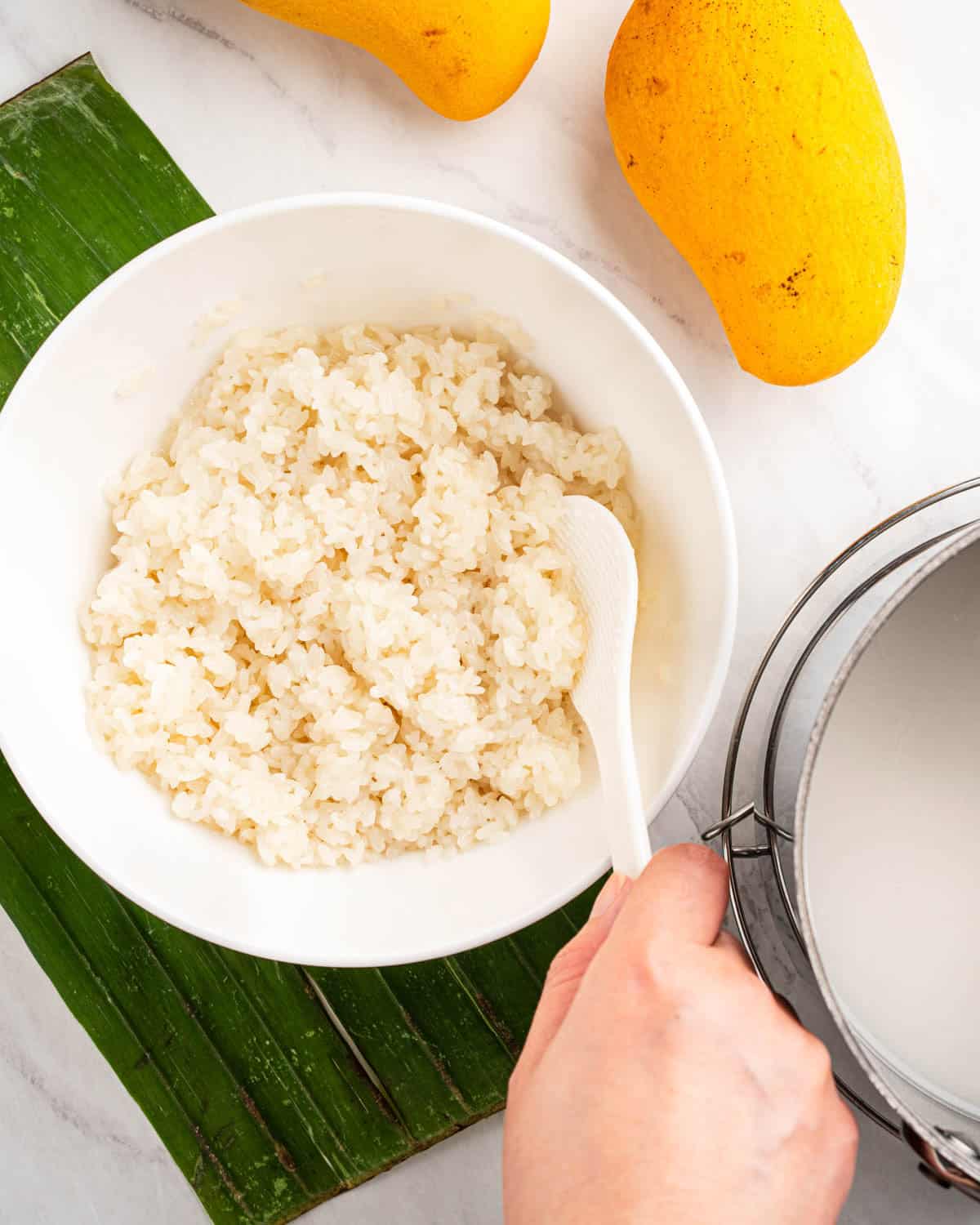
Transfer the hot rice to a bowl and pour 1 cup of the coconut mixture over it. Gently fold everything together, cover, and let it sit for 15–20 minutes so the rice can absorb the coconut milk.
Mix the rice flour with water, then stir it into the remaining coconut sauce. Cook for another 2–3 minutes, stirring, until the sauce thickens slightly but is still pourable.
Serve the coconut sticky rice with sliced mango and spoon the extra coconut sauce over the top. Finish with toasted sesame seeds if you like.
Why Do I Need to Soak the Rice?
Sticky rice cooks differently from regular white rice.
Soaking gives the dry grains time to absorb water before steaming, which helps them cook evenly. If the rice hasn’t soaked long enough, the outside can soften while the center stays firm.
Four hours is enough, but soaking it overnight makes it easy to prep ahead.
Why Steam Instead of Boil?
Steaming gives sticky rice its chewy texture while helping the individual grains hold their shape.
Boiling it directly in water can add too much moisture and make the rice softer or mushier, especially once the coconut milk is added afterward.
No Steamer?
You don’t need a traditional bamboo sticky rice steamer.
Place the soaked and well-drained rice in a fine-mesh strainer or colander lined with cheesecloth, then set it over a pot of simmering water. Make sure the bottom of the strainer stays above the water.
Cover and steam until the rice is tender and slightly translucent.
How to Tell If a Mango Is Ripe
For this recipe, the mango should be sweet and soft enough to slice easily without being mushy.
Don’t rely on color alone. Gently press the mango near the stem. It should give slightly under your fingers and have a noticeable fruity smell.
If the mango still feels very firm, let it sit at room temperature for another day or two before using it.
The Best Texture
✔️ Drain the soaked rice well. Too much water left on the rice can make the bottom overly soft while it steams.
✔️ Steam instead of boiling. This keeps the rice chewy rather than mushy.
✔️ Pour the coconut mixture over the rice while both are warm. The hot rice absorbs the coconut milk more easily.
✔️ Let the rice rest after adding the coconut milk. It may look a little wet at first, but the rice will absorb the liquid as it sits.
✔️ Keep the topping sauce pourable. It should thicken slightly but shouldn’t become as thick as pudding.
✔️ Use fully ripe mangoes. Since there are so few ingredients, the sweetness and flavor of the mango make a big difference.
Can I Make Mango Sticky Rice Ahead?
You can soak the uncooked rice overnight, which makes most of the prep easy to do ahead.
The finished sticky rice is best the day it’s made because it becomes firmer once refrigerated.
If you need to prepare it a little early, keep the mango separate and assemble everything shortly before serving.
How to Store Mango Sticky Rice
Store the sticky rice and mango separately in airtight containers in the refrigerator for up to 2–3 days.
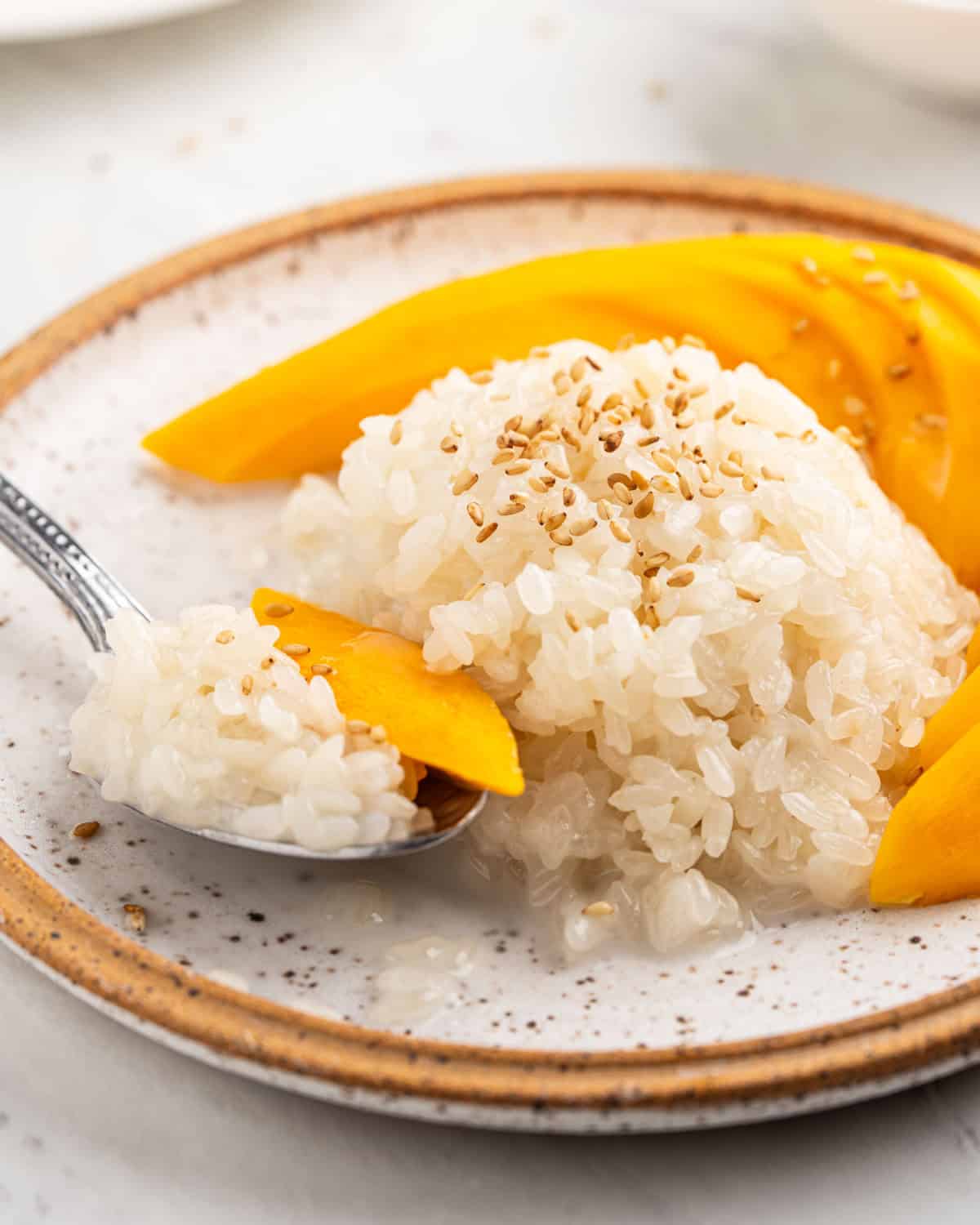
The rice will firm up in the refrigerator. Reheat it gently in the microwave with a small splash of coconut milk or water, then serve with the cold mango and coconut sauce.
For the best texture, I don’t recommend freezing mango sticky rice.
For another creamy Asian dessert, try Vietnamese Flan (Banh Flan) next.
If you make this Mango Sticky Rice, I’d love to hear how it turned out! Leave a comment and rating below.
RECIPE

Mango Sticky Rice
Ingredients
Sticky Rice
- 1 cup white glutinous rice (sweet rice)
Coconut Sauce
- 1 (13.5-ounce) can full-fat coconut milk
- ¼ to ½ cup sugar, to taste
- 1 teaspoon salt
- 1 teaspoon rice flour
- 1 tablespoon water
For Serving
- 3 ripe mangoes, preferably Ataulfo or Champagne, peeled and sliced
- Toasted sesame seeds, optional
Instructions
- Soak the rice. Rinse the glutinous rice several times until the water runs mostly clear. Cover with water and soak for at least 4 hours or overnight.
- Steam the rice. Drain well and place the rice in a steamer lined with cheesecloth or parchment. Steam over medium heat for 25–30 minutes, until tender, slightly translucent, and sticky. Transfer the hot rice to a bowl.
- Make the coconut mixture. While the rice cooks, combine the coconut milk, sugar, and salt in a saucepan over medium-low heat. Stir until the sugar dissolves. Avoid letting the coconut milk boil vigorously.
- Season the sticky rice. Remove 1 cup of the coconut mixture and pour it over the hot rice. Gently fold to combine, cover, and let sit for 15–20 minutes, until the rice absorbs most of the coconut milk.
- Thicken the remaining sauce. Mix the rice flour and water until smooth. Stir it into the remaining coconut mixture and cook for 2–3 minutes, stirring constantly, until slightly thickened but still pourable.
- Assemble. Divide the sticky rice between plates and add the sliced mango. Spoon the coconut sauce over the rice and finish with toasted sesame seeds if using.
Notes
- Use glutinous or sweet rice. Regular jasmine or sushi rice will not give you the same texture.
- Soak the rice for at least 4 hours or overnight.
- Drain the soaked rice very well before steaming.
- The coconut sticky rice may look wet at first but will absorb the sauce as it rests.
- Use ripe, fragrant mangoes that give slightly when pressed.
- Mango sticky rice is best the day it’s made.
- Store the rice and mango separately in the refrigerator for up to 2–3 days.