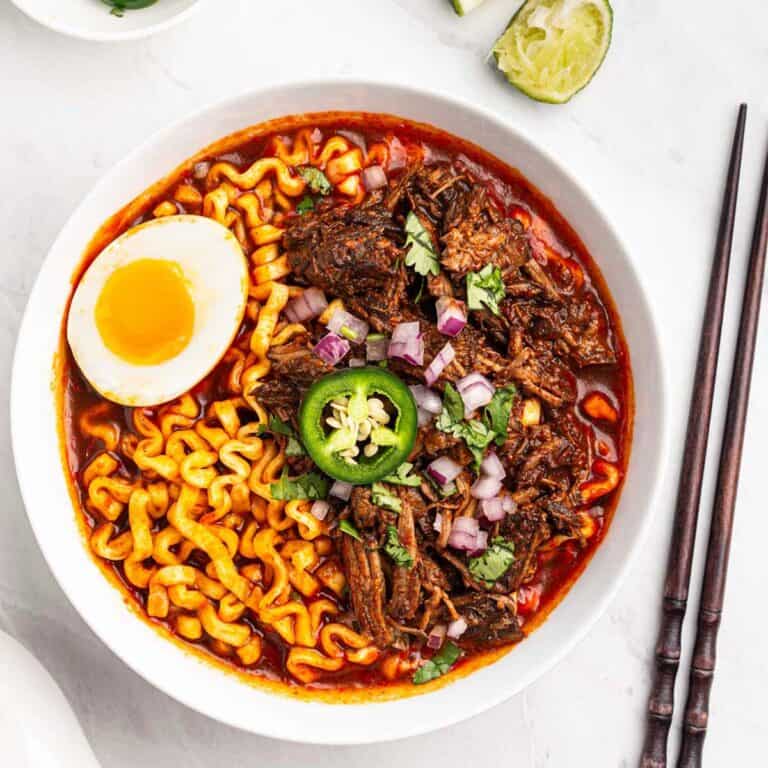
Salmon Spring Rolls


These salmon spring rolls are one of my favorite ways to turn fresh Vietnamese-style spring rolls into an easy dinner. They’re filled with flaky baked salmon, banh hoi noodles, crisp vegetables, and lettuce, then served with nuoc cham, peanut sauce—or both if you can’t decide.
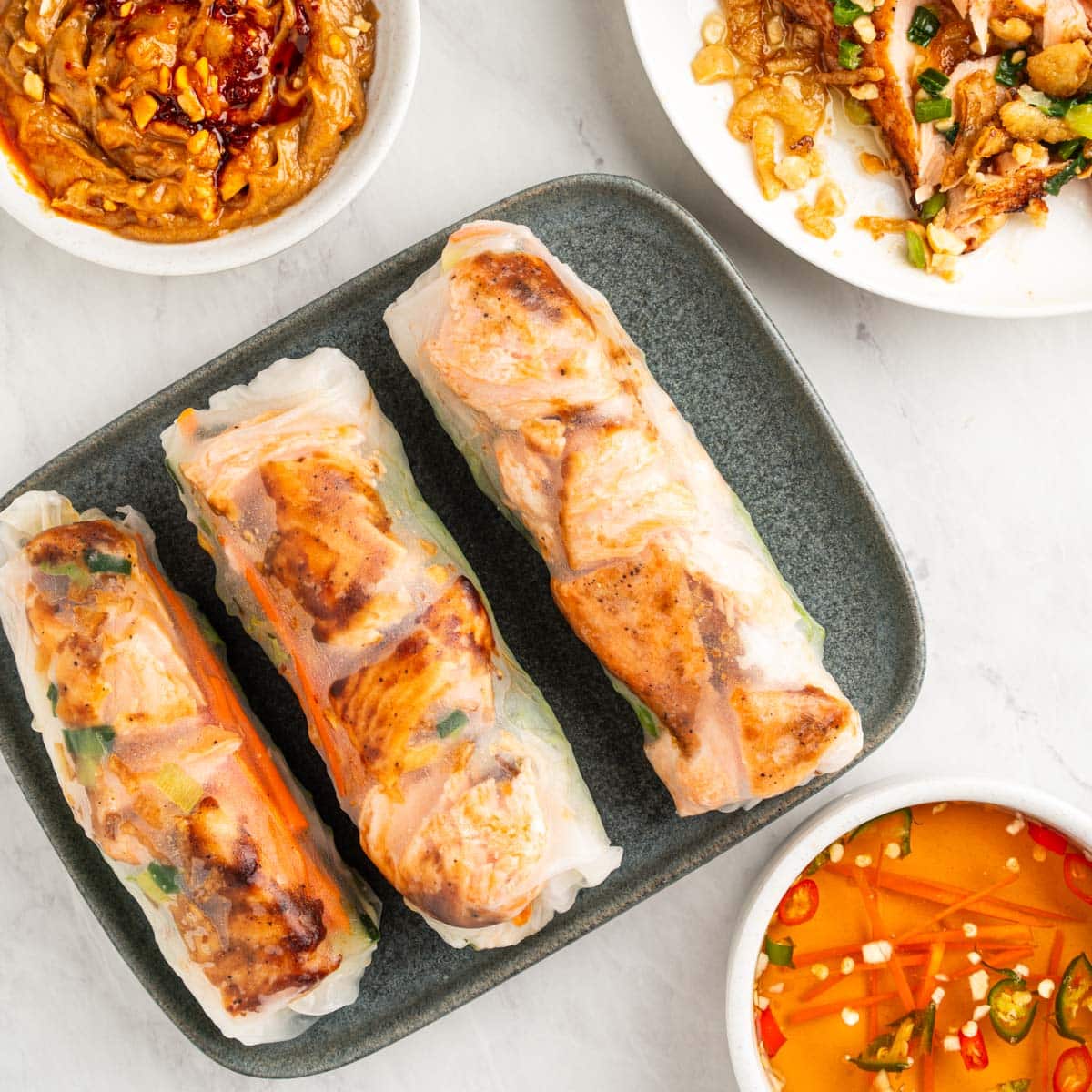
What really makes these different is how I finish the salmon. After baking, I top it with scallion oil (mo hanh), crushed peanuts, and crispy fried onions. The combination adds so much flavor and crunch that I don’t consider these toppings optional when I make them at home.
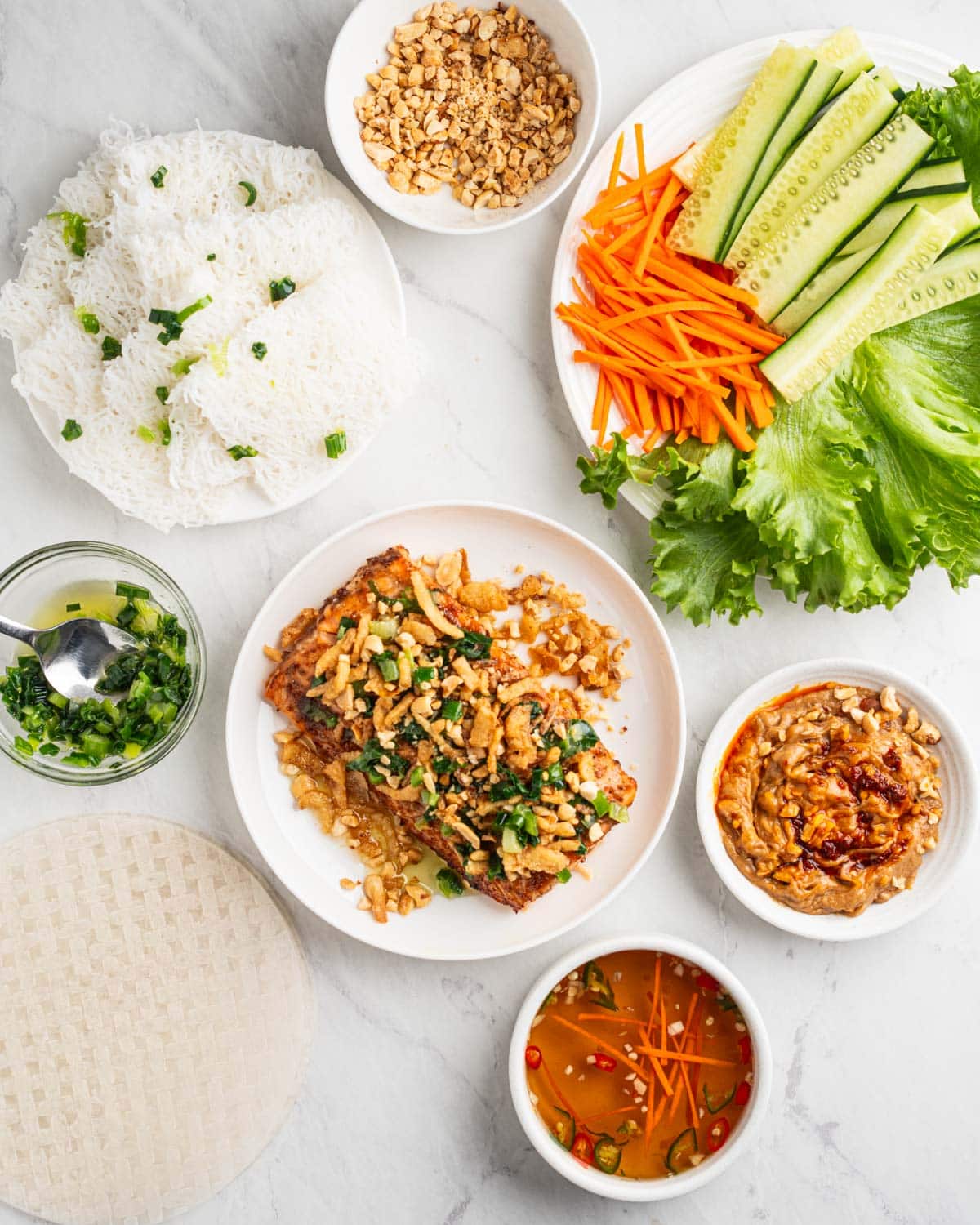
I usually put all of the ingredients on the table and let everyone make their own rolls. It’s easier than rolling an entire batch yourself, and dinner can be ready in just over 30 minutes.
If you’re looking for the more traditional version made with shrimp and pork, try my Vietnamese Spring Rolls (Goi Cuon).
Ingredient Notes
Please scroll ⬇️ to the recipe card for the full ingredient amounts and instructions.
Salmon: I use about 1 pound of salmon and season it simply with oyster sauce, black pepper, garlic powder, and sesame oil. Bake it at 425°F for about 15 minutes, depending on the thickness of your salmon. It’s done when it flakes easily with a fork and reaches your preferred doneness.
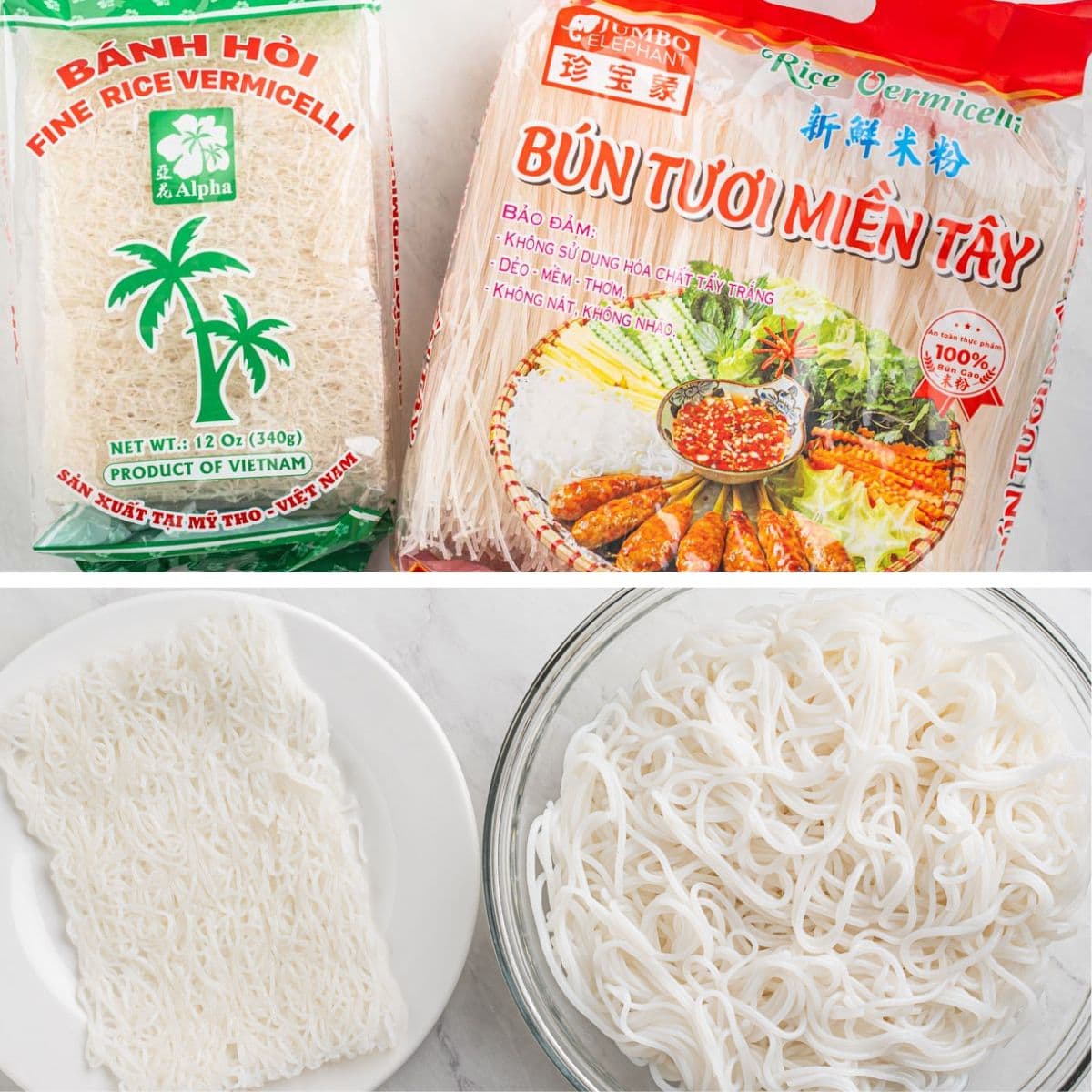
Banh hoi: Regular rice vermicelli works, but I prefer banh hoi for spring rolls because the noodles stay together instead of falling everywhere as you roll. Banh hoi comes in thin woven sheets or bundles, so you can fold or cut off just the amount you need for each spring roll.
It also cooks quickly—usually about 2–3 minutes. After cooking, rinse it under cold water, drain well, and lightly brush oil between the layers so they don’t stick together.
Rice paper: I use size 22 rice paper made with both rice flour and tapioca flour. The tapioca gives the wrapper more elasticity, which makes it easier to roll without tearing.
My usual brand is Banh Trang Double Parrot (look for the red rose on the package), but you don’t have to use that exact brand. Check the ingredient list and look for wrappers made with both rice flour and tapioca flour.
Rice paper also comes in round and square sheets, and either shape works for spring rolls. Which one is easier to roll really comes down to personal preference—some people find square wrappers easier to fold neatly, while others prefer the more traditional round shape. If you have trouble rolling spring rolls, it’s worth trying the other shape to see which feels easier to work with.
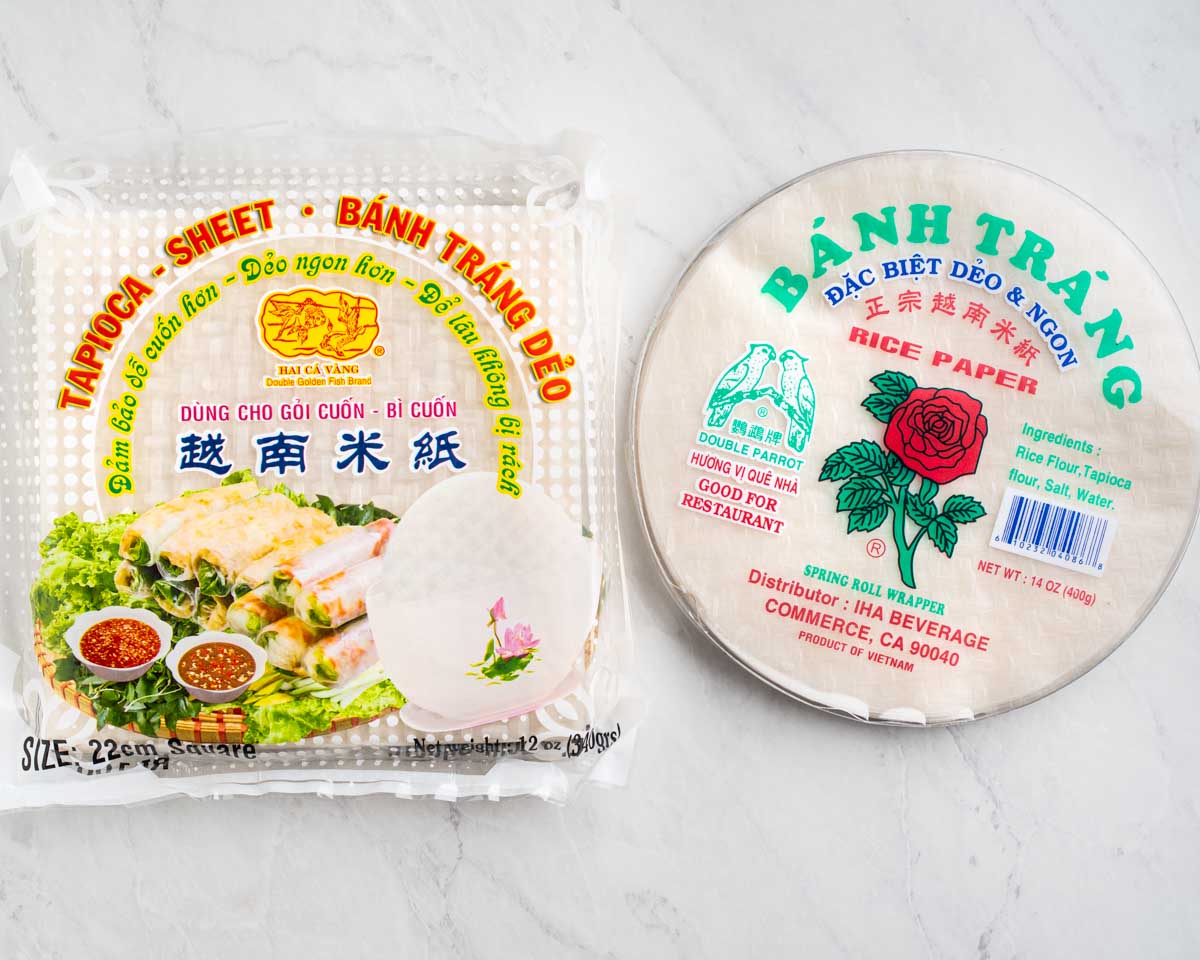
Vegetables: Lettuce, cucumber, and carrots are what I normally use. You can certainly add other vegetables, but I like keeping the filling fairly simple so you can still taste the seasoned salmon.
Fresh herbs: Mint and cilantro are traditional options for fresh spring rolls, so feel free to add either or both if you enjoy them. I personally prefer mine without the herbs, so they’re completely optional here.
Please scroll ⬇️ to the recipe card for the full ingredient amounts and instructions.
How to Make Salmon Spring Rolls
1. Bake the salmon
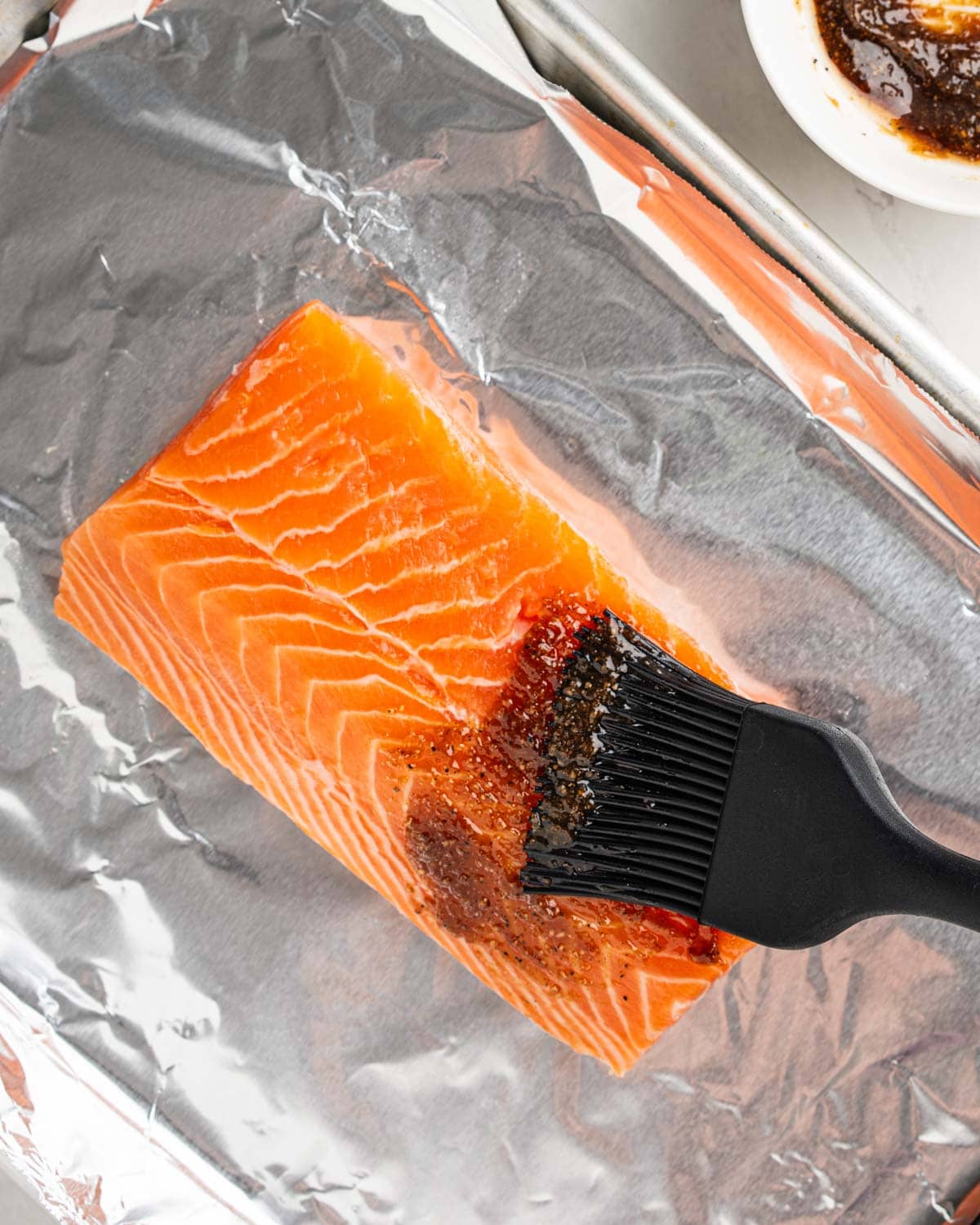
Preheat the oven to 425°F. Season the salmon with oyster sauce, black pepper, garlic powder, and sesame oil.
Bake for about 15 minutes, depending on the thickness of the salmon, until it’s cooked through and flakes easily with a fork.
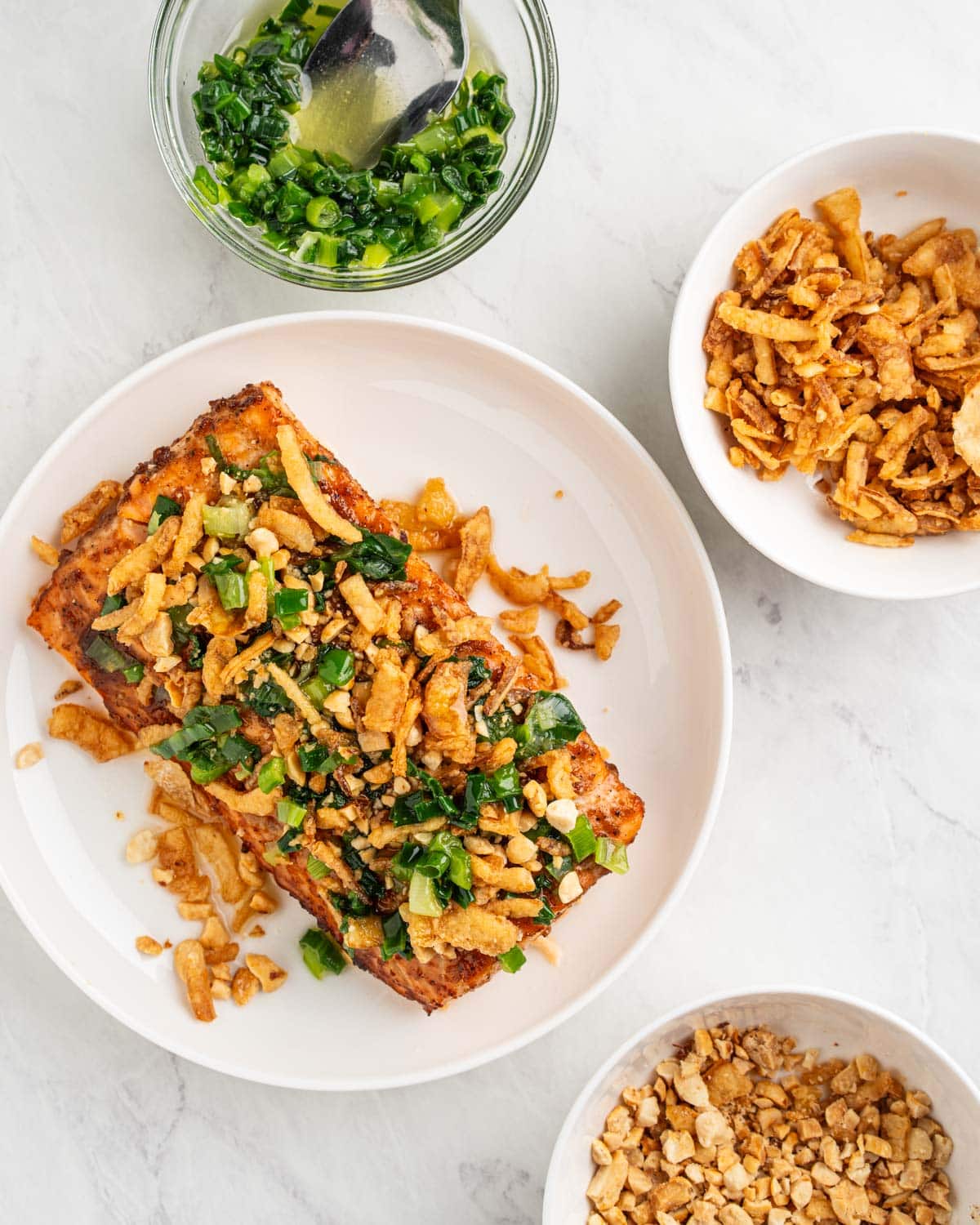
Once it comes out of the oven, spoon Vietnamese Scallion Oil (Mo Hanh) over the salmon and finish with crushed peanuts and crispy fried onions. I use all three—the scallion oil adds flavor and richness while the peanuts and fried onions give the soft salmon some much-needed crunch.
Break the salmon into large flakes for serving.
2. Prepare the noodles and vegetables
While the salmon is baking, cook the banh hoi according to the package directions. It usually only takes about 2–3 minutes.
Rinse the cooked noodles under cold water, drain well, and lightly brush oil between the layers to keep them from sticking.
Slice the cucumber and prepare the carrots and lettuce. If you’re adding mint or cilantro, wash and dry those as well.
3. Soften the rice paper
Fill a large shallow dish with room-temperature water.
Dip one rice paper wrapper into the water for just a few seconds and place it on a flat work surface.
Don’t wait for the wrapper to become completely soft in the water. It will continue absorbing moisture and softening while you add the fillings. Oversoaking it makes the rice paper sticky and more likely to tear.
4. Fill and roll
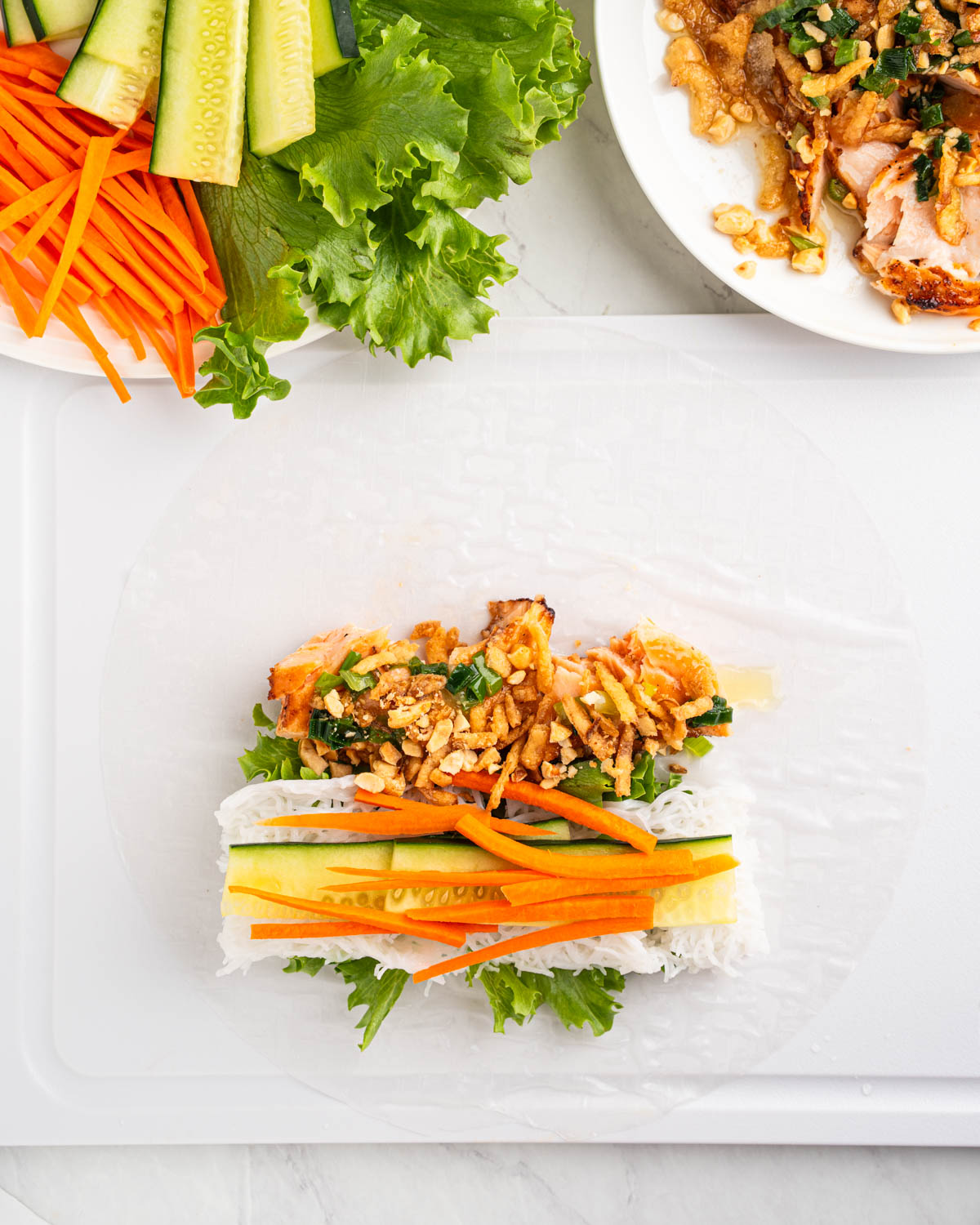
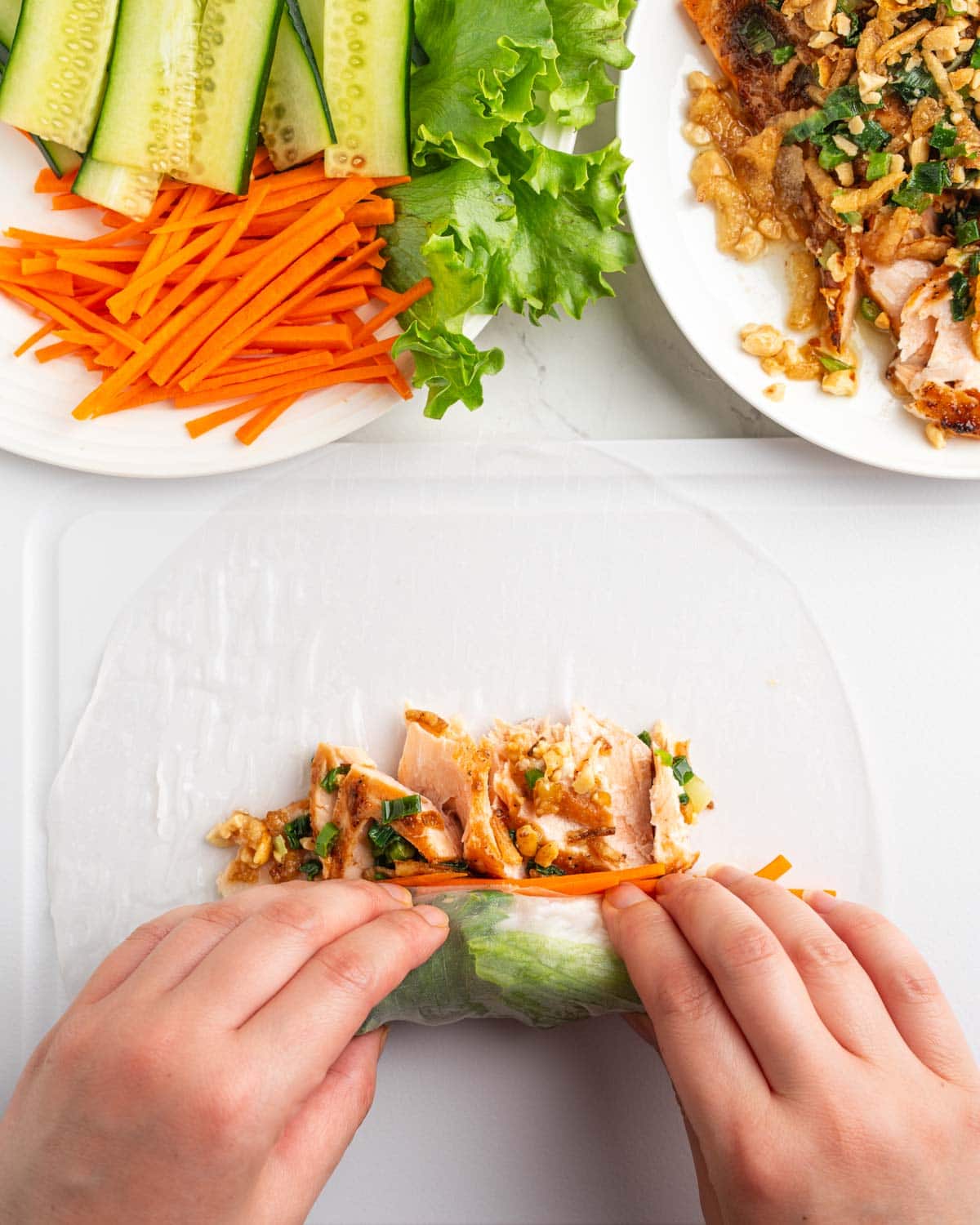
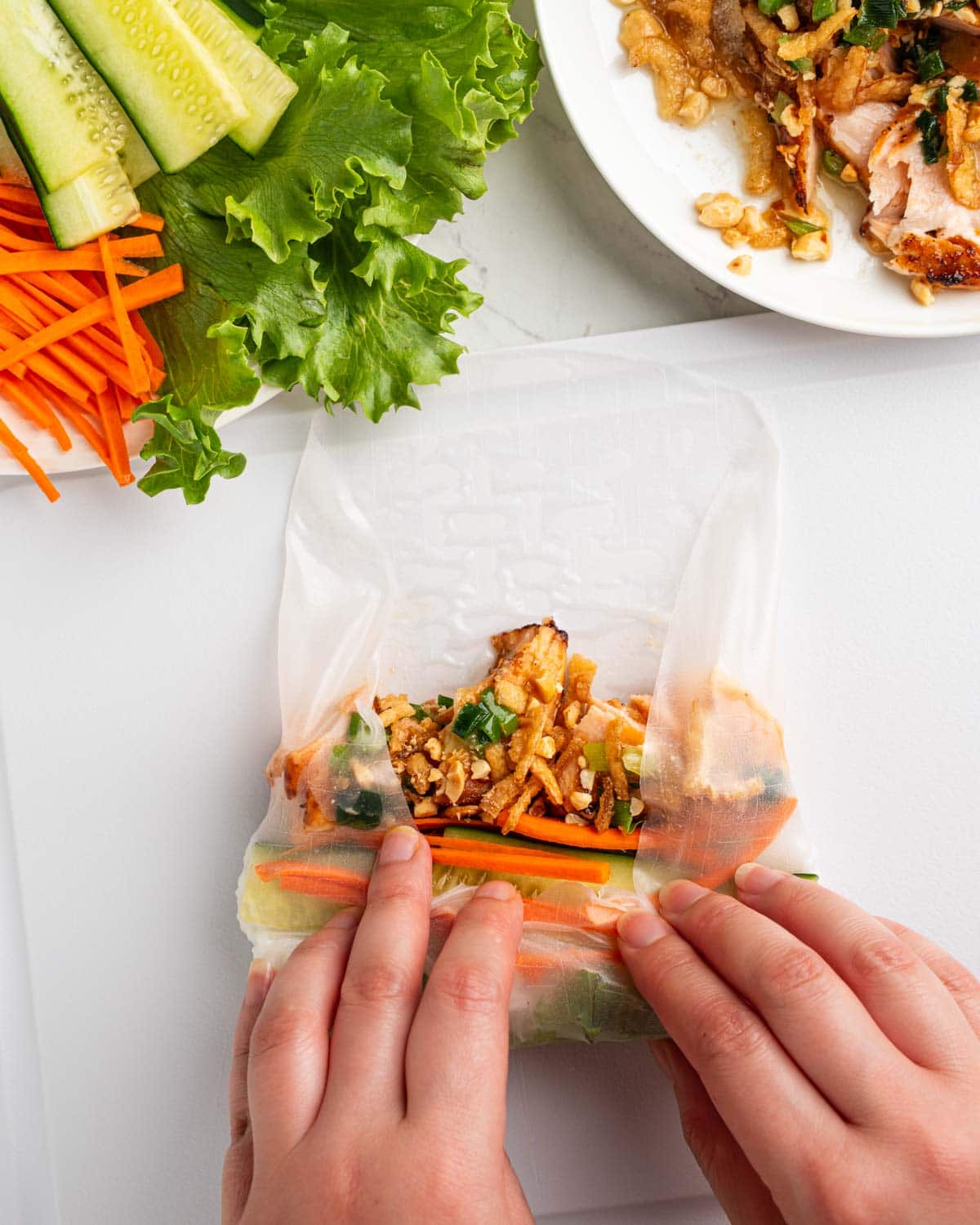
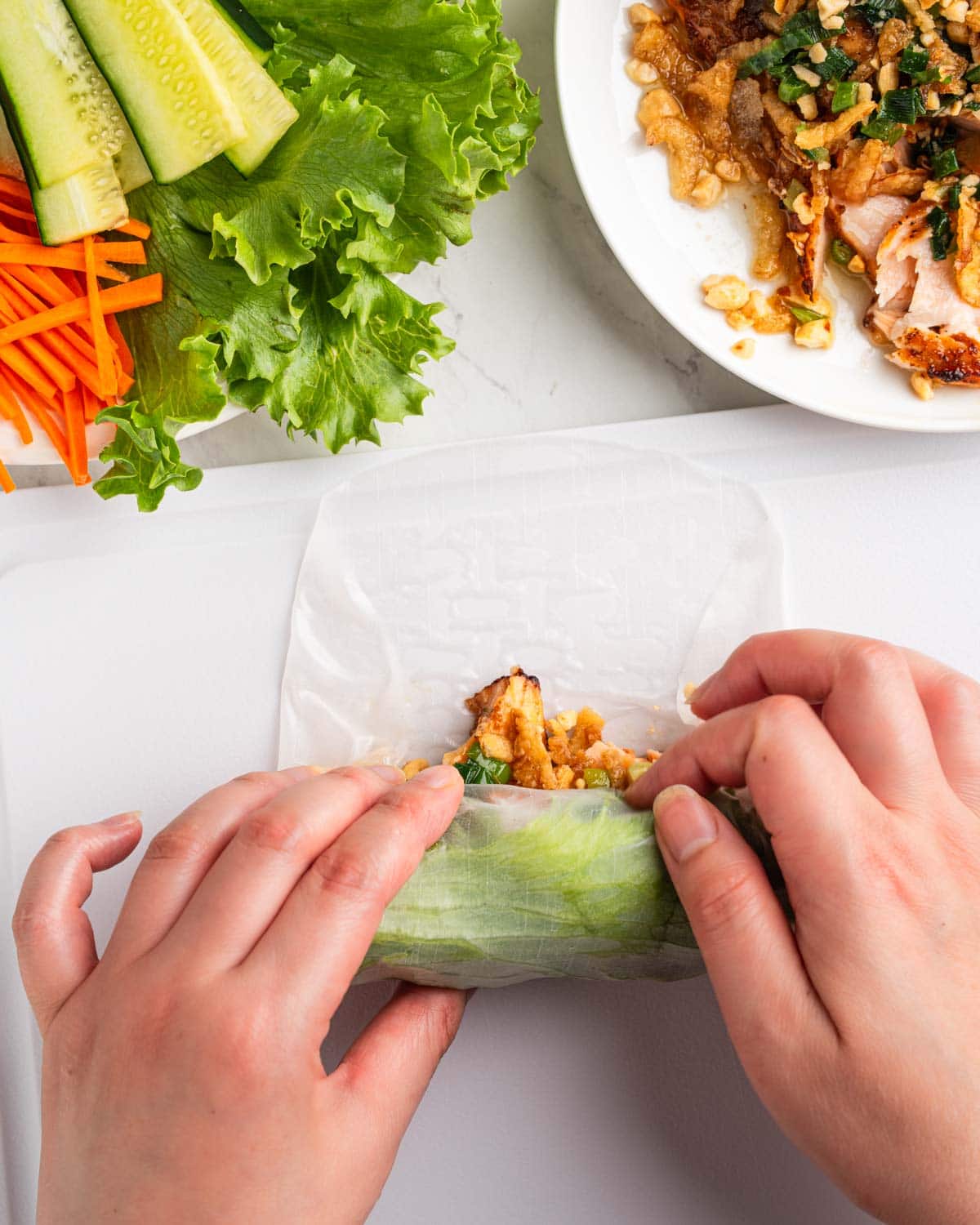
Place lettuce, banh hoi, cucumber, and carrots toward the bottom third of the wrapper.
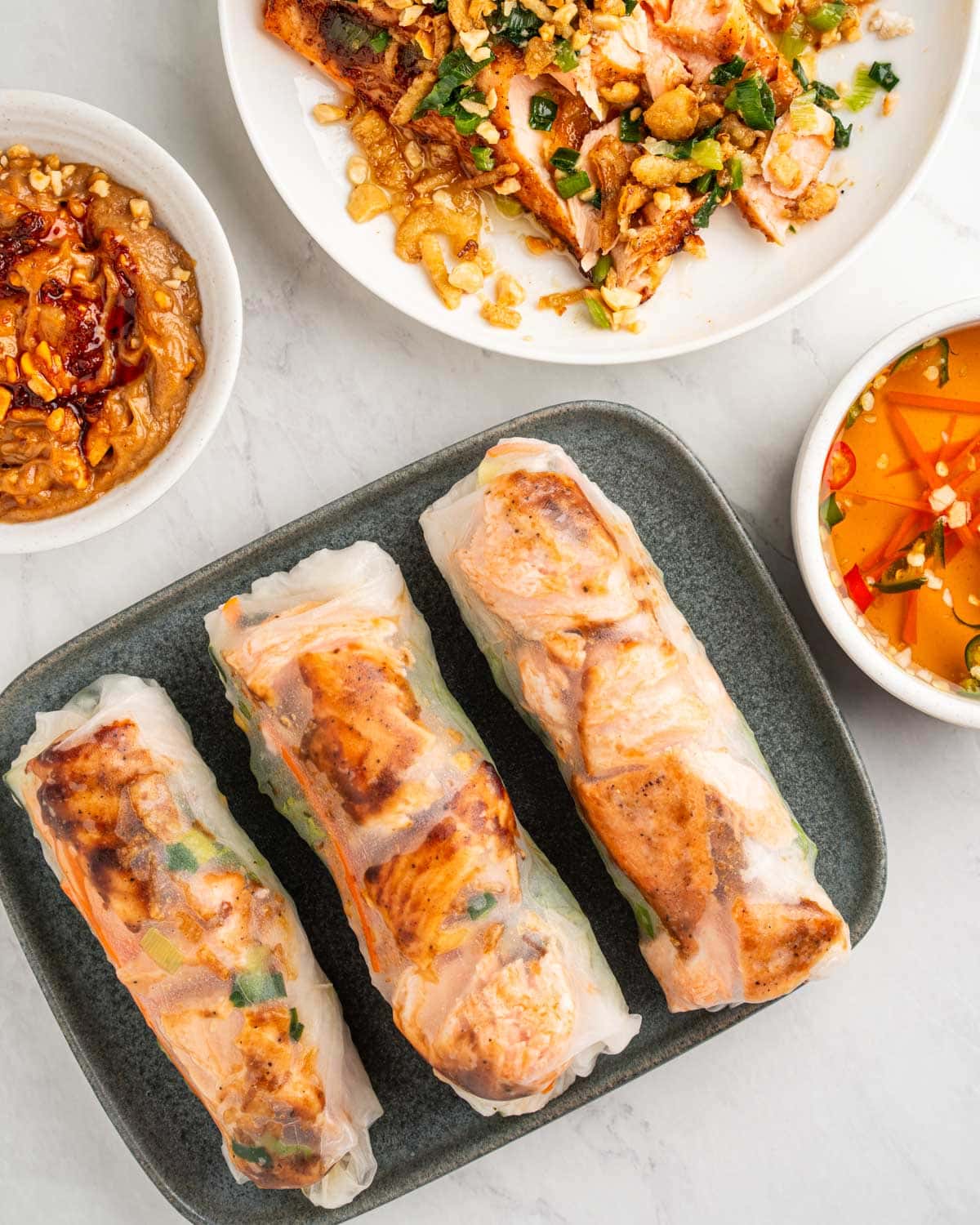
Place a few pieces of salmon slightly above the other fillings. This way, when you finish rolling, some of that colorful salmon shows through the rice paper.
Fold the bottom of the wrapper over the vegetables and noodles, fold both sides inward, and continue rolling tightly like a burrito.
Try not to overfill the first few. Once you’ve rolled one or two, you’ll get a better feel for how much filling your rice paper can comfortably hold.
My Tips for Spring Rolls That Don’t Tear
The type of rice paper makes a bigger difference than you might think. I prefer wrappers that contain both rice flour and tapioca flour because they’re more elastic and forgiving when rolled.
It’s also important not to soak the wrapper too long. A quick dip is enough. If it already feels completely soft before you’ve added your fillings, it will usually become too sticky by the time you start rolling.
Banh hoi also makes these easier to assemble than loose vermicelli. Since the noodles stay together in little sheets, you can place a neat portion inside each wrapper without strands spilling out the sides.
Finally, don’t overfill them. It’s tempting to squeeze in more salmon and vegetables, but a slightly smaller spring roll is much easier to roll tightly without tearing.
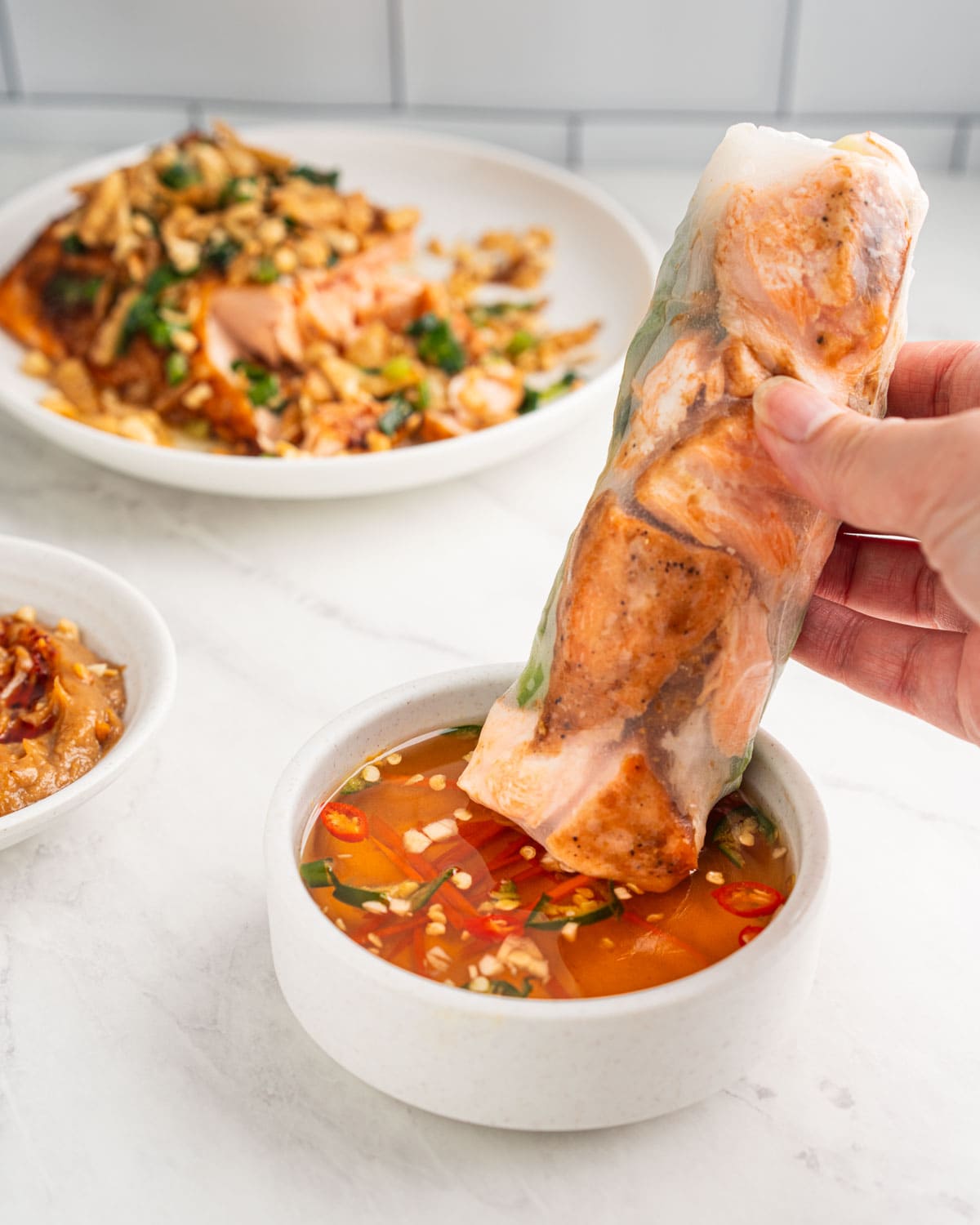
Nuoc Cham or Peanut Sauce?
I like these salmon spring rolls with either Nuoc Cham or Vietnamese Peanut Sauce, and honestly, sometimes I can’t decide and make both.
Nuoc cham is my choice when I want something lighter and more savory, while peanut sauce is creamier and sweeter. They give the exact same spring roll two completely different flavors, so serving both is also fun when everyone is making their own at the table.
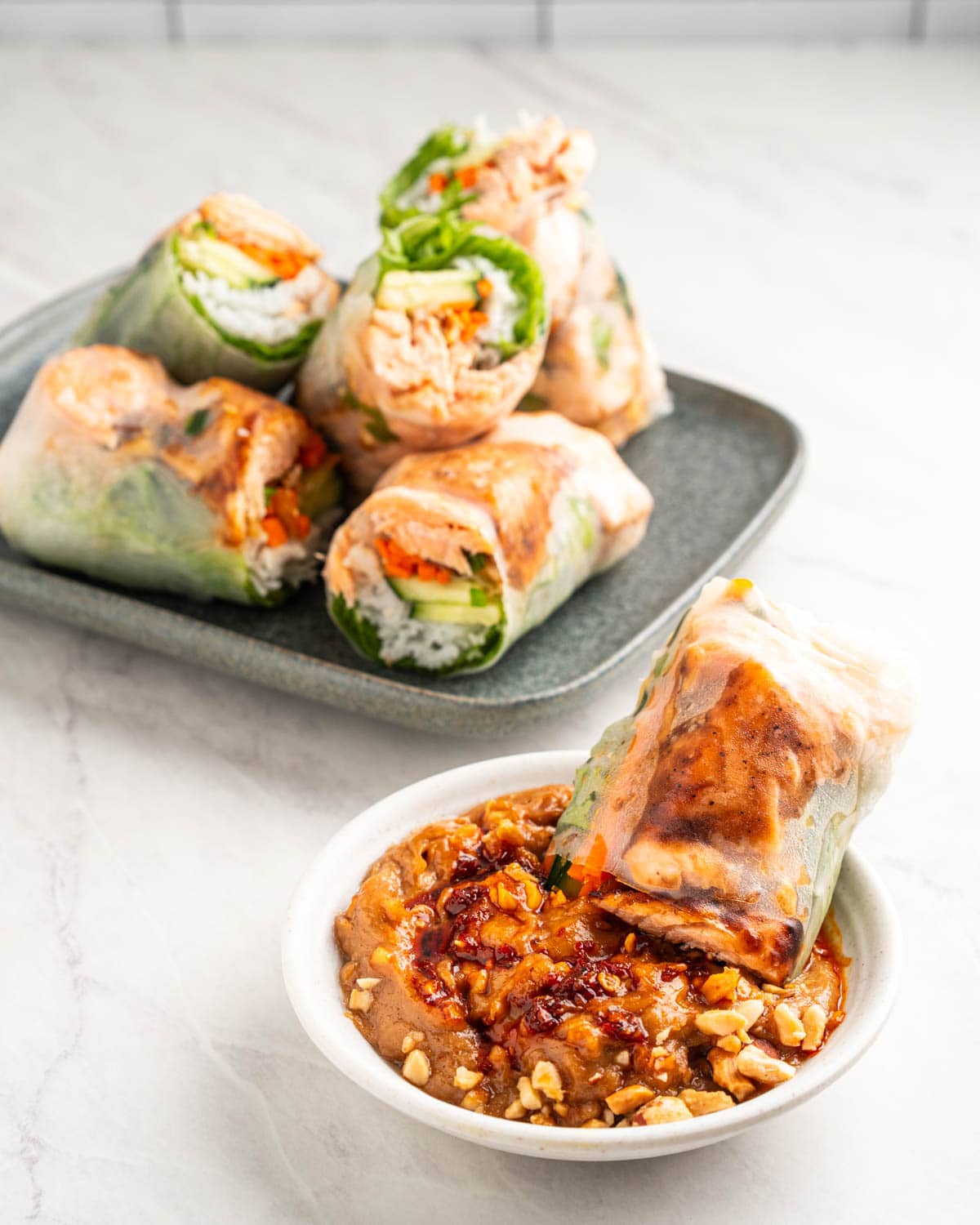
The Easiest Way to Serve Them
My favorite way to eat salmon spring rolls is family-style.
Instead of rolling everything before dinner, put the salmon, banh hoi, lettuce, vegetables, rice paper, and dipping sauces on the table and let everyone make their own.
Not only is it more fun, but it also keeps the prep time reasonable. I can have everything ready in about 35 minutes this way. If you plan to roll all 8–10 spring rolls yourself before serving, give yourself some extra time.
For another Vietnamese dinner that’s especially good with plenty of fresh vegetables, try my Vietnamese Lemongrass Chicken.
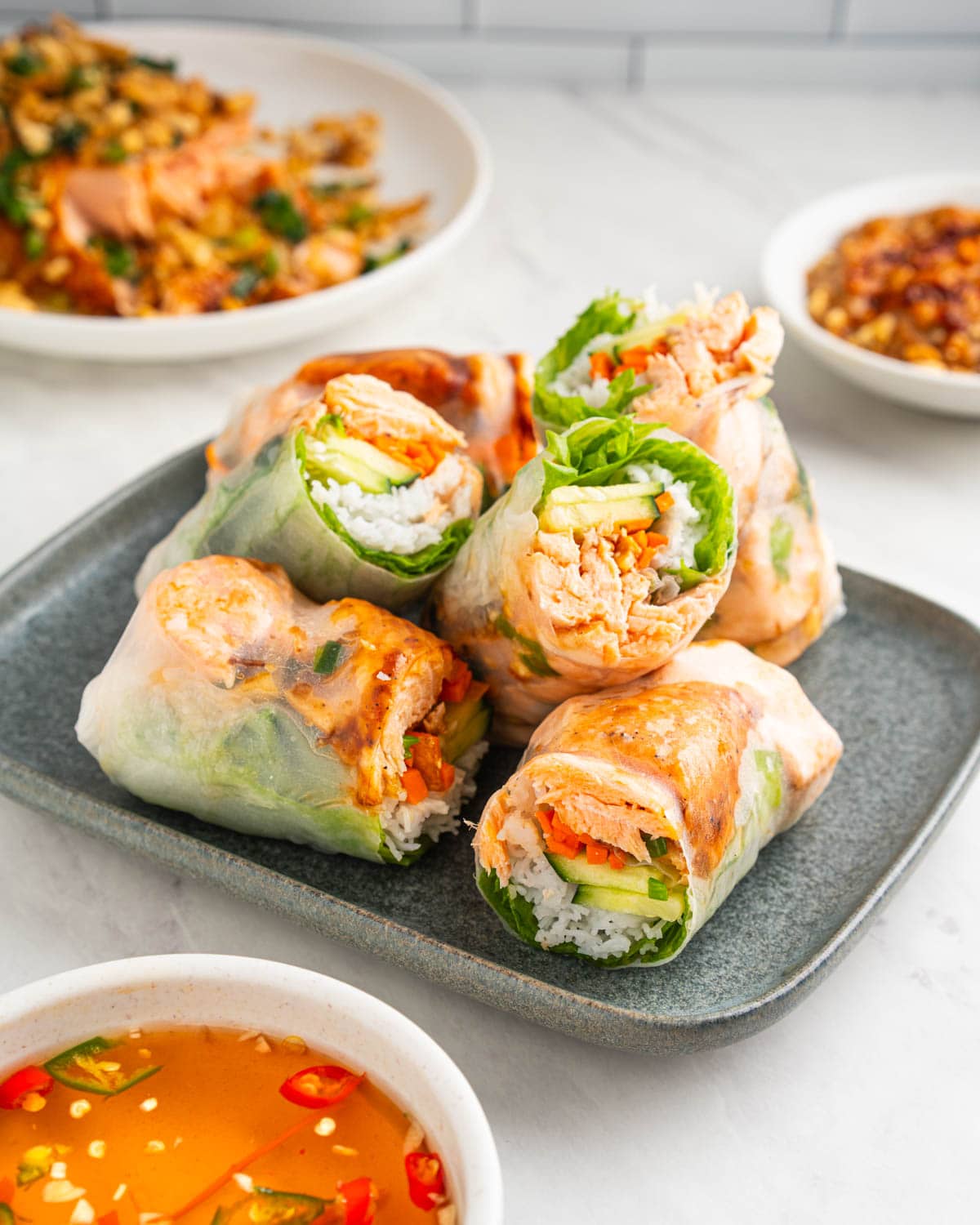
Storage
Salmon spring rolls are best eaten freshly rolled. I don’t recommend these as a meal-prep recipe because the rice paper becomes firmer and the fresh vegetables lose some of their texture in the refrigerator.
If you’d like to get a head start, prepare the individual components instead. Cook the salmon and noodles and prep the vegetables, then store everything separately in the refrigerator and assemble the spring rolls when you’re ready to eat.
Leftover cooked salmon can be refrigerated in an airtight container for up to 3 days.
Once everything is prepped, set it out with the rice paper and dipping sauces and let everyone start rolling. I especially recommend making both nuoc cham and peanut sauce if your family can’t agree on one—there’s really no need to choose.
RECIPE

Salmon Spring Rolls
Ingredients
Salmon
- 1 pound salmon
- 1 tablespoon oyster sauce
- ½ teaspoon black pepper
- 1 teaspoon garlic powder
- 1 tablespoon sesame oil
For Topping the Salmon
- Vietnamese scallion oil (mo hanh)
- Crushed peanuts
- Crispy fried onions
Spring Rolls
- 8-10 rice paper wrappers, preferably made with rice flour and tapioca flour
- 2 cups banh hoi noodles (rice vermicelli can be substituted)
- 1 cup lettuce (such as butter lettuce or green leaf lettuce)
- 1 cup shredded or julienned carrots
- 1 cucumber, thinly sliced or julienned
- Mint and/or cilantro optional
For Serving
Instructions
- Bake the salmon: Preheat the oven to 425°F. Place the salmon on a baking sheet and season with oyster sauce, black pepper, garlic powder, and sesame oil. Bake for about 15 minutes, depending on thickness, until the salmon is cooked through and flakes easily with a fork.
- Add the toppings: Spoon scallion oil over the warm salmon and top with crushed peanuts and crispy fried onions. Break the salmon into large flakes and set aside.
- Prepare the noodles: While the salmon cooks, prepare the banh hoi according to the package directions, usually about 2–3 minutes. Rinse under cold water and drain well. Lightly brush oil between the layers to prevent sticking.
- Prepare the fillings: Wash and prepare the lettuce, cucumber, carrots, and optional herbs.
- Soften the rice paper: Fill a large shallow dish with room-temperature water. Dip one rice paper wrapper into the water for just a few seconds, then transfer it to a flat work surface. Don't wait for it to soften completely; it will continue to soften as you add the fillings.
- Fill: Arrange lettuce, banh hoi, cucumber, and carrots toward the bottom third of the wrapper. Add pieces of salmon slightly above the other fillings so the salmon will be visible through the finished roll.
- Roll: Fold the bottom of the rice paper over the filling, fold in both sides, and roll tightly to close. Avoid overfilling so the wrapper doesn't tear.
- Serve: Serve immediately with nuoc cham, Vietnamese peanut sauce, or both. For an easy family-style dinner, set out all of the prepared ingredients and let everyone roll their own spring rolls at the table.