Vietnamese Spring Rolls (Gỏi Cuốn)


Fresh spring rolls are one of my favorite things to order at Vietnamese restaurants, but I always wish they came with more than two. They’re surprisingly easy to make at home, and once everything is prepped, it’s mostly just assembly and rolling.
Traditional Vietnamese spring rolls are usually made with shrimp, pork, rice noodles, herbs, and vegetables, but there are so many ways to customize them. If you’re looking for a different variation, my Salmon Spring Rolls are another easy option that makes a great light lunch or dinner.
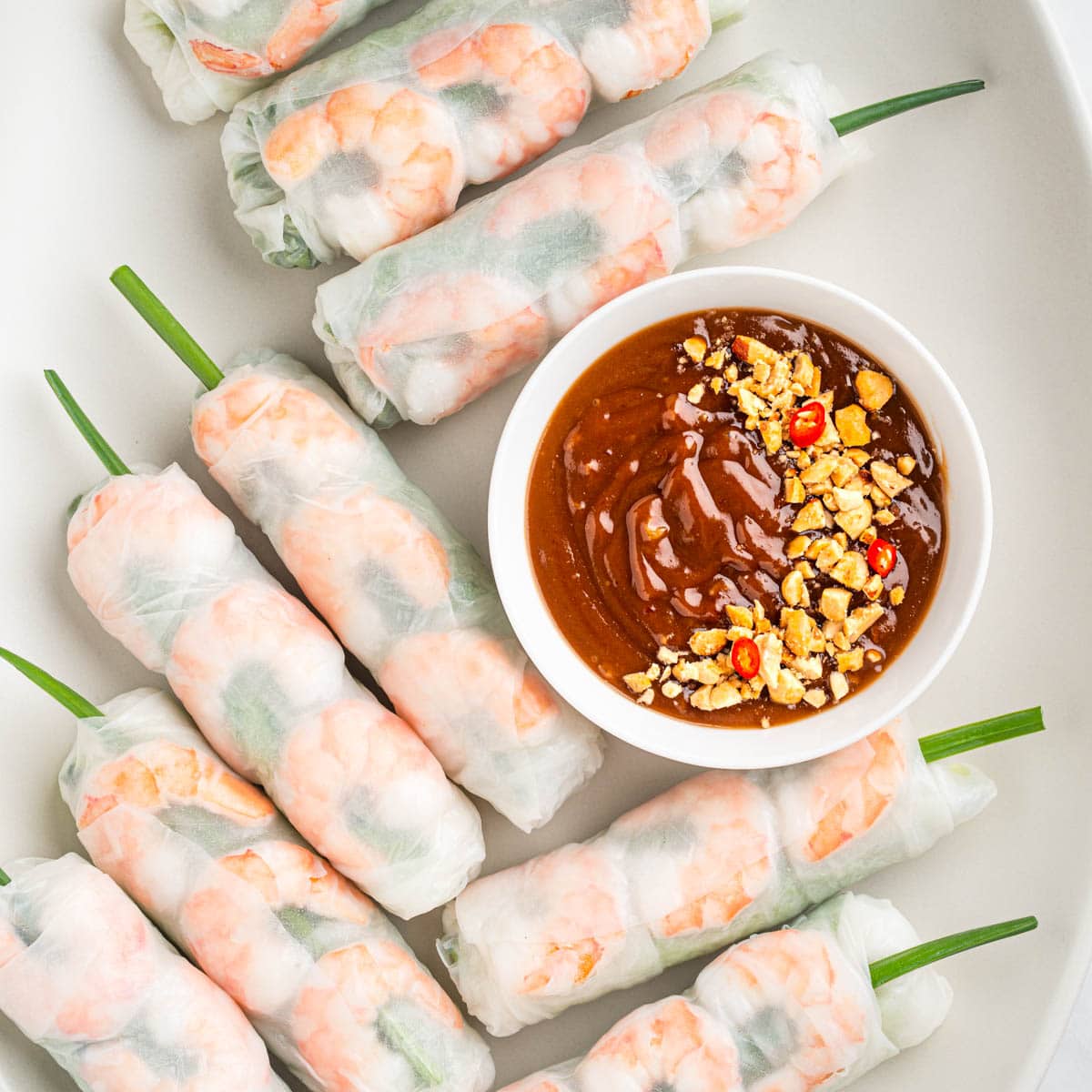
Growing up, we had spring rolls at almost every family gathering. They’re easy to share, and everyone can build their own. On days when my mom didn’t feel like cooking, she’d simply put all the ingredients on the table and let everyone roll their own spring rolls. It was simple, interactive, and honestly still one of my favorite ways to eat them today.
Whether you’re making them for a party, meal prep, or an easy dinner, fresh spring rolls are one of those recipes that always disappear fast.
What Are Vietnamese Spring Rolls?
Goi cuon, or Vietnamese fresh spring rolls, are made by wrapping rice paper around a mix of protein, herbs, vegetables, and rice vermicelli. You might also see them called summer rolls on restaurant menus. The name goi cuon loosely translates to “salad rolls,” which makes sense since they’re packed with fresh herbs and vegetables.
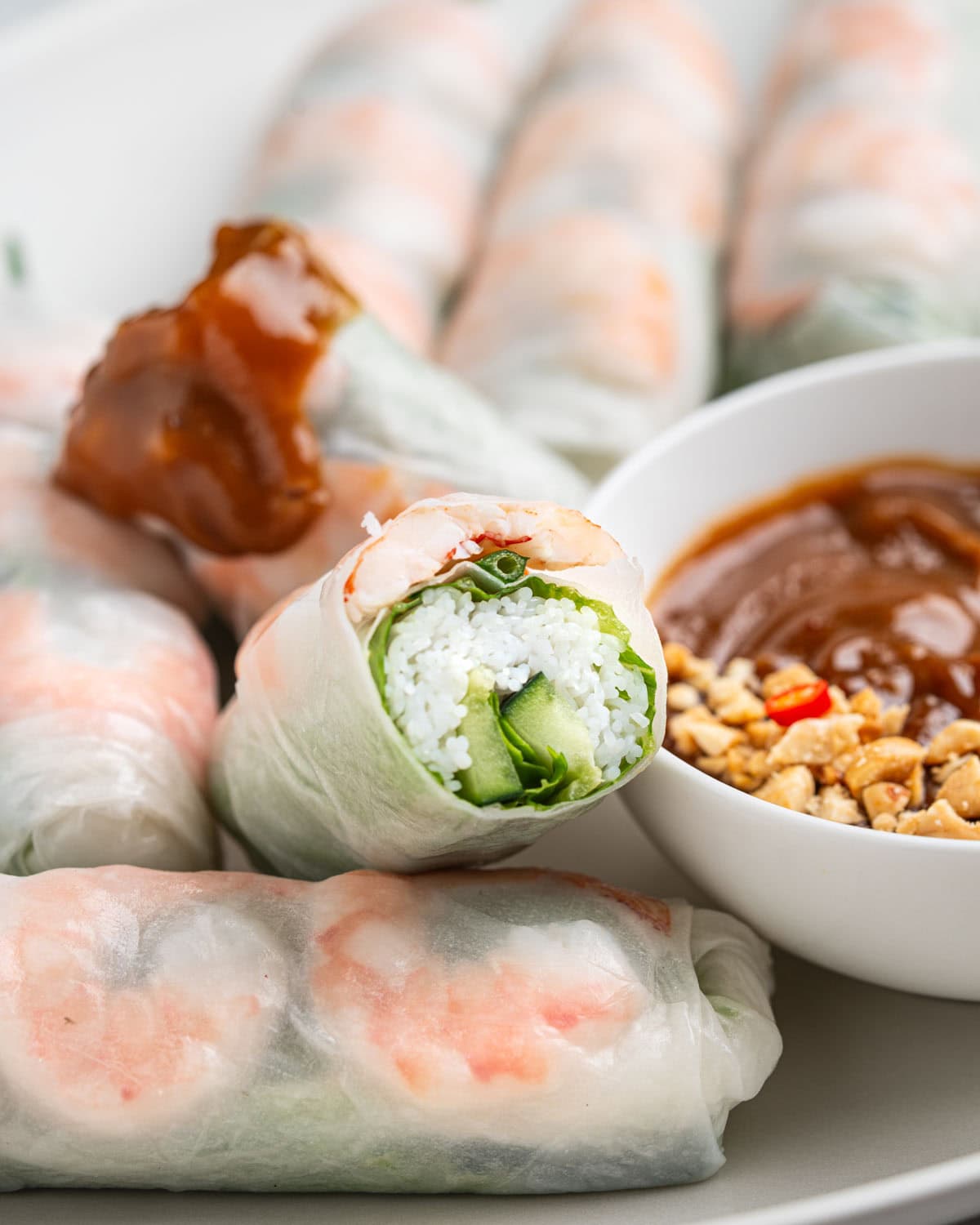
The rice paper stays soft and slightly chewy, and you can actually see the fillings through the wrapper. Each bite is a mix of textures: tender shrimp, juicy pork, soft noodles, and crunchy herbs.
They’re not fried, which is what makes them feel light and refreshing compared to cha gio (Vietnamese egg rolls). Everything is layered and rolled tightly, so you get a little bit of everything in each bite.
Why You’ll Love This Recipe
- Fresh, light, and packed with flavor
- No cooking required once ingredients are prepped
- Easy to customize with what you have
- Great for meal prep or gatherings
- Works with peanut sauce or fish sauce (nuoc cham)
Rice Paper: What to Look For
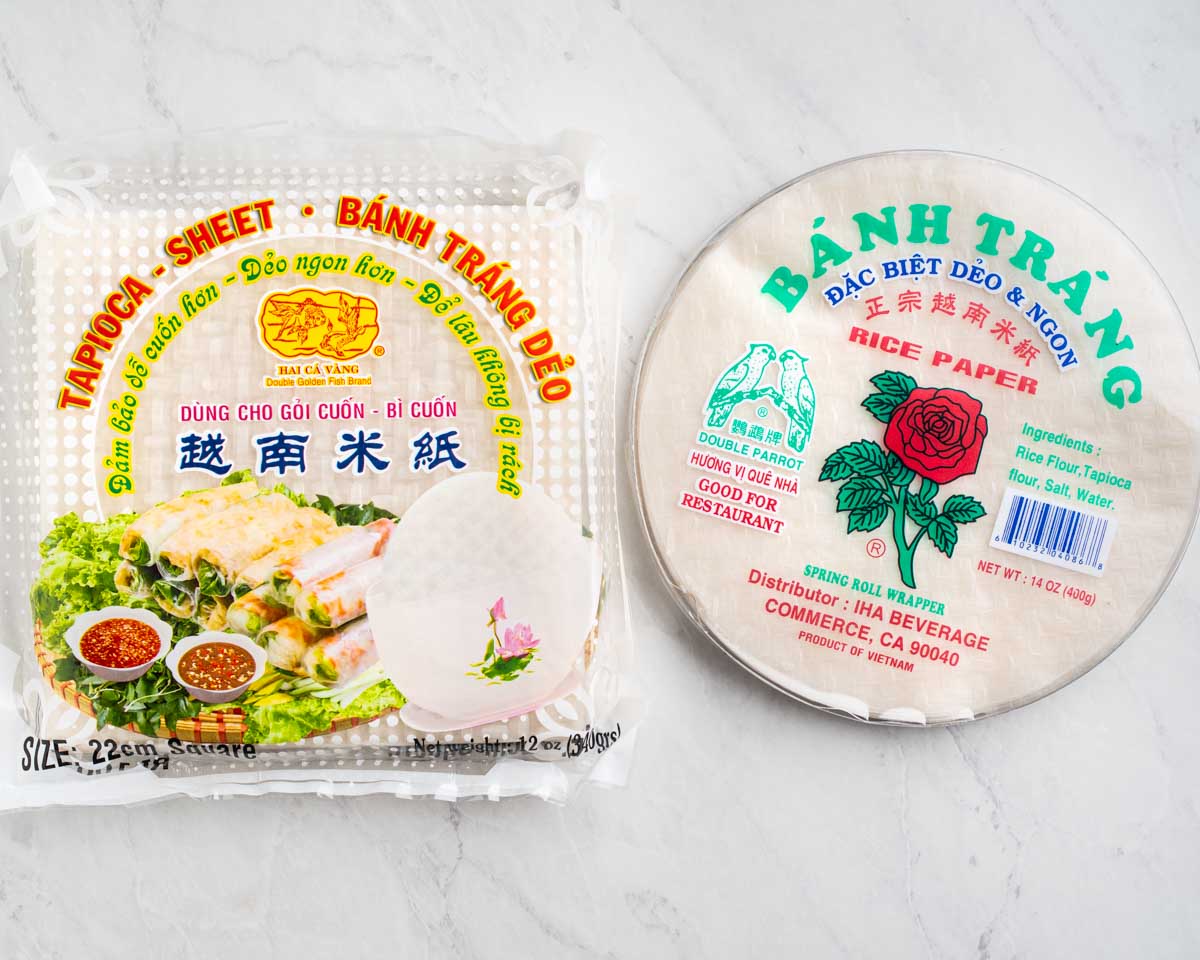
There are two common shapes you’ll see: round and square. Either works. It mostly comes down to what you find easier to roll.
Look for size 22 rice paper with ingredients that include rice flour and tapioca flour. The tapioca is important because it adds elasticity, which makes the rice paper easier to roll without tearing.
Each sheet has two sides. One smooth and one slightly bumpy. Place the bumpy side facing up when assembling.
When softening the rice paper, use cold or lukewarm water. Avoid hot water. Dip it just until it’s lightly wet. It will continue to soften as you work. If it’s too wet, it will tear more easily.
Fillings and How to Choose Them
This is where you can really make it your own.
Protein
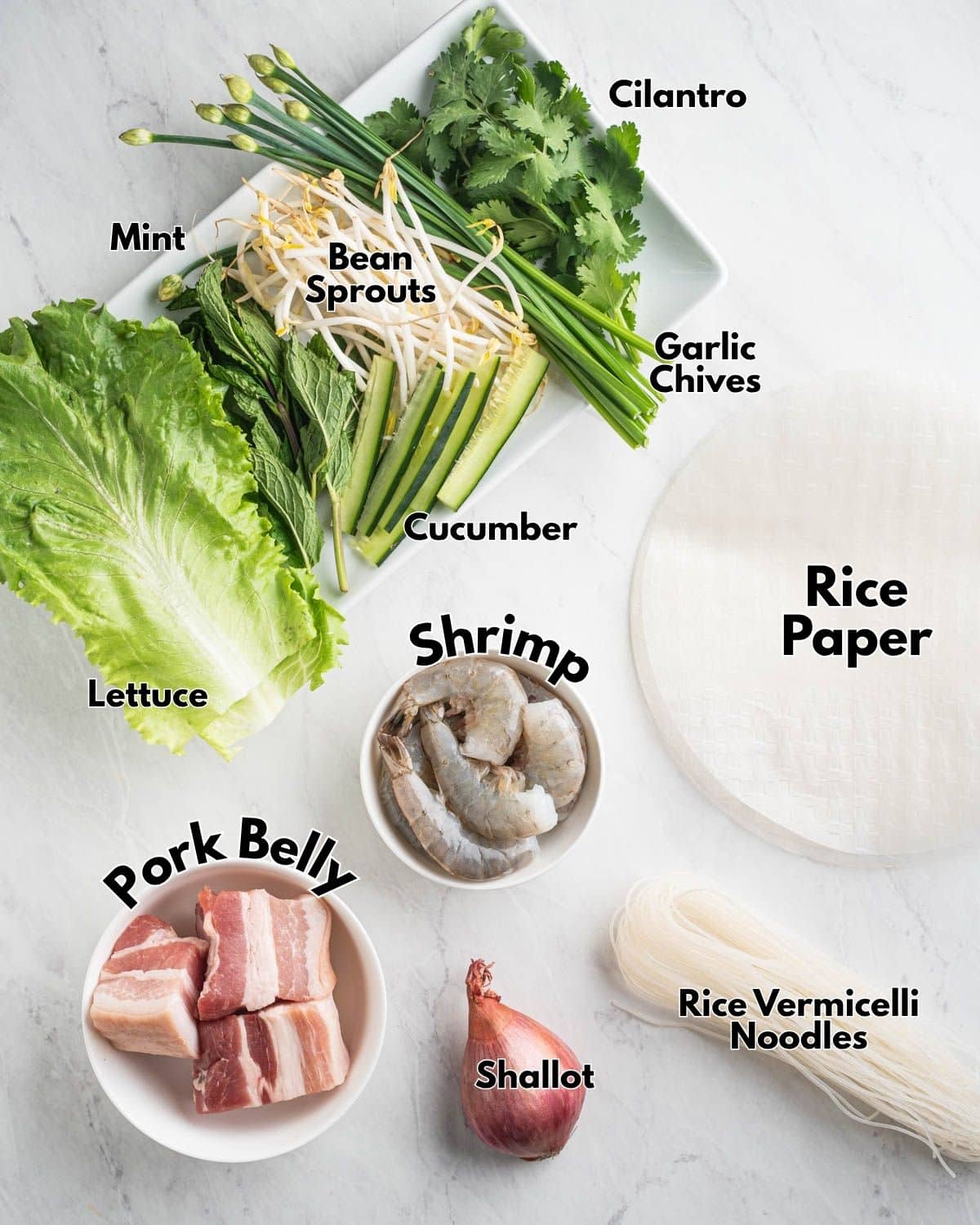
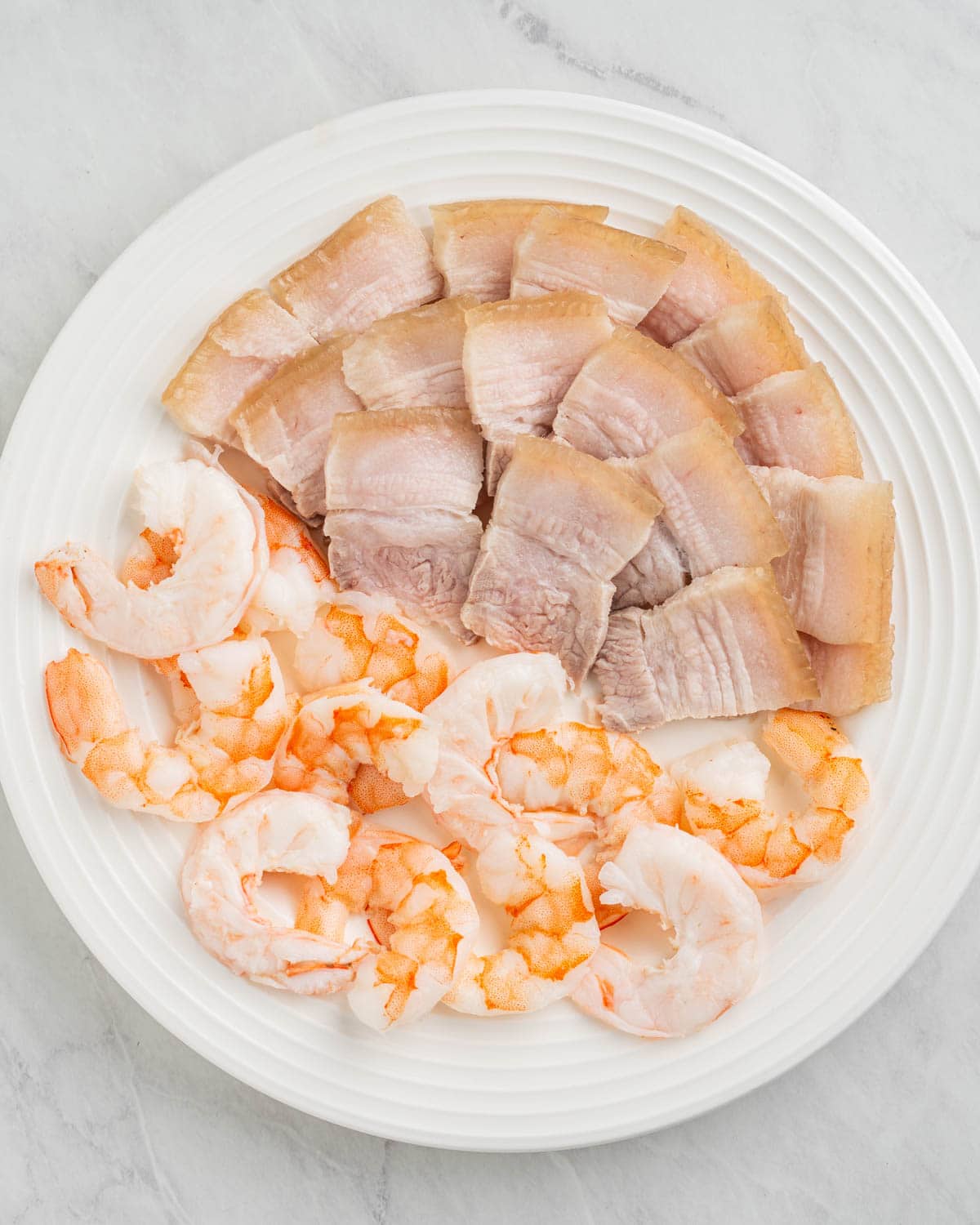
The traditional combination is shrimp and pork. Pork belly or pork shoulder both work. Slice the pork thin after cooking. Let it cool first so it’s easier to cut.
For shrimp, cooking them with the shell on helps them hold their shape and look better through the rice paper. Remove the shells and slice them in half lengthwise for that classic look.
You can also use grilled chicken or pork, fried tofu, or fish.
Noodles
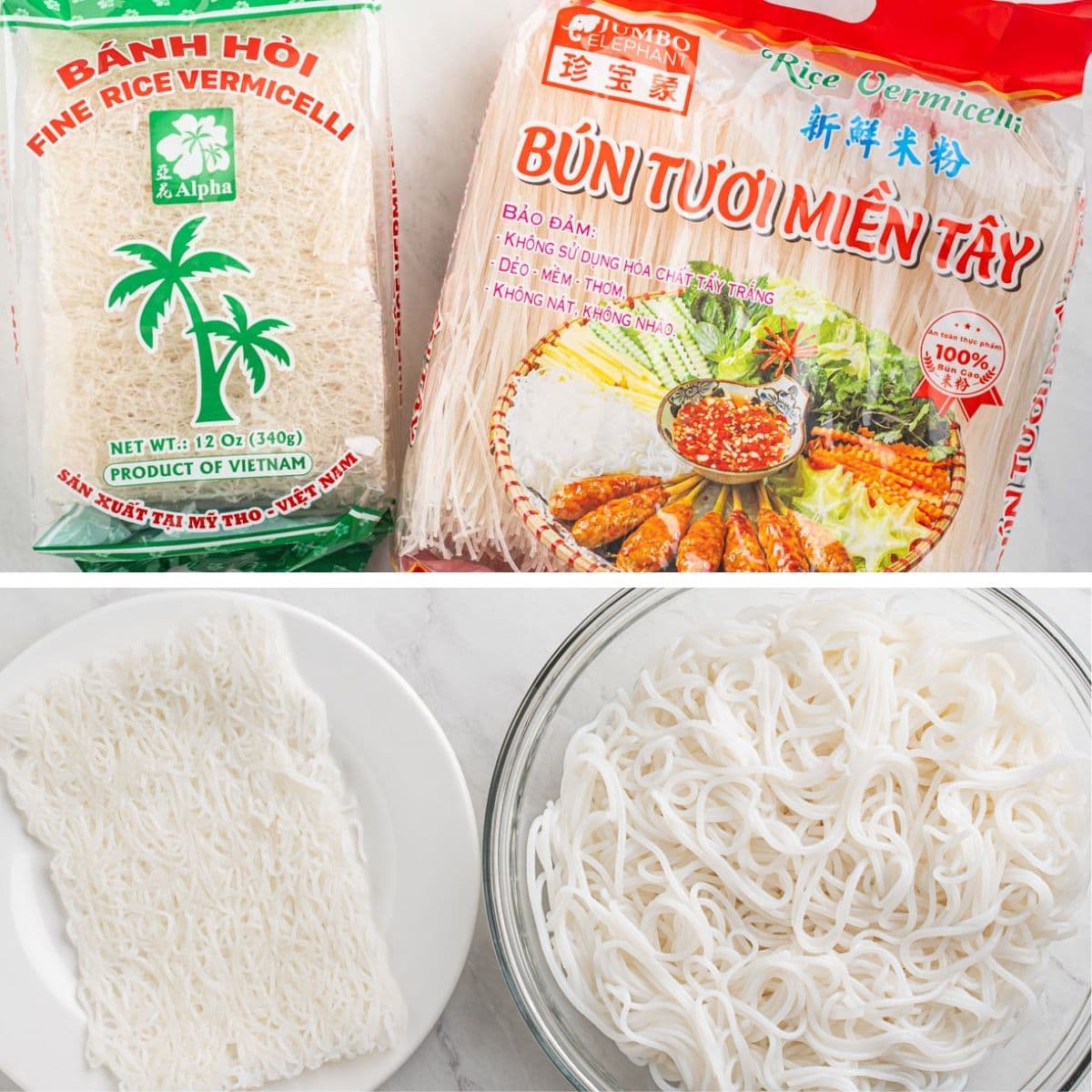
Use thin rice vermicelli, often labeled as bun tuoi. These are soft, light, and easy to work with. If you’re not sure how to prep them, you can follow my how to cook rice noodles guide for the best texture.
You can also use banh hoi, which I personally love for spring rolls. It comes in woven sheets that hold together, so you don’t have to deal with loose noodles. I usually use one portion per roll. Just cook it in boiling water until tender, then rinse with cold water to stop the cooking. After that, brush a thin layer of oil between each layer so it doesn’t stick. You can fold it or cut it to size, which makes rolling a lot easier and keeps everything neat.
Herbs and Vegetables
This is where you can make it your own.
Common options include:
- Lettuce (butter, red leaf, or green leaf)
- Mint
- Cilantro
- Perilla
- Bean sprouts
- Cucumber
- Carrots (optional)
- Garlic chives or chives
You don’t need to use everything. Just pick what you like or what you have.
A quick tip for lettuce: break off the thick stem or bend it a few times so it doesn’t poke through and tear the rice paper.
How to Make Spring Rolls
Start by prepping everything first. Cook and slice your proteins, cook the noodles, and wash and dry your herbs.
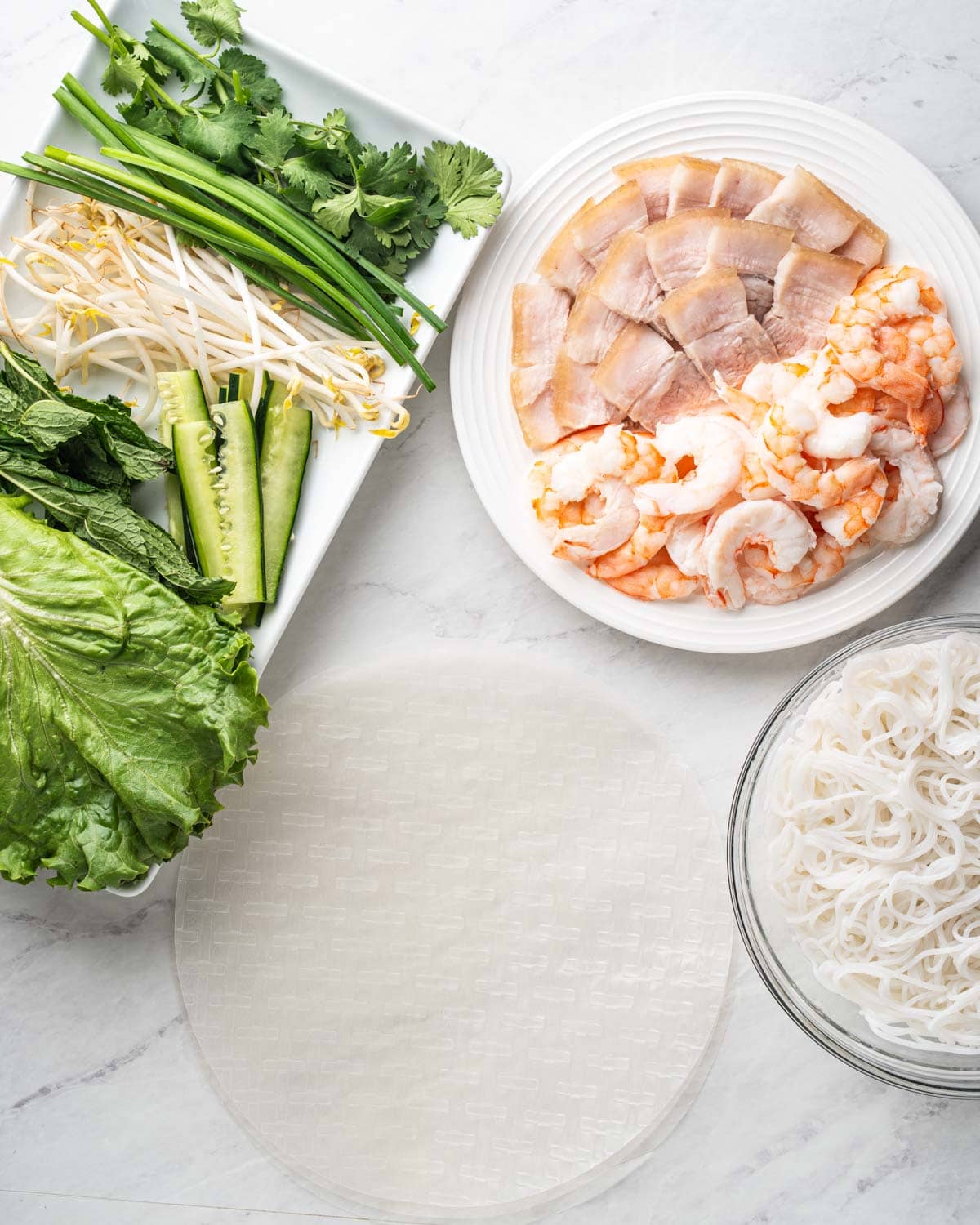
Dip one sheet of rice paper into water until just lightly wet, then place it on a flat surface with the bumpy side facing up.
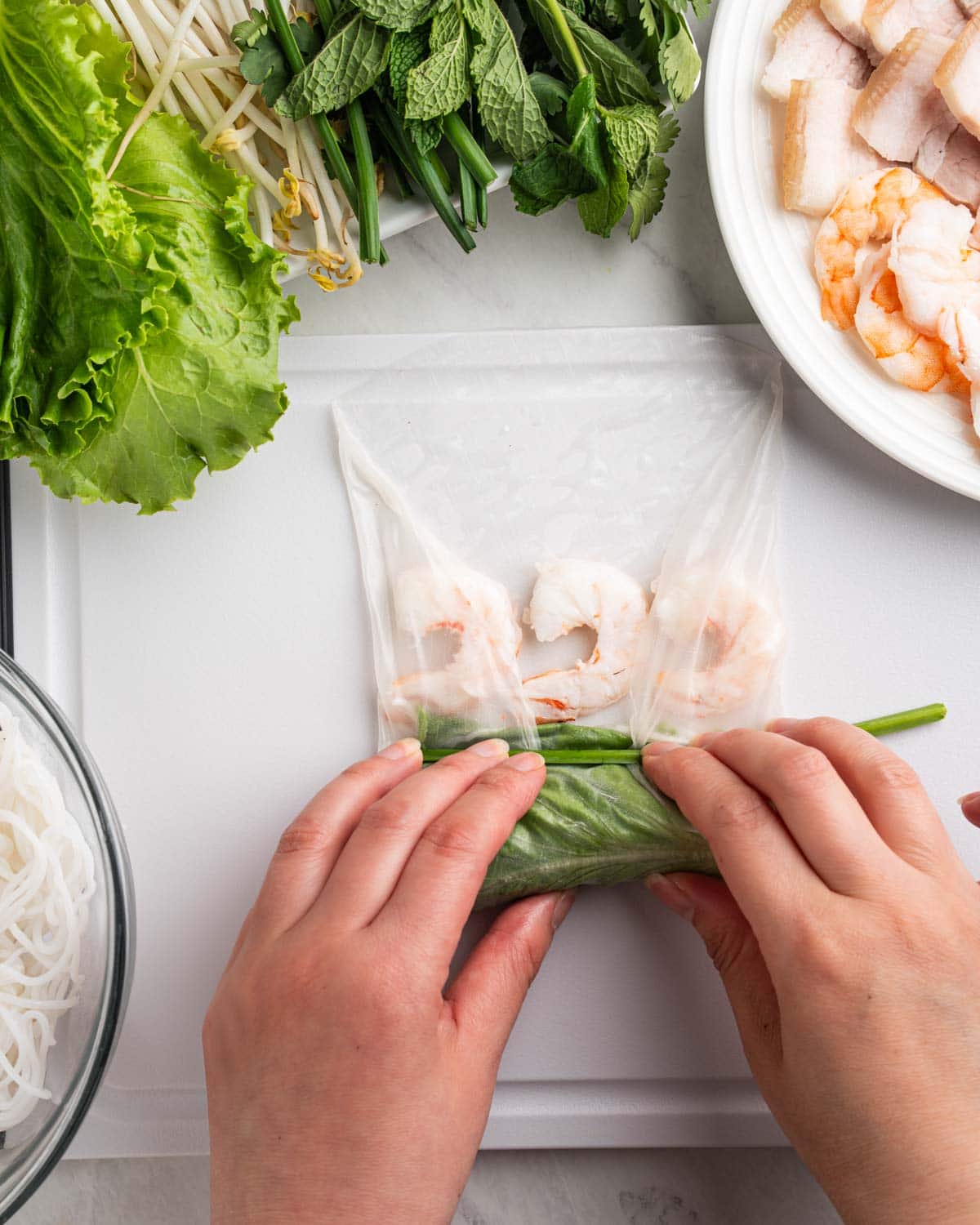
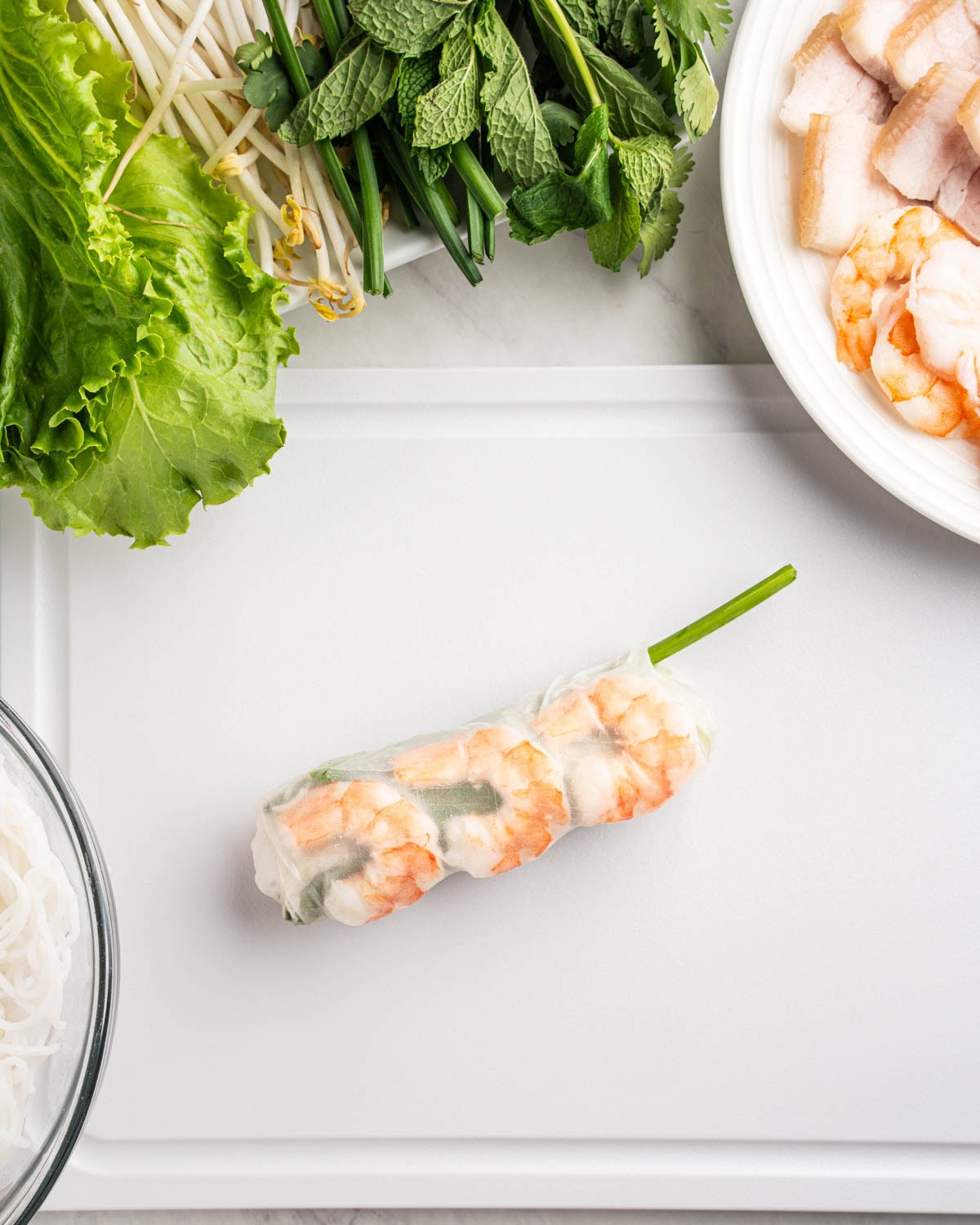
Layer your fillings starting with lettuce, then noodles, herbs, and protein. Place shrimp cut-side down near the edge if you want them visible through the roll.
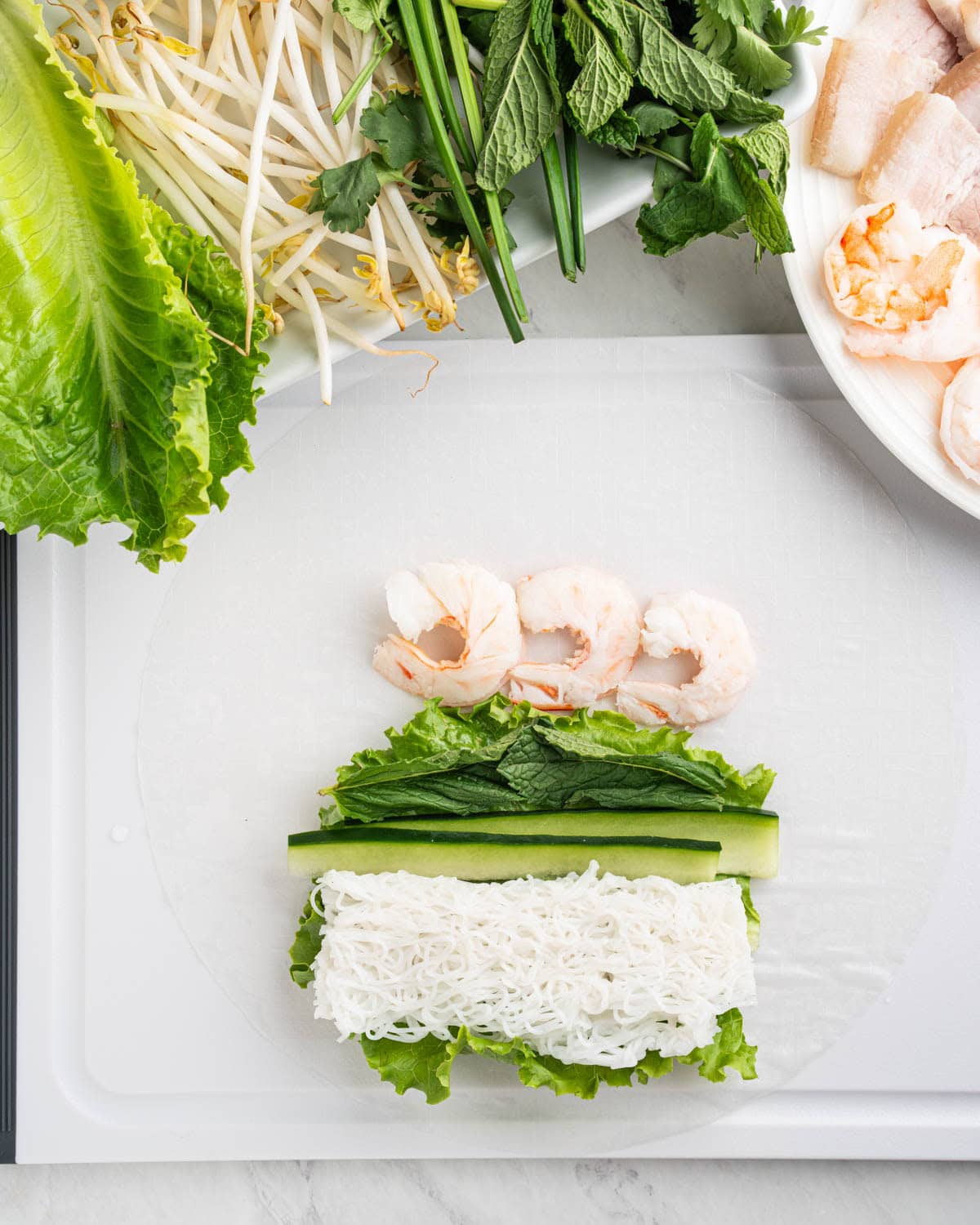
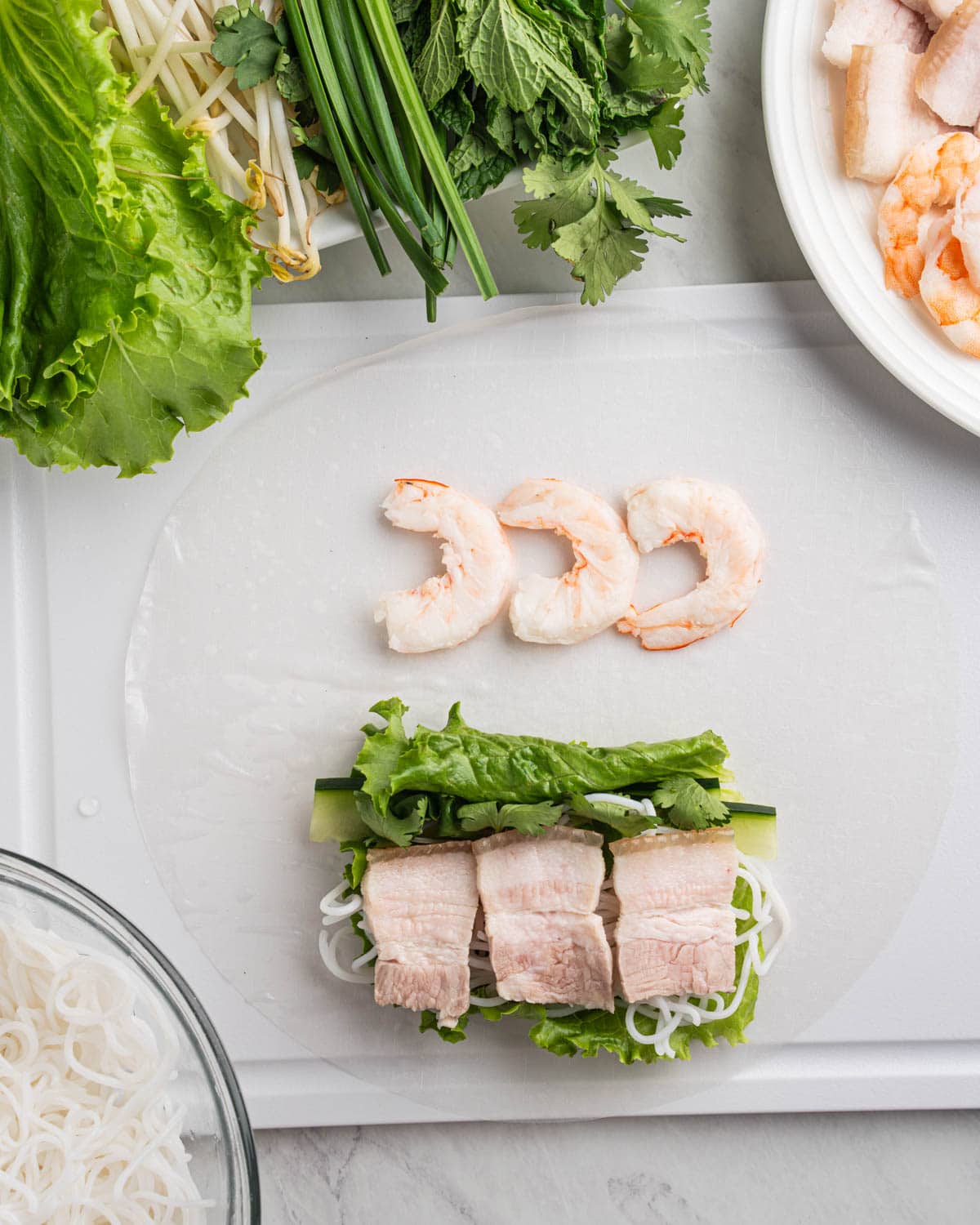
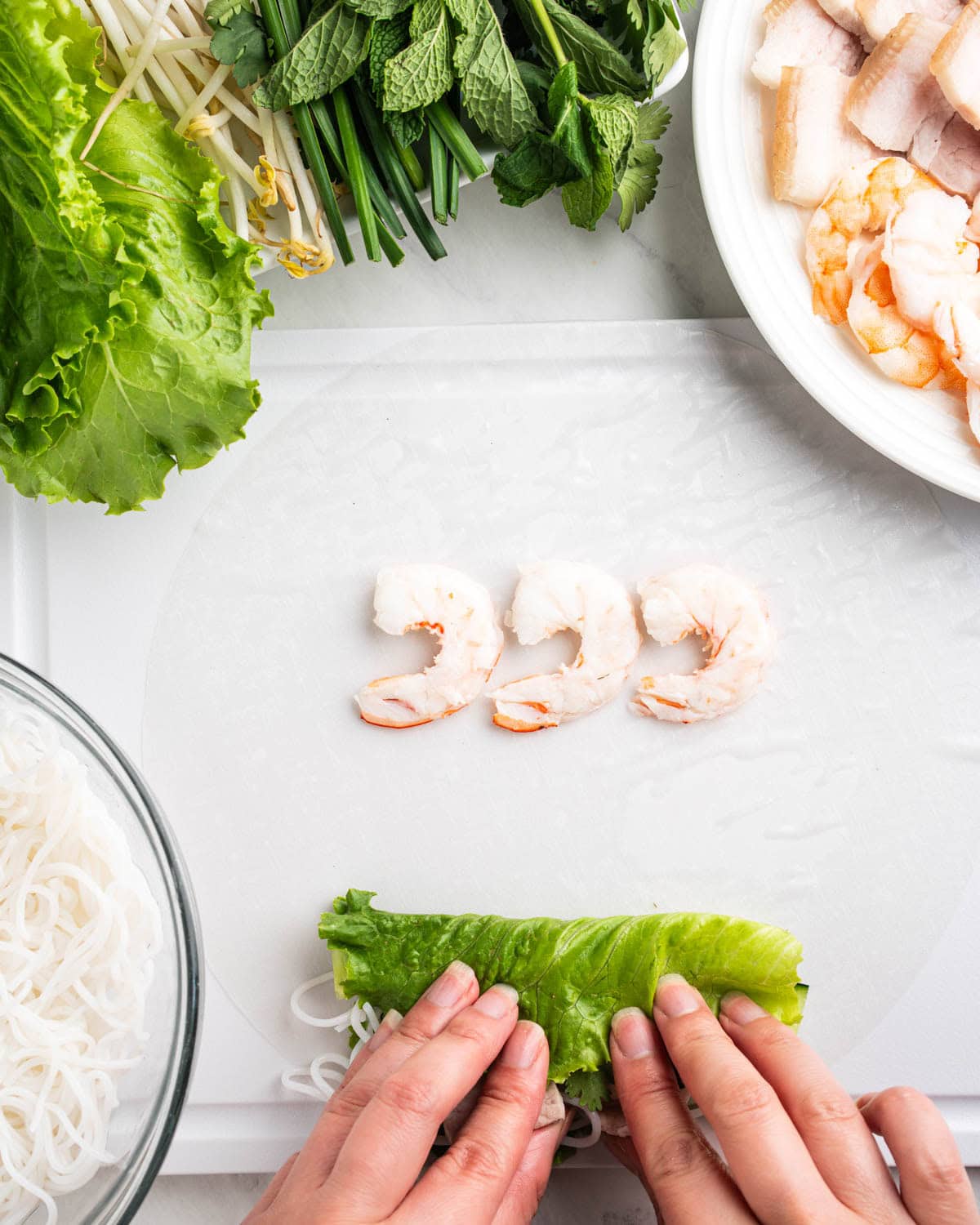
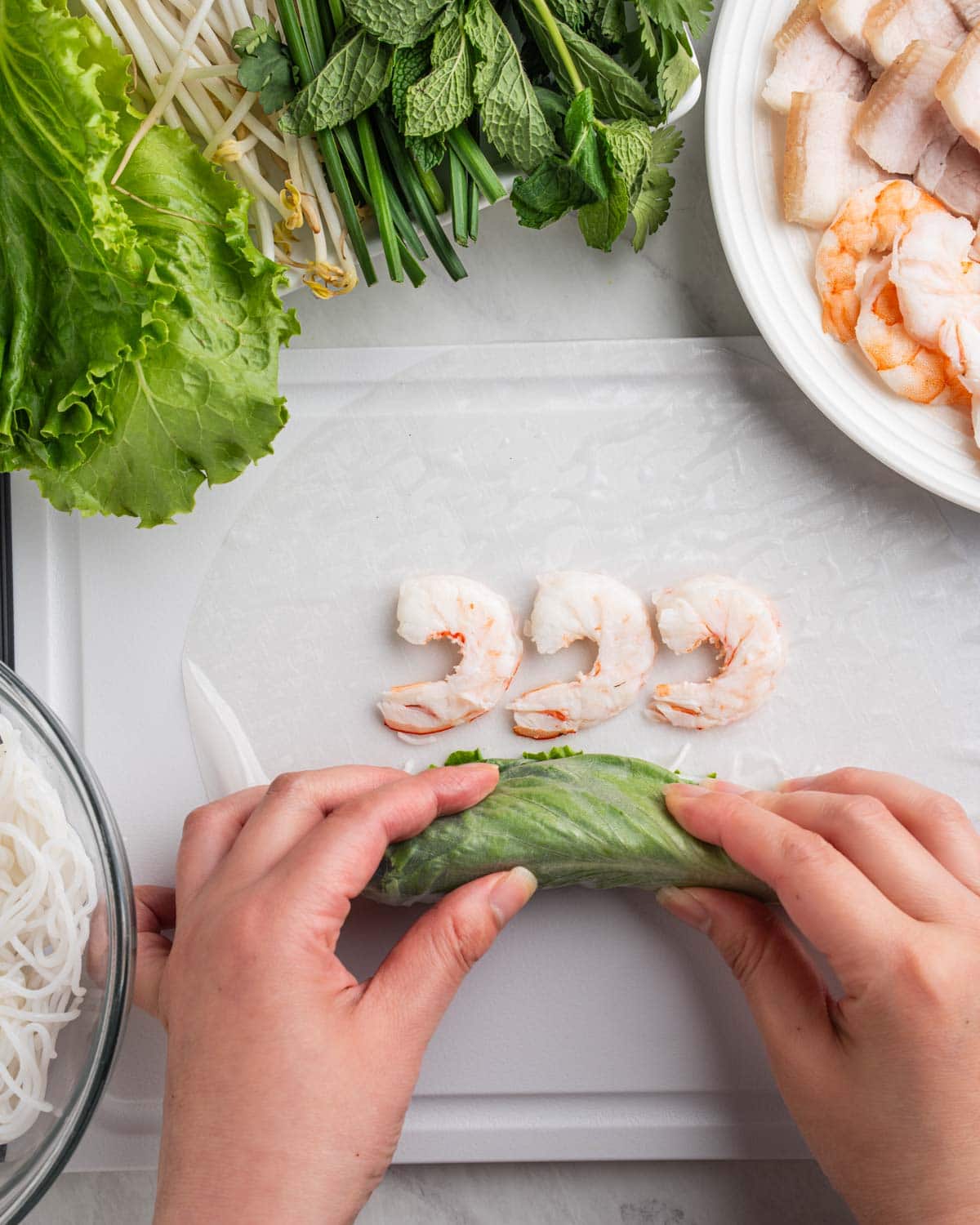
Fold the bottom up over the filling, then fold in the sides. Roll tightly, keeping everything compact as you go.
It might feel awkward at first, but after a few rolls, it gets much easier.
How to Serve
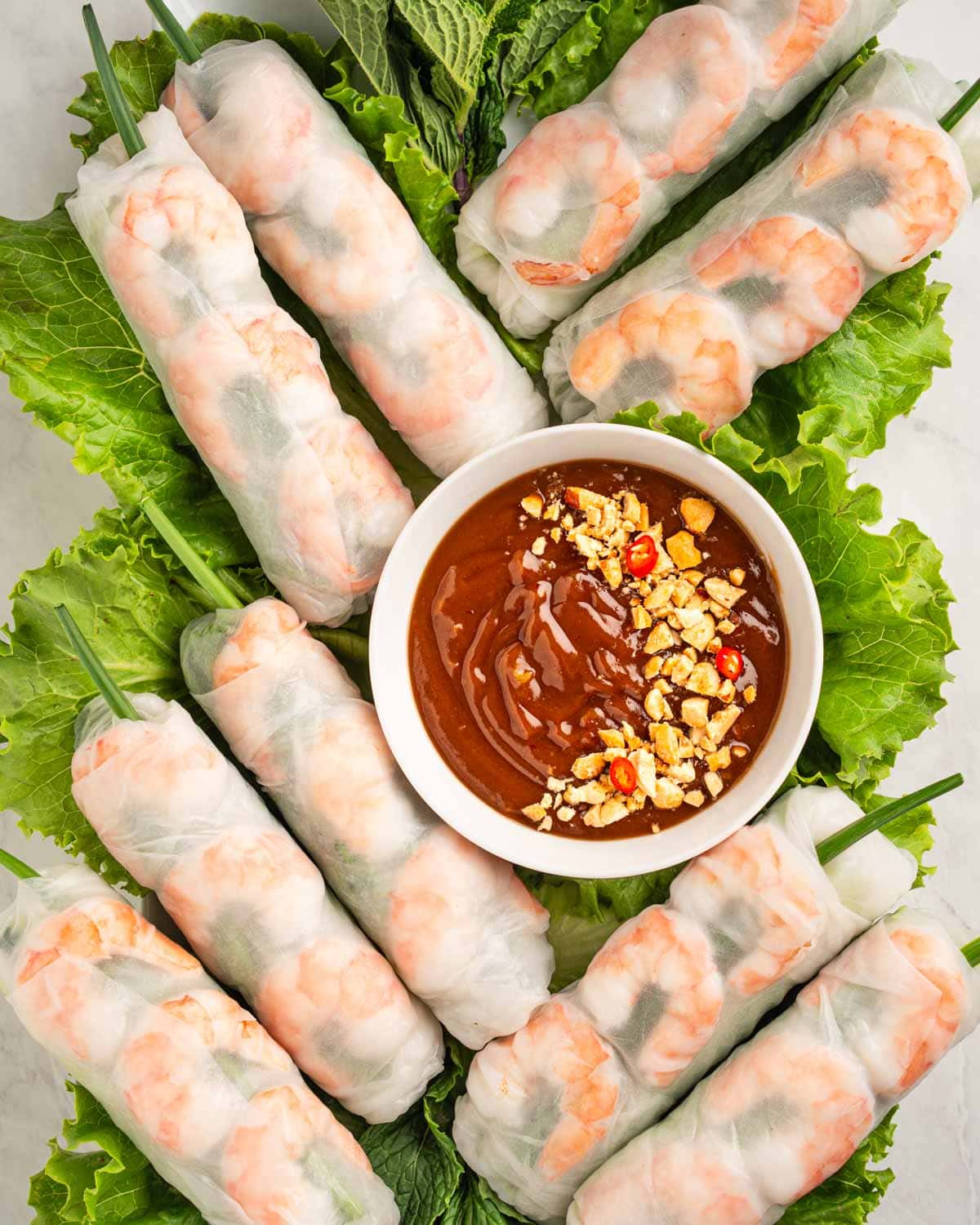
Spring rolls are best served fresh, right after rolling.
Serve with:
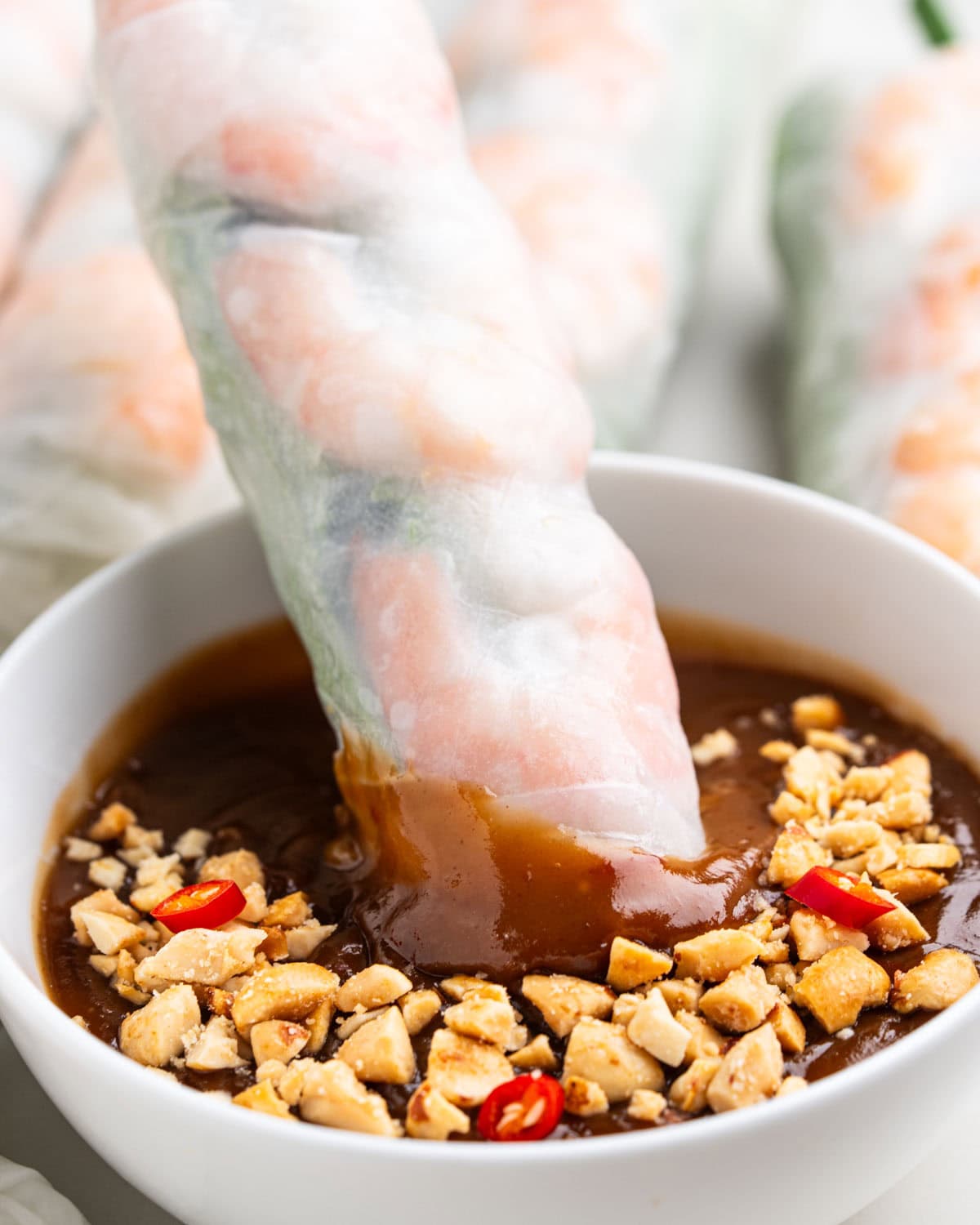
- Vietnamese peanut sauce for something rich and creamy
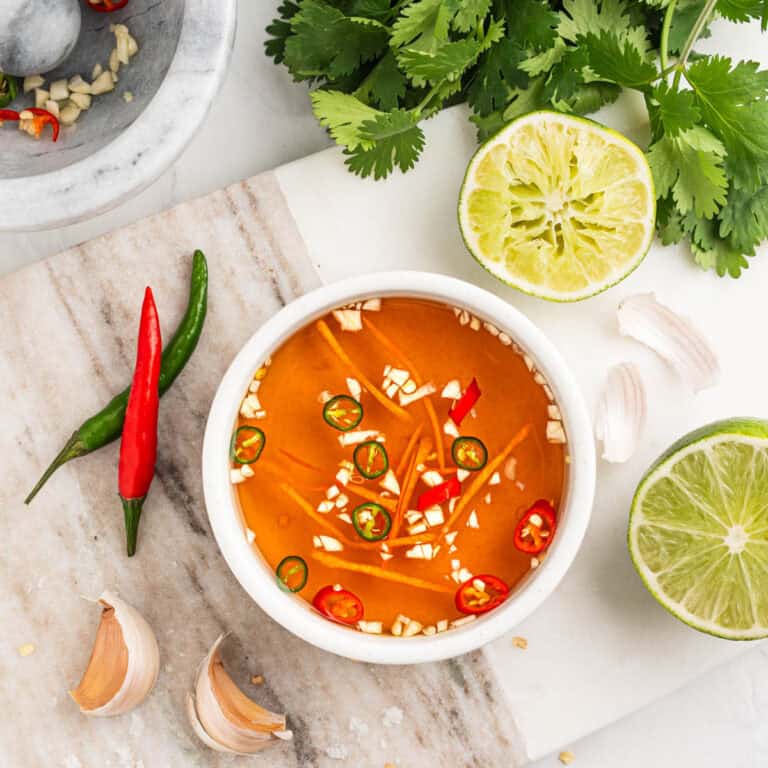
- Nuoc cham (fish sauce dip) for a lighter, tangy option
They’re great as an appetizer, snack, or served alongside Vietnamese dishes like bun thit nuong, pho, bun rieu, or crispy dishes like banh xeo and banh khot.
Make Ahead and Storage Tips
Spring rolls are best eaten the same day, especially right after rolling when the rice paper is soft and fresh.
If you’re making them for a party, you can prep them a few hours ahead. Cover the rolls with a damp towel or wrap each one individually in plastic wrap to keep the rice paper from drying out.
For longer storage, wrap each roll individually so they don’t stick together and store them in the fridge for up to 1 to 2 days. Before serving, let them sit at room temperature for about 20 to 30 minutes with a damp paper towel on top so the rice paper softens again.
Make this Tonight!
Once you get the hang of rolling, spring rolls are one of those recipes you’ll come back to often. They’re simple, flexible, and easy to adjust based on what you have.
If you make them, leave a comment and let me know what fillings you used. And don’t forget to save it on Pinterest so you can come back to it later.
RECIPE

Vietnamese Spring Rolls (Gỏi Cuốn)
Ingredients
For the Rolls
- 12 rice paper (size 22, round or square)
- ½ pound shrimp, shell on and deveined
- ½ pound pork belly or pork shoulder
- 1-2 shallots, halved
- 1-2 teaspoons salt
- rice vermicelli noodles (bun tuoi)
- leaf lettuce, washed and torn
- mint, cilantro, perilla (optional)
- bean sprouts
- cucumbers, julienned
- garlic chives or chives
For Serving
- Peanut sauce or nuoc cham
Instructions
Cook Noodles, Pork, and Shrimp
- Cook the rice vermicelli noodles according to package instructions. Rinse with cold water to stop the cooking, then drain well.
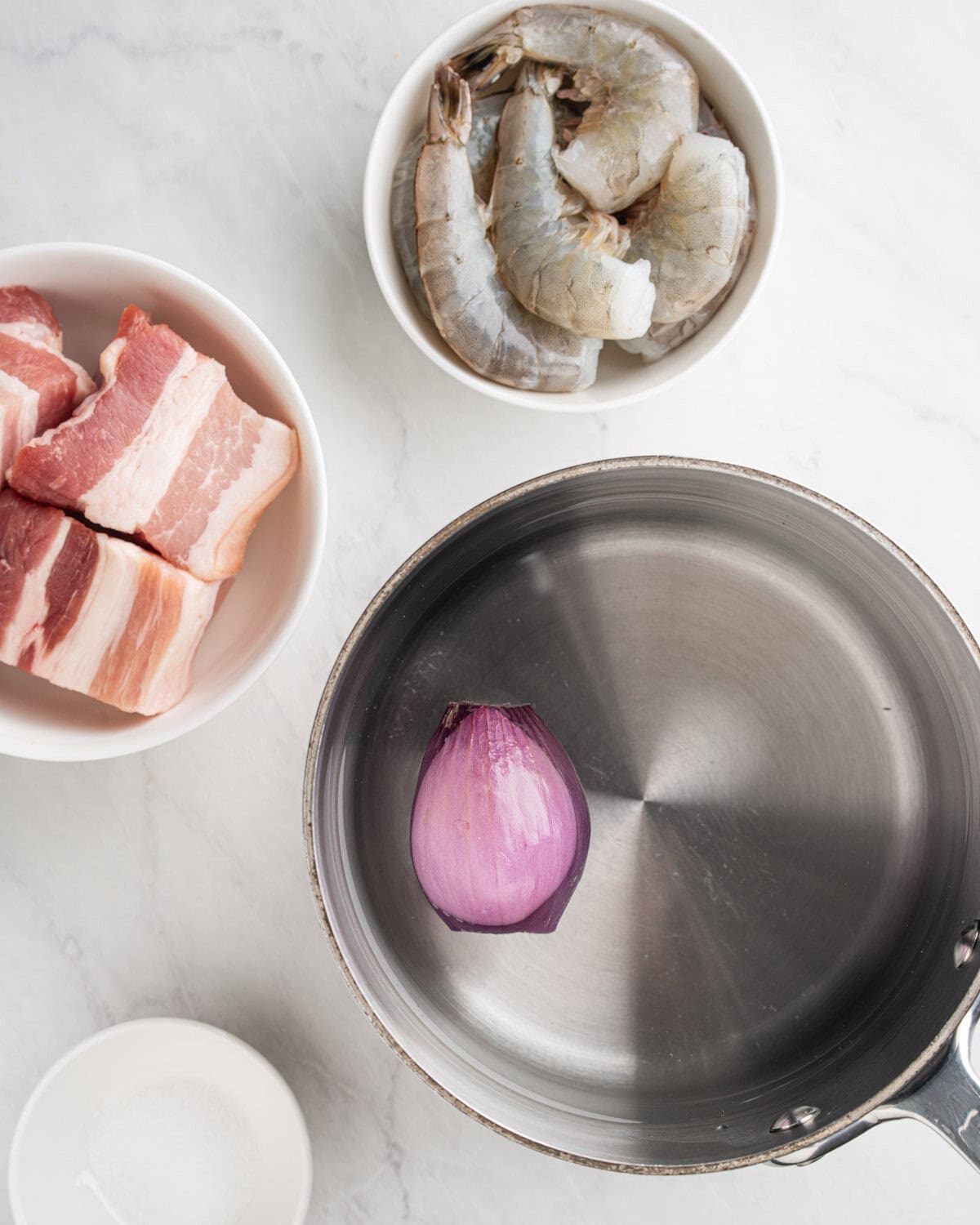
- In a pot, bring water to a boil and add sliced shallots and salt. This lightly seasons the water and adds more flavor to the pork and shrimp.
- Add the pork and cook until fully cooked, about 10 to 15 minutes depending on thickness. Remove and let it cool completely before slicing thin. It’s much easier to slice once cooled.
- In the same pot, add the shrimp and cook just until pink and opaque, about 2 to 3 minutes. Drain and let cool, then slice each shrimp in half lengthwise. Keeping the shell on while cooking helps the shrimp hold its shape and look better in the rolls.
Wrap the Rolls
- Fill a shallow plate or pan with cold or lukewarm water. Dip one sheet of rice paper briefly until just lightly wet. It will continue to soften as you work.
- Lay the rice paper on a clean surface with the bumpy side facing up.
- Place a piece of lettuce on the lower third, followed by a small amount of noodles, pork, herbs, and vegetables. Place shrimp cut-side down near the edge if you want them visible through the wrapper.
- Fold the bottom edge over the filling, then fold in the sides and roll tightly to seal. Keep the roll snug so it holds together well.
- Repeat with the remaining ingredients.
Serve
- Serve immediately with peanut sauce or nuoc cham.
Notes
- Cooking the pork and shrimp with shallots and salt adds a subtle layer of flavor without extra work.
- Let the pork cool before slicing so you can get thin, clean pieces.
- Don’t over-soak the rice paper. It should feel slightly firm when you start rolling.
- For best texture and appearance, keep your fillings balanced and not overstuffed.
- These are best eaten fresh, but can be wrapped individually if making ahead.