Bánh Bèo (Vietnamese Steamed Rice Cakes)


Bánh bèo are soft, slightly chewy Vietnamese steamed rice cakes topped with savory dried shrimp, creamy mung beans, scallion oil, and a sweet and salty fish sauce. They take a little time to prepare because each cake is steamed in a small dish, but the batter is simple and most of the toppings can be made ahead.
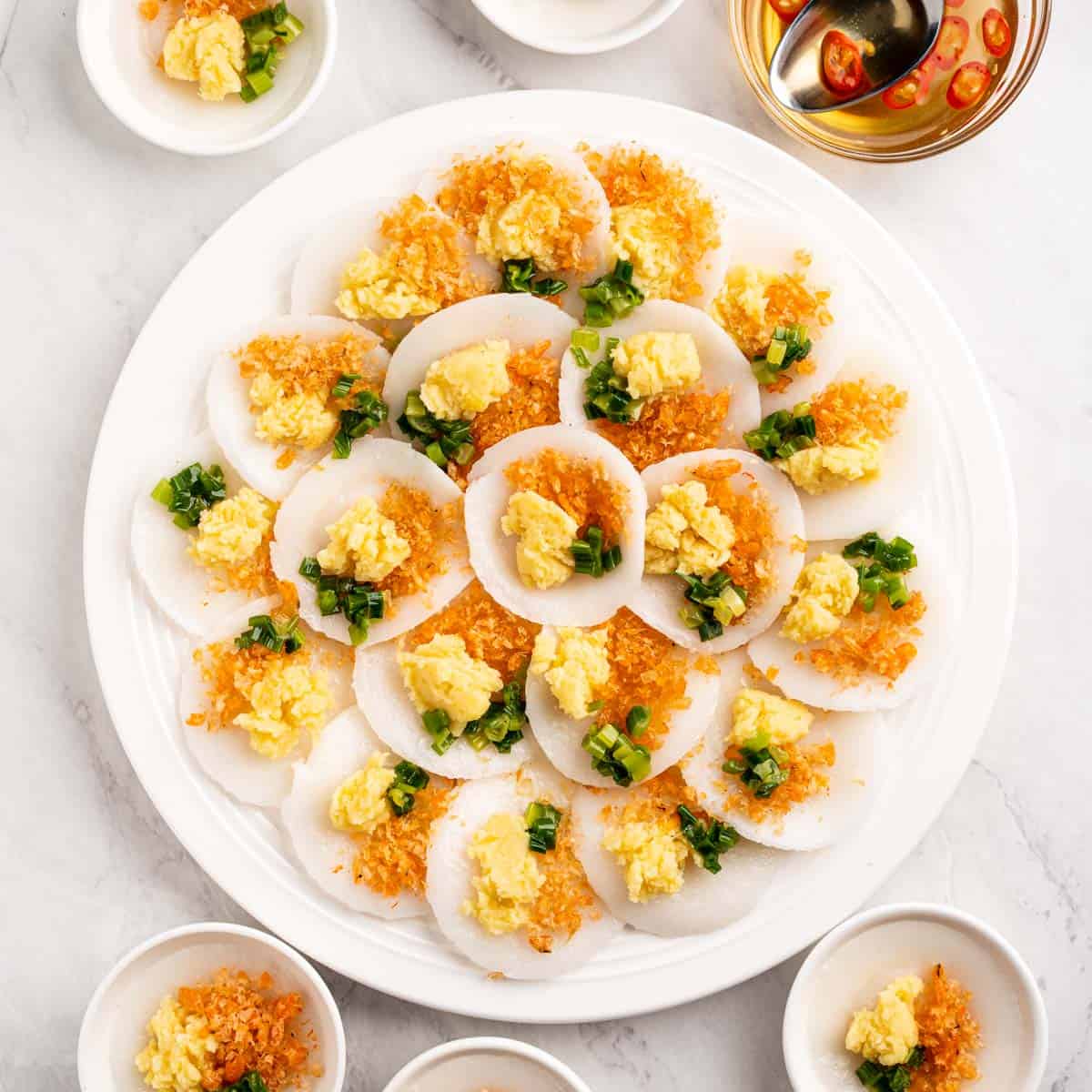
These small rice cakes are a popular dish from Central Vietnam, particularly in Hue, and are usually served right in the shallow dishes they’re steamed in. The rice cake itself has a mild flavor, so the shrimp, mung beans, scallion oil, and dipping sauce are what give the dish most of its flavor.
I like making the mung beans and shrimp ahead of time. Then when I’m ready to serve, I only need to steam the rice cakes and add the toppings.
You can also serve these with Vietnamese Egg Rolls or Vietnamese Shrimp Toast if you want another Vietnamese appetizer on the side.
What Are Vietnamese Steamed Rice Cakes?
Banh beo are small steamed rice cakes made from a thin batter of rice flour, tapioca flour, water, and salt.
They’re traditionally steamed in small shallow dishes, then topped with dried shrimp, mung beans, scallion oil, and sometimes something crispy such as fried shallots or pork cracklings.
To eat them, drizzle a little Vietnamese dipping sauce (nuoc cham) over the top and use a spoon to loosen the rice cake from the dish.

Before You Start
Rice flour: Use regular rice flour, not glutinous or sweet rice flour. Glutinous rice flour will give you a much stickier texture and isn’t interchangeable here.
Tapioca flour: A small amount gives the rice cakes their slight chewiness without making them overly bouncy.
Dried shrimp: Soaking rehydrates the shrimp before they’re chopped and cooked until dry and crumbly.
Split mung beans: Use peeled split mung beans. They cook until soft and are mashed into a smooth topping.
Small bowls or saucers: Shallow dishes around 3 inches wide work well. The size and depth of your dishes can affect the steaming time, so use the texture of the cakes as your final guide.
Steamer: A bamboo steamer, metal steamer, or large pot with a steaming rack will work. An idli stand is also useful because you can steam several small cakes at once.

Please scroll ⬇️ to the recipe card for the full ingredient amounts and instructions.
How to Make Banh Beo
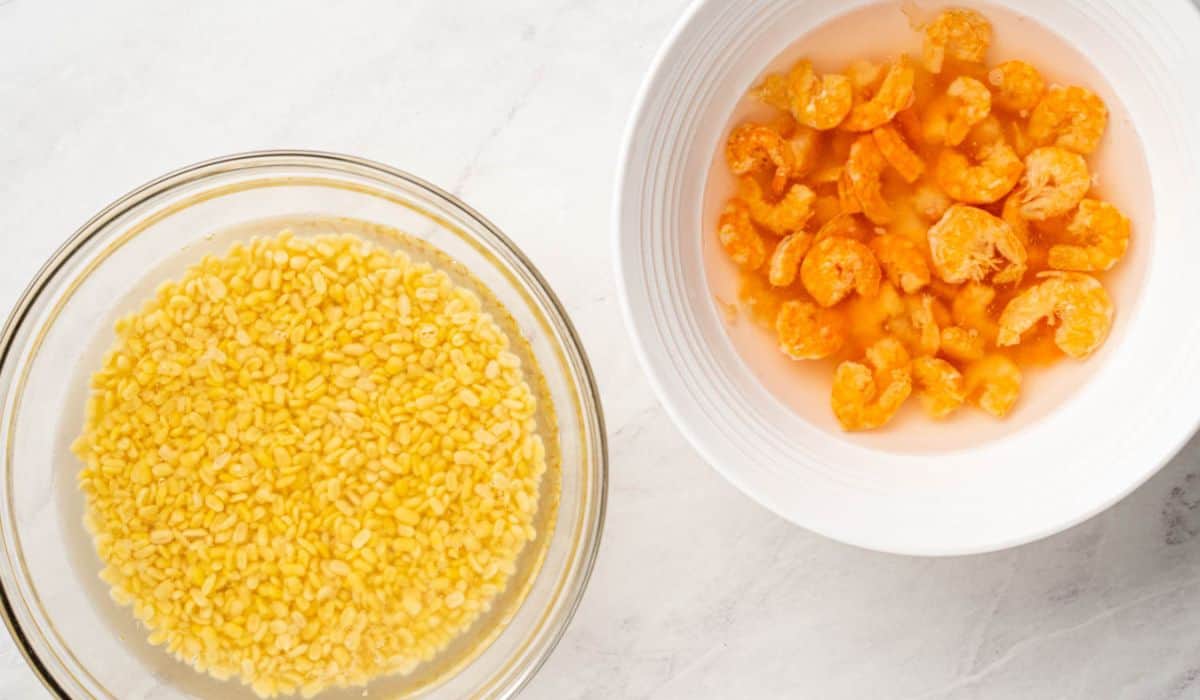
Start by preparing the toppings since the mung beans and dried shrimp need a little extra time. The mung beans should cook until very soft so they mash easily, while the dried shrimp should be cooked until dry and crumbly. You can make both of these ahead of time if you want to make the steaming process easier later.


Next, whisk together the rice flour, tapioca flour, salt, and water until the batter is smooth. It will look thin and pourable, which is what you want. Let it rest for about 30 minutes so the flour has time to hydrate.
While the batter rests, lightly oil the small bowls or saucers. This makes the rice cakes much easier to loosen after steaming.
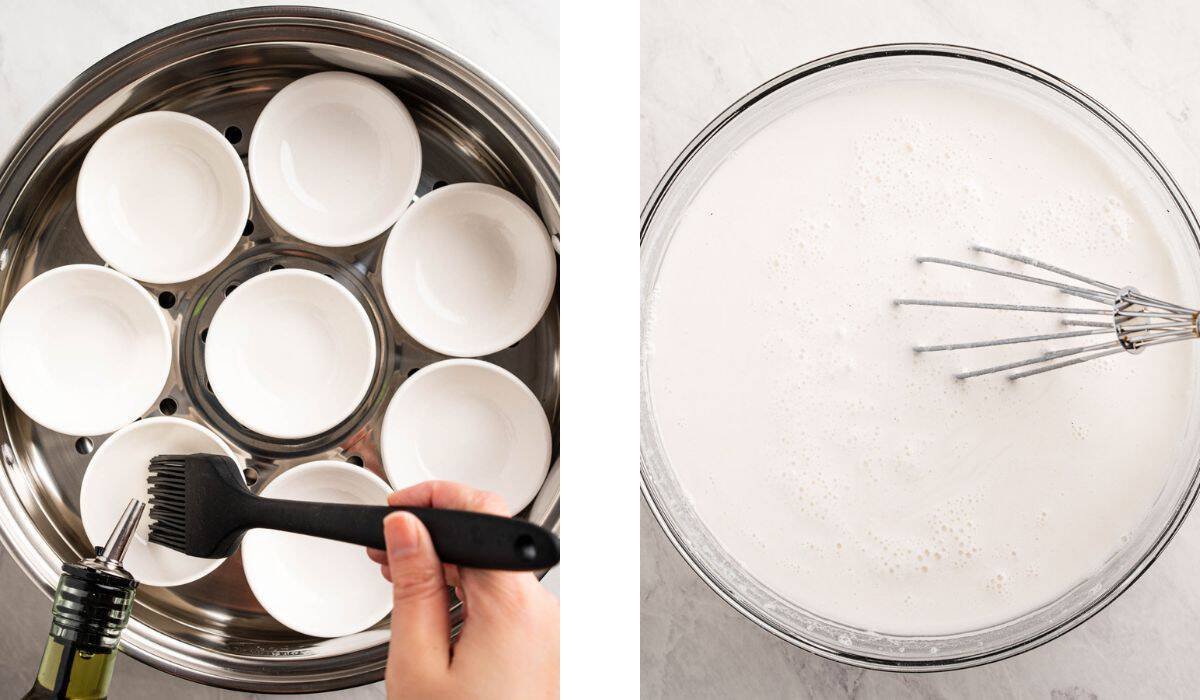
When you’re ready to cook, bring the water in your steamer to a steady boil. Stir the batter well before pouring because the rice flour will settle at the bottom as it sits.
Pour about 1 tablespoon of batter into each dish. You only need a thin layer. If the bowls are filled too deeply, the cakes will take longer to cook and won’t have the same delicate texture.
Steam for about 6–8 minutes. The cakes are ready when they look opaque and set with a smooth, slightly shiny surface. If the center still looks wet, give them another minute or two.

If you’re steaming in batches, stir the batter again before each one so the flour stays evenly distributed. Also make sure there’s enough space around the bowls for the steam to circulate.
While the cakes are steaming, make the scallion oil and dipping sauce. The scallion oil only needs a couple of minutes, just until the green onions soften and become fragrant.
Once the rice cakes are cool enough to handle, add the mashed mung beans, dried shrimp, and scallion oil on top. Serve them warm with Vietnamese dipping sauce on the side.

Tips for Better Rice Cakes
✔️ Use regular rice flour. Do not substitute glutinous or sweet rice flour.
✔️ Let the batter rest. About 30 minutes gives the flour time to hydrate and helps the cakes cook more evenly.
✔️ Stir before every batch. Rice flour settles quickly, so the batter needs to be mixed again before you pour it into the dishes.
✔️ Oil the dishes lightly. This makes the rice cakes much easier to loosen with a spoon.
✔️ Keep condensation off the cakes. Wrapping the steamer lid with a clean towel helps prevent water from dripping onto the surface.
✔️ Watch the texture, not just the timer. Different dishes may need slightly different steaming times. The cakes should be set, opaque, and slightly springy.
✔️ Don’t overfill the dishes. A thin layer of batter gives you the soft, delicate texture you want.

What If the Rice Cakes Don’t Set?
If the centers still look wet or very soft after the suggested steaming time, give them another minute or two.
Thicker dishes or a deeper layer of batter can take longer to cook.
Also make sure the steamer has enough heat and steam before adding the batter. The water should already be simmering when the bowls go in.
Can I Make Them Ahead?
Yes. Most of the components can be prepared ahead of time.
The mung bean topping, dried shrimp, scallion oil, and dipping sauce can all be stored separately in the refrigerator.
You can also steam the rice cakes a few hours before serving and keep them covered so they don’t dry out. Warm them briefly by steaming again before adding the toppings.

How to Serve Vietnamese Steamed Rice Cakes
These are best served warm with the toppings and Vietnamese dipping sauce and scallion oil spooned over the top.
You can serve them with Vietnamese Egg Rolls or Vietnamese Shrimp Toast if you want another Vietnamese appetizer on the side.
Mini Vietnamese Savory Pancakes (Banh Khot) are another good option and have a crispier texture, while Vietnamese Steamed Pork Buns (Banh Bao) are softer and more filling.
For dessert, Vietnamese Fruit Cocktail (Che Thai) is a light, refreshing option.

Storage and Reheating
Store the rice cakes and toppings separately in airtight containers in the refrigerator for up to 3 days.
For the best texture, reheat the rice cakes in a steamer for a few minutes until warm and soft again. You can also microwave them briefly, but steaming keeps them from drying out.
Add the shrimp, mung beans, scallion oil, and dipping sauce after reheating.
If you make these Vietnamese Steamed Rice Cakes, I’d love to hear how they turned out! Leave a comment and rating below.
RECIPE

Bánh Bèo (Vietnamese Steamed Rice Cakes)
Equipment
- Steamer
- Small shallow bowls or saucers, about 3 inches wide
- Mixing Bowl
- Whisk
- Food Processor optional
- Idli stand, optional
Ingredients
Rice Cake Batter
- 2 cups rice flour
- 3 tablespoons tapioca flour
- 1 teaspoon salt
- 4 cups water
- 2 tablespoons vegetable oil
Toppings
- ½ cup dried split mung beans, soaked overnight
- ½ cup dried shrimp, soaked for at least 2 hours
- 1 tablespoon vegetable oil
- 1 teaspoon salt
Scallion Oil
- ½ cup green onions, thinly sliced
- 3 tablespoons vegetable oil
- ½ teaspoon salt
Vietnamese Dipping Sauce
- ¼ cup fish sauce
- ¼ cup water
- ¼ cup sugar
- 1 ½ tablespoons lime juice
- 1-2 garlic cloves, minced
- 2 bird's eye chilies, thinly sliced
Instructions
Prepare the Toppings
- Soak the ingredients. Soak the mung beans overnight and the dried shrimp for at least 2 hours.
- Cook the mung beans. Boil the mung beans until very soft, about 30 minutes. Drain if needed, mash until smooth, and season with salt.
- Prepare the shrimp. Drain the soaked shrimp well and finely chop or pulse in a food processor.
- Cook the shrimp. Heat 1 tablespoon of oil in a skillet over medium heat. Cook the shrimp for 8–10 minutes, stirring occasionally, until dry and crumbly. Set aside.
Make the Batter
- Mix the batter. Whisk together the rice flour, tapioca flour, salt, water, and vegetable oil until smooth.
- Rest. Let the batter sit for 30 minutes.
Steam the Rice Cakes
- Prepare the steamer. Bring the water to a simmer and lightly oil the small bowls or saucers.
- Stir the batter. Mix it thoroughly again before pouring because the rice flour will settle as it sits.
- Fill the dishes. Pour about 1 tablespoon of batter into each bowl.
- Steam. Cover and steam for 6–8 minutes, or until the rice cakes are set, opaque, and slightly springy.
- Repeat. Steam the remaining batter in batches, stirring the batter again before each batch.
Make the Scallion Oil
- Heat the oil in a small saucepan over medium heat. Add the green onions and salt and cook for 2–3 minutes, until softened and fragrant.
Make the Dipping Sauce
- Stir together the fish sauce, water, sugar, lime juice, garlic, and chili until the sugar dissolves.
Assemble
- Top each rice cake with mung beans, dried shrimp, and scallion oil.
- Serve warm with Vietnamese dipping sauce on the side.
Notes
- Use regular rice flour, not glutinous or sweet rice flour.
- Let the batter rest for 30 minutes before steaming.
- Stir the batter well before every batch because the flour settles.
- Lightly oil the dishes so the rice cakes release easily.
- Wrap the steamer lid with a clean kitchen towel if condensation is dripping onto the cakes.
- Different bowl sizes may need slightly different steaming times.
- The cakes are done when they are set, opaque, and slightly springy.
- Store the rice cakes and toppings separately in the refrigerator for up to 3 days.


