Salted Shrimp (Saeujeot)


If you’ve ever made kimchi, you’ve probably come across salted shrimp, also known as Saeujeot (새우젓 in Korean). It might not look like much in the jar, but this tiny ingredient adds huge flavor. Think of it as the secret behind kimchi’s deep, savory, umami taste.

What Is Salted Shrimp?
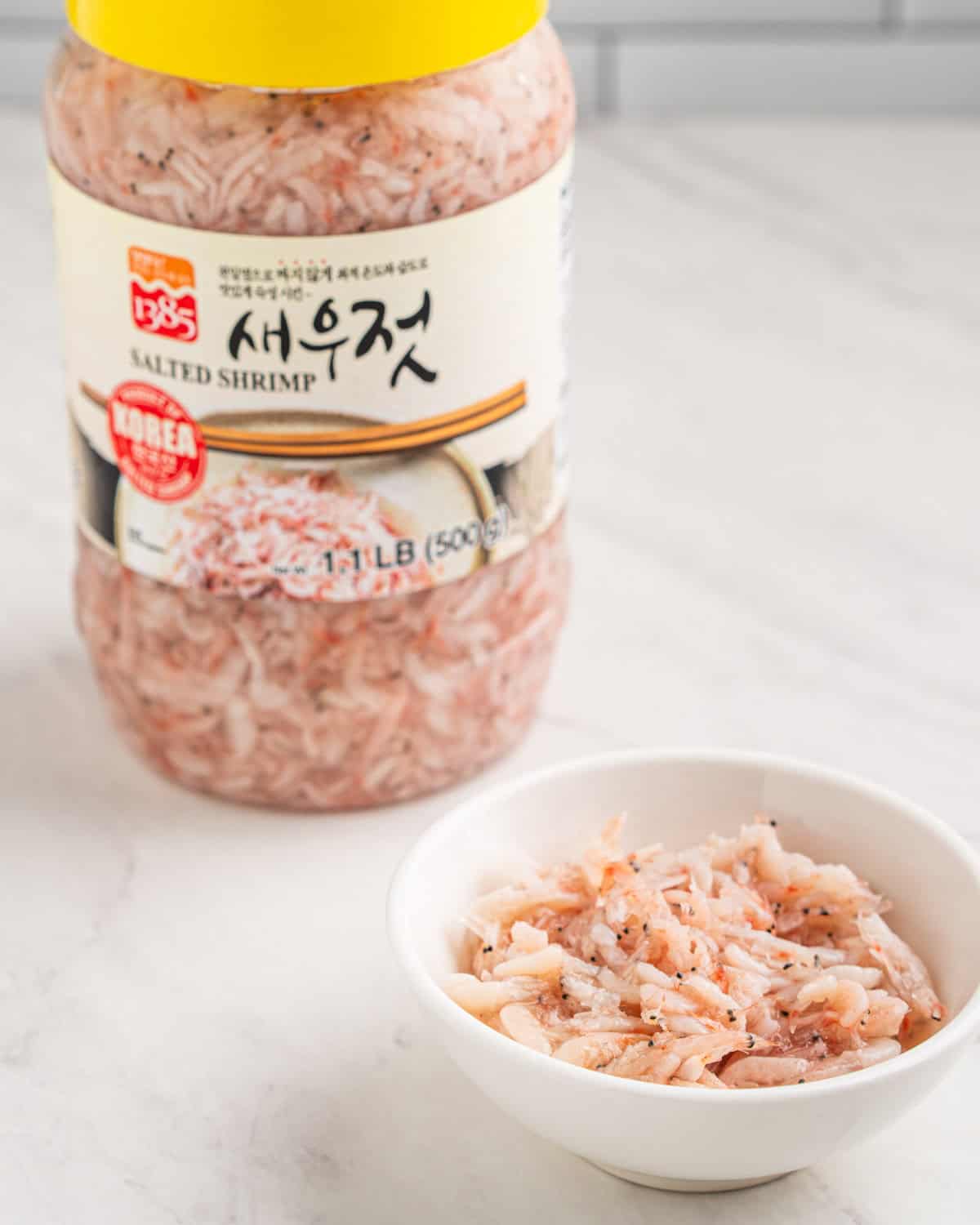
Salted shrimp, or Saeu-jeot, is a Korean fermented seafood condiment made from very small shrimp preserved in salt. Over time, the shrimp naturally ferment, creating a briny, salty, and slightly funky flavor that adds richness and depth to all kinds of Korean dishes.
The shrimp are typically harvested from coastal areas in Korea, salted right away, and then aged for several months. The result is a thick, pinkish paste that’s packed with umami; a little goes a long way.
How It’s Used in Korean Cooking
The most common use for salted shrimp is in kimchi, where it helps season and ferment the cabbage. It gives kimchi its signature depth and that subtle seafood flavor that’s hard to replicate. You can see how it’s used step-by-step in my Kimchi Recipe.
Beyond kimchi, you’ll also find Saeu-jeot used in soups, stews, and dipping sauces. It’s especially popular in Bossam (Korean boiled pork wraps), where it’s mixed with sesame oil and garlic as a salty, punchy dipping sauce. Some people even add a spoonful to Korean tofu stew (Sundubu-jjigae) or vegetable side dishes for extra flavor instead of using regular salt.
Where to Find Salted Shrimp
You can find salted shrimp in the refrigerated section of Korean or Asian grocery stores, usually near other fermented products like gochujang and doenjang. It’s sold in small plastic tubs or jars labeled Saeu-jeot or Salted Fermented Shrimp.
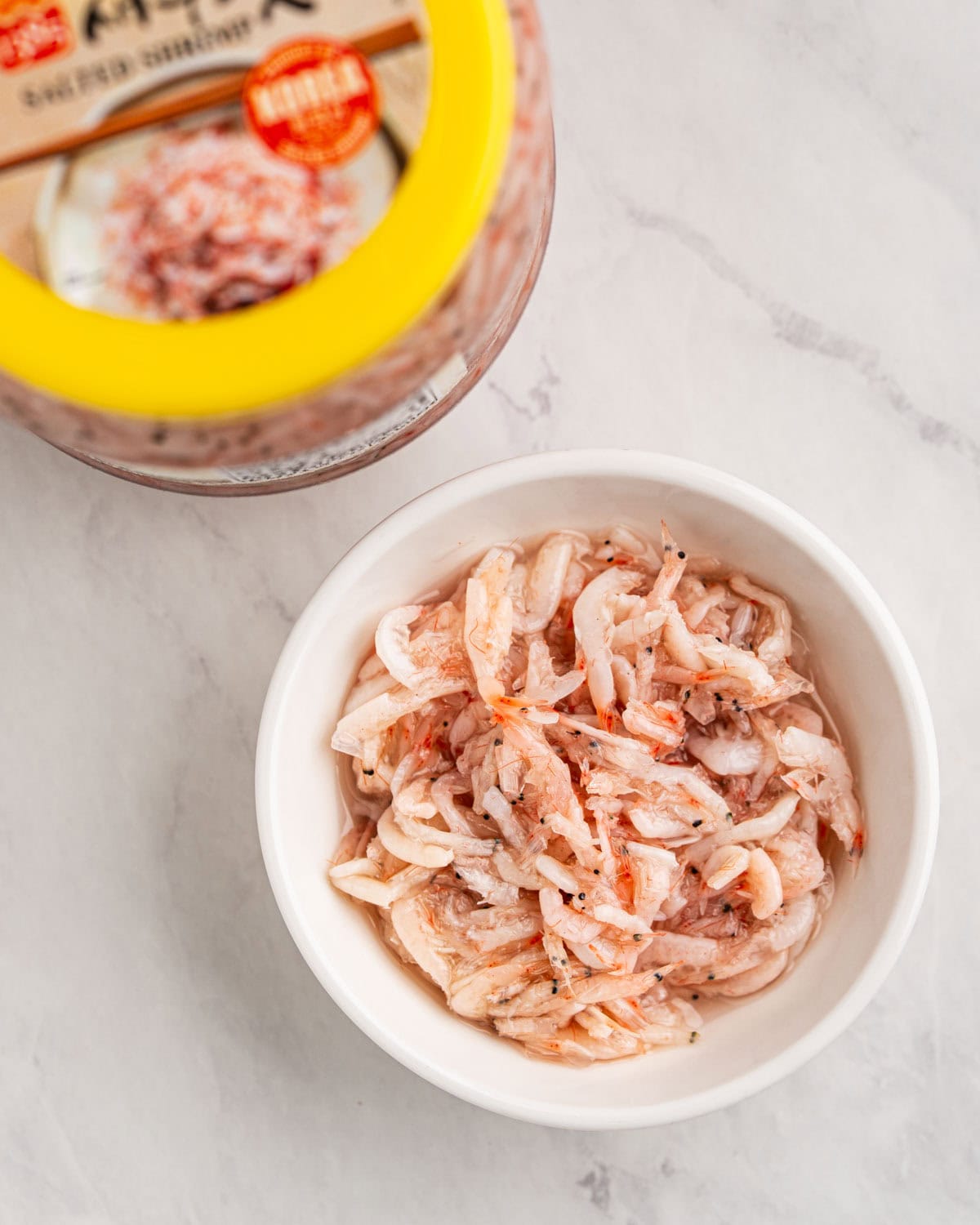
When buying, look for shrimp that are pale pink with a clean, salty smell (not overly fishy). Once opened, keep it tightly sealed in the fridge. It lasts for months, and the flavor actually gets better as it continues to age.
How to Use It (and How Much)
Salted shrimp is very salty, so you’ll only need a small amount. A teaspoon or two is usually enough for most dishes. You can mash it slightly before adding it to sauces or marinades so it mixes in more evenly.
For kimchi, it’s typically blended into the seasoning paste to boost umami. You can also mix a little with soy sauce, vinegar, and sesame oil for a quick dipping sauce for meat or vegetables.
Substitutes for Salted Shrimp
If you can’t find Saeu-jeot, here are a few easy substitutions:
- Fish sauce: The closest flavor match and easiest to find. Use about half the amount since fish sauce is thinner but still salty and fermented.
- Anchovy paste or anchovy sauce: Similar salty depth, especially good for kimchi or soups.
- Dried shrimp (soaked and finely minced): Adds a similar seafood umami flavor, though not quite the same saltiness.
- Vegan alternative: Use a mix of soy sauce and miso paste for that same rich, fermented note without the seafood.
Storage Tips
Keep salted shrimp in an airtight container in the fridge. It can last for six months or more, and even longer in the freezer. The salt acts as a natural preservative, so don’t worry if it gets a little stronger in smell over time; that’s part of its character.
The Secret Ingredient You Didn’t Know You Needed
Salted shrimp might seem small, but it makes a big difference. Whether you’re making kimchi or adding a spoonful to soups and stews, it brings out that deep, savory flavor Korean cooking is known for. Once you start using it, you’ll wonder how you ever cooked without it.


