Bibimbap Sauce


If you’re a fan of Korean food, you’ll know that bibimbap sauce is what takes a simple bowl of rice, veggies, and a fried egg from good to absolutely irresistible! This bold, savory, and slightly spicy sauce is the heart of bibimbap, adding the perfect balance of sweet, spicy, tangy, and umami flavors to every bite.
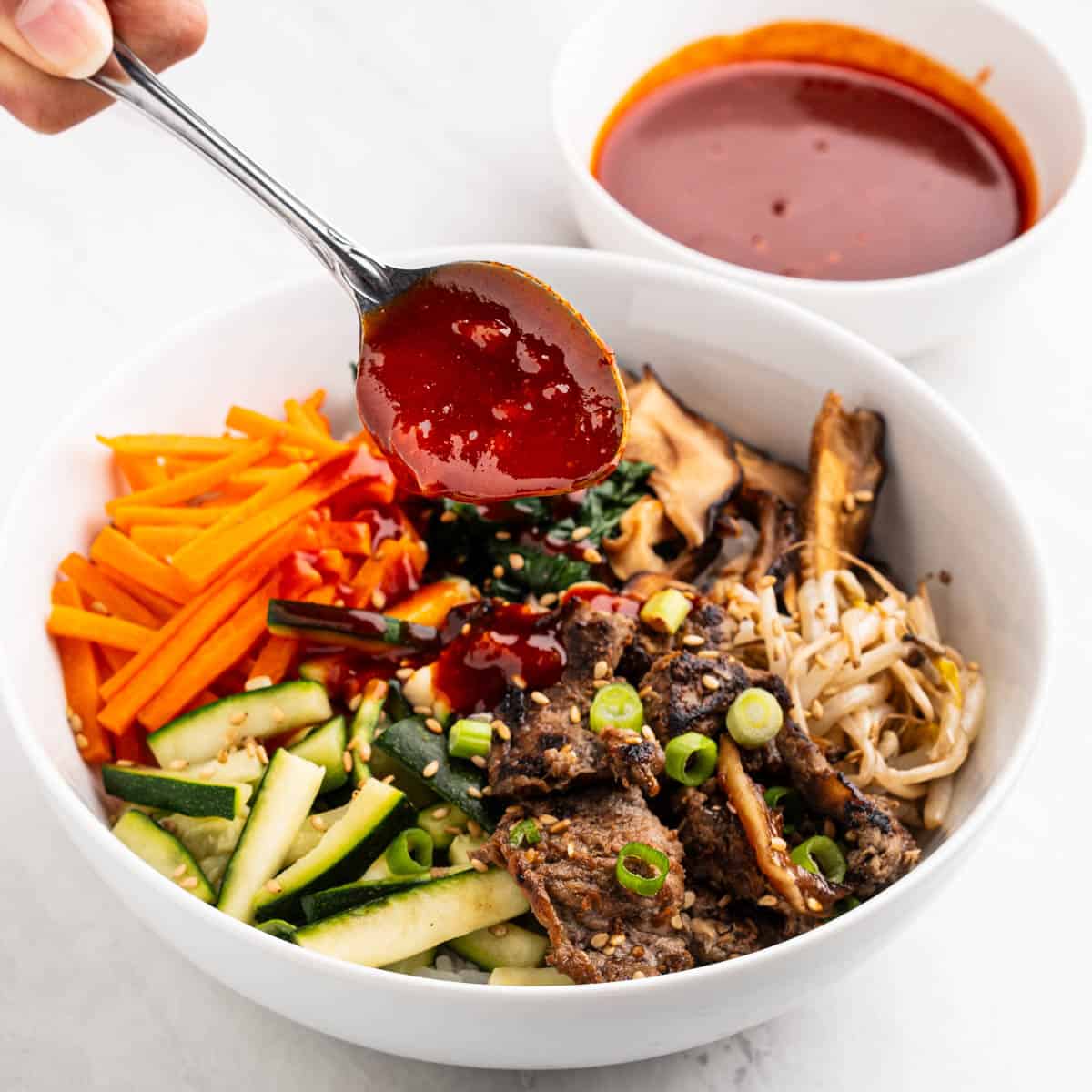
The best part? It’s ridiculously easy to make with just a few pantry staples, and you can use it on way more than just bibimbap!
Why You’ll Love This Recipe
- Quick & Easy – Mix everything in one bowl—no cooking required!
- Packed with Flavor – Sweet, salty, spicy, and full of umami goodness.
- Customizable – Adjust the spice level or sweetness to your taste.
- Versatile – Not just for bibimbap! Use it as a dip, marinade, or stir-fry sauce.
What is Bibimbap Sauce?
Bibimbap sauce is a Korean gochujang-based sauce that adds a rich, spicy kick to bibimbap, one of Korea’s most famous rice dishes. The key ingredient is gochujang (Korean red chili paste), which gives the sauce its signature deep, smoky heat.
Traditional bibimbap sauce is a perfect balance of flavors—spicy from the gochujang, slightly sweet from honey or sugar, tangy from rice vinegar, and savory from soy sauce and sesame oil. A little bit goes a long way, and once you drizzle it over your rice bowl, you’ll never want to eat plain rice again!
Ingredients and Substitutions
You probably already have most of these ingredients in your kitchen!
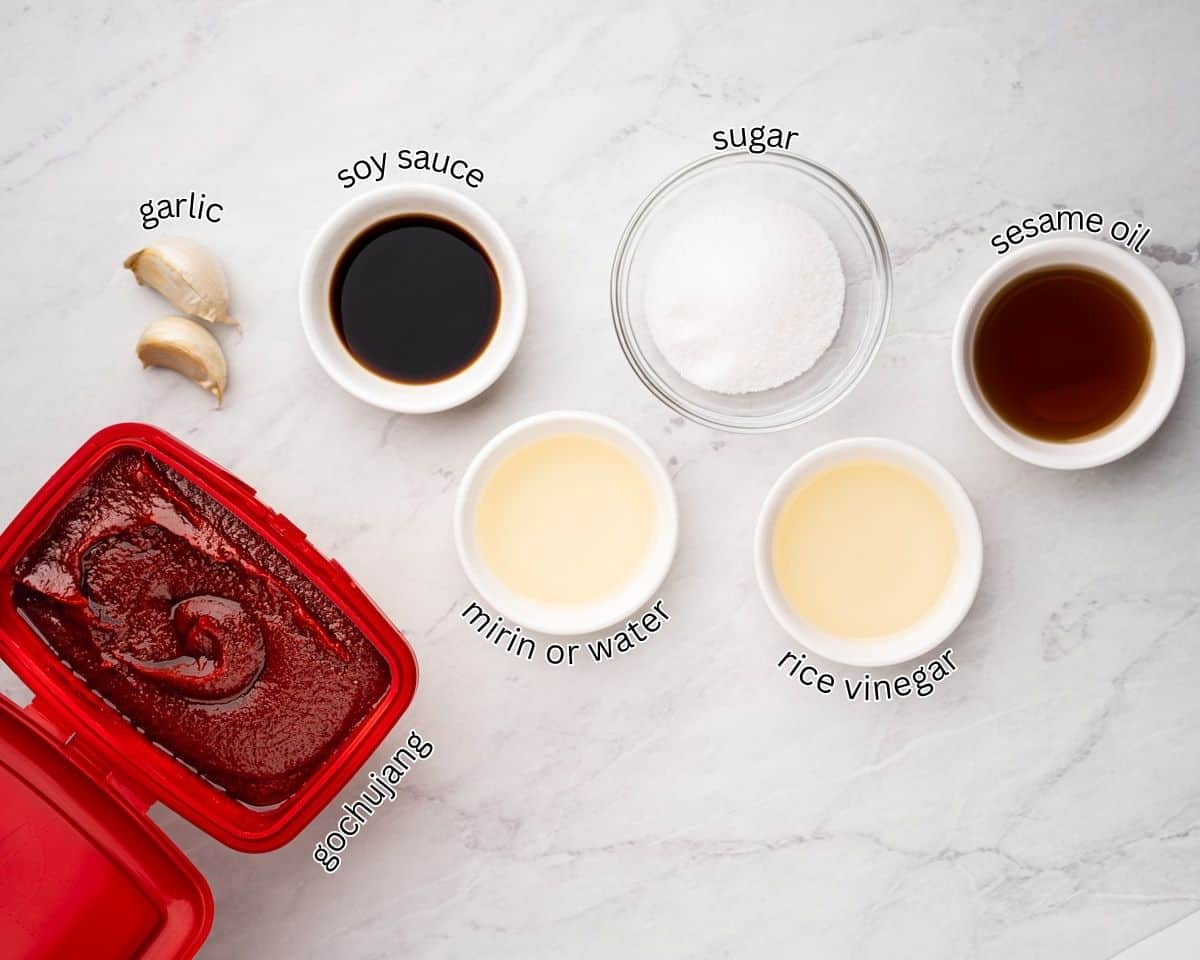
Please scroll ⬇️ to the recipe card for the full ingredient amounts and instructions.
- Gochujang (Korean red chili paste) – The heart of the sauce, adding deep, spicy-sweet umami flavor. You can find it at most Asian grocery stores or online.
- Soy sauce – Brings savory depth and balances the spice. Tamari or coconut aminos work as gluten-free alternatives.
- Sesame oil – Adds a rich, nutty aroma.
- Rice vinegar: A touch of tanginess to brighten up the flavors. If needed, you can substitute with apple cider vinegar.
- Mirin (or water) is a sweet rice wine with a hint of sweetness and smoothness. For a lighter alternative, use water.
- Honey or sugar – A little sweetness to balance the heat.
- Garlic – Because everything is better with garlic!
Best Gochujang to Use
When choosing gochujang for bibimbap sauce, go with one that matches your spice preference—some are mild, while others bring serious heat. Look for a high-quality brand made with simple ingredients like fermented soybeans, rice, and red chili peppers for the best flavor.
Chung Jung One and Sempio are great options, but always check the heat level on the label so you can control how spicy your sauce turns out!
How to Use Bibimbap Sauce
Yes, it’s called bibimbap sauce, but trust me—you’ll want to put this on everything!
Classic Uses
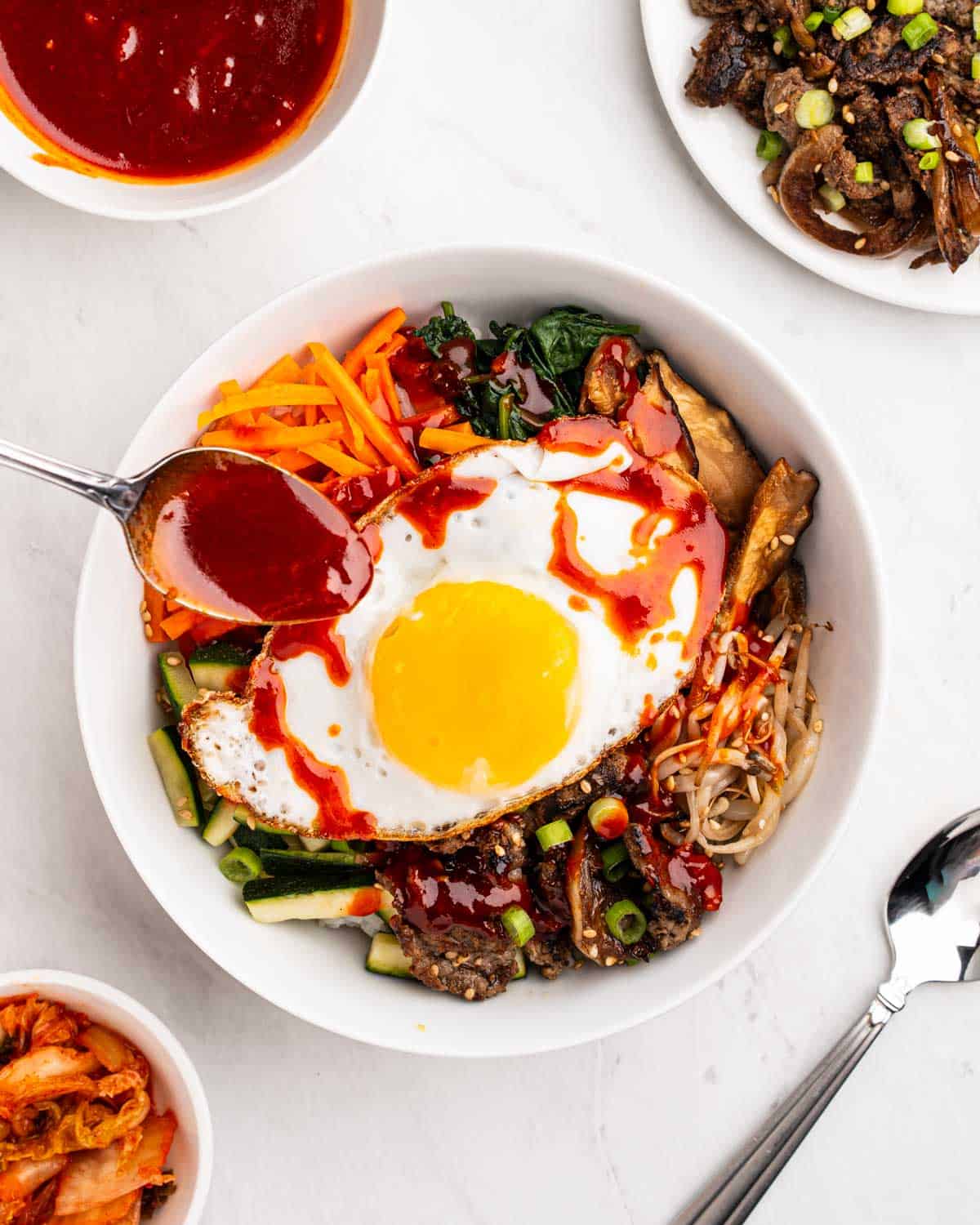
- Drizzled over bibimbap – The OG way to enjoy it!
- As a dipping sauce – Perfect for dumplings, veggies, or grilled meats.
- Mixed into stir-fries – Adds an instant flavor boost to any dish.
Other Fun Ways to Use It
- Marinate meats – Great for chicken, beef, or tofu.
- Spicy noodle sauce – Toss it with hot noodles for a quick meal.
- Salad dressing – Mix it with a little extra sesame oil for a bold, Korean-inspired dressing.
**Pro Tip: Make a big batch and store it in the fridge—it lasts for up to 2 weeks!
Advanced Prep and Storage Tips
You can easily prepare this sauce in advance by mixing all the ingredients and storing it in an airtight container. It keeps well in the fridge for up to 1-2 weeks, allowing you to have it ready for quick meals.
For longer storage, you can even freeze the sauce in small portions and thaw as needed. Just give it a quick stir before using it to refresh the texture!
Final Thoughts
This bibimbap sauce is the easiest way to level up any meal. Whether you’re making a traditional Korean rice bowl, marinating meats, or just looking for a quick and flavorful sauce, this recipe is a must-try.
So, what are you using it on first? Let me know how you like it!
RECIPE

Bibimbap Sauce
Ingredients
- ¼ cup gochujang paste
- 2 tablespoons mirin
- 2 tablespoons rice vinegar
- 1 tablespoon soy sauce
- 1½ tablespoons white sugar
- 2 garlic cloves minced
- 1 tablespoon sesame oil
Instructions
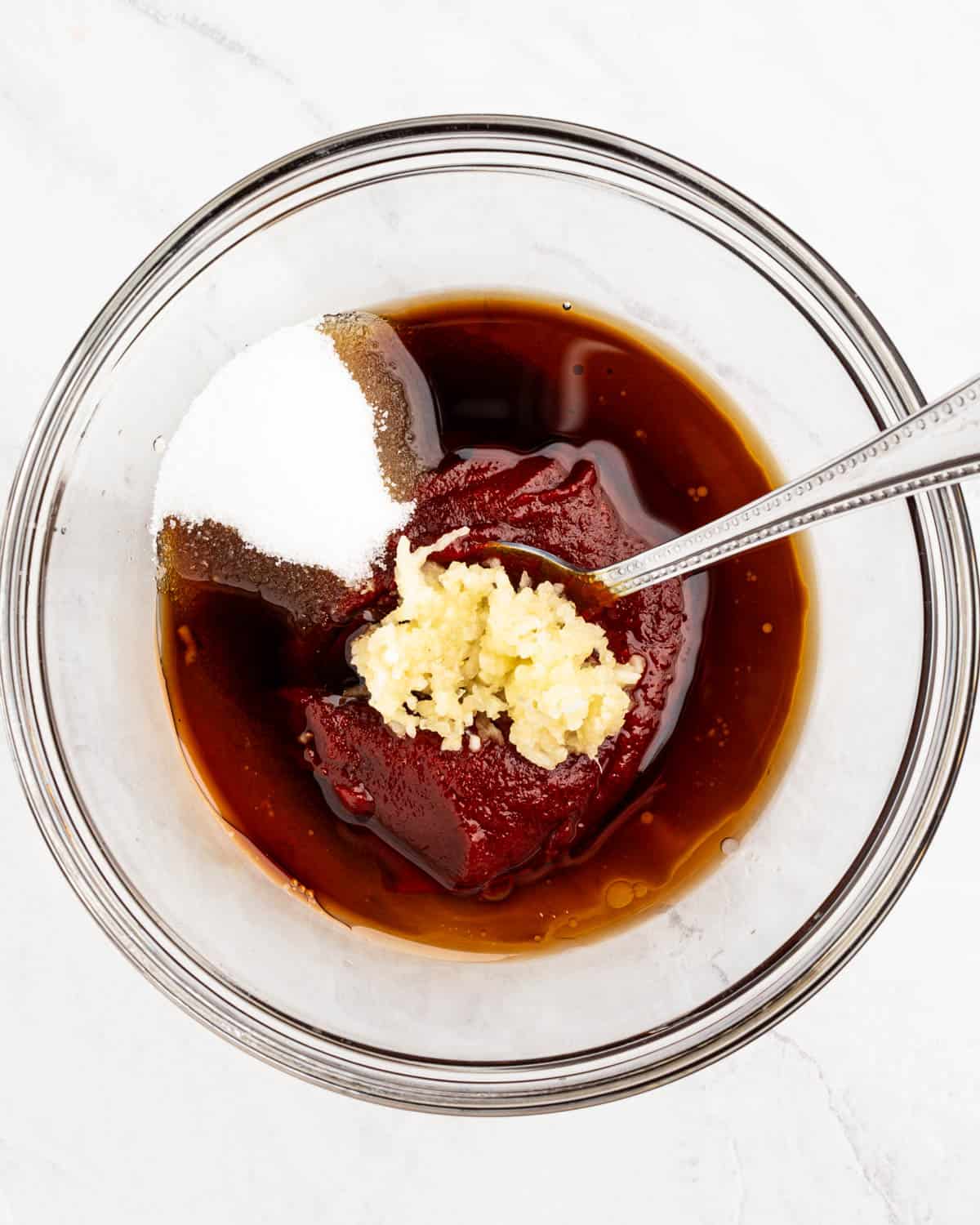
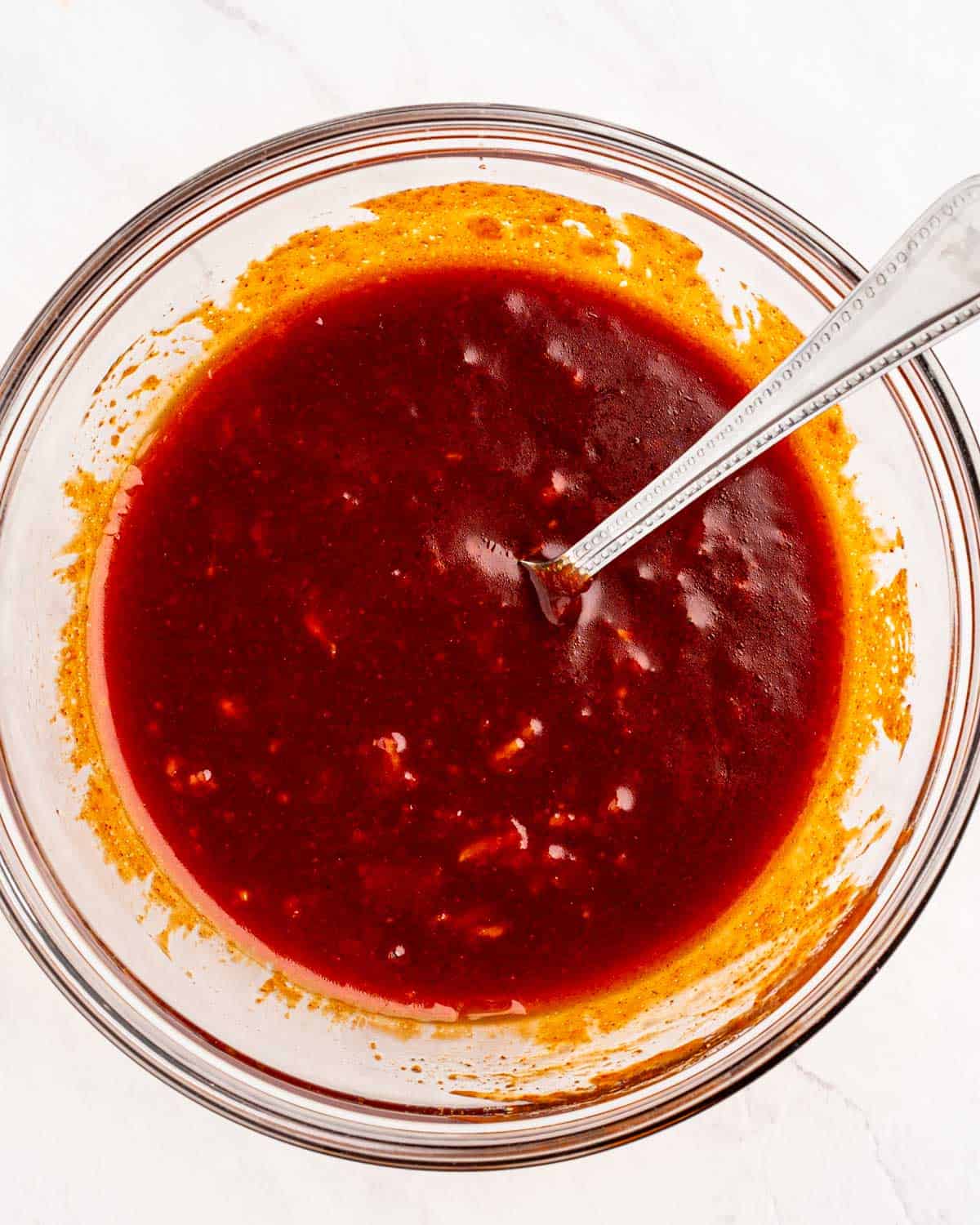
- In a small bowl, combine gochujang paste, mirin, rice vinegar, soy sauce, white sugar, minced garlic, and sesame oil.
- Whisk the ingredients until smooth, well combined, and the sugar fully dissolves.
- Adjust the sauce to taste, adding more gochujang for heat or more sugar for sweetness.
- Serve with your favorite bibimbap or as a condiment.