Thịt Kho (Vietnamese Braised Pork and Eggs)



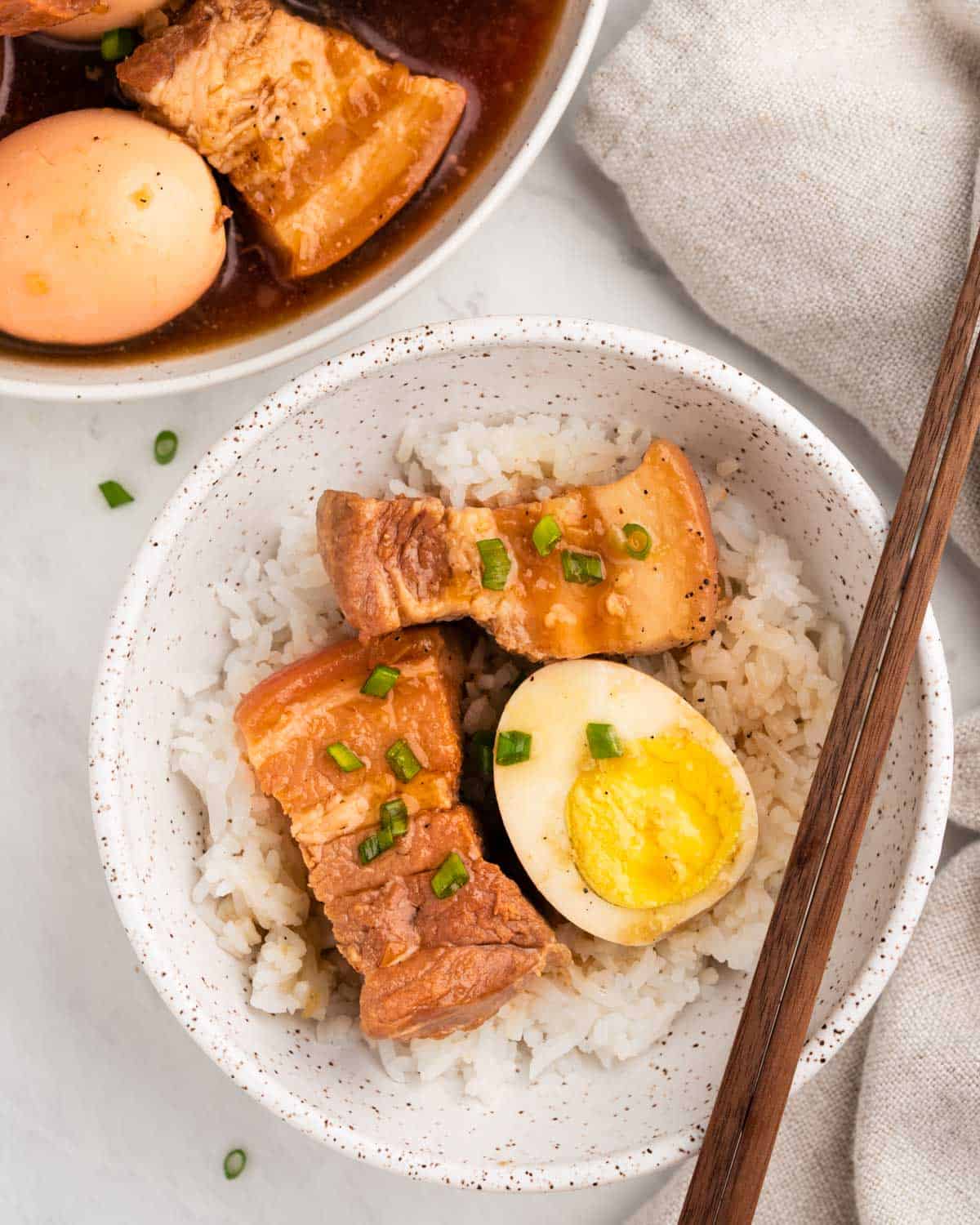
Thit kho is Vietnamese braised pork and eggs simmered in a savory-sweet caramelized sauce until the pork is tender and the eggs have soaked up all that flavor. It’s one of those dishes that needs no introduction if you grew up eating Vietnamese food, and it’s still one of my favorite meals to serve with a simple bowl of jasmine rice.
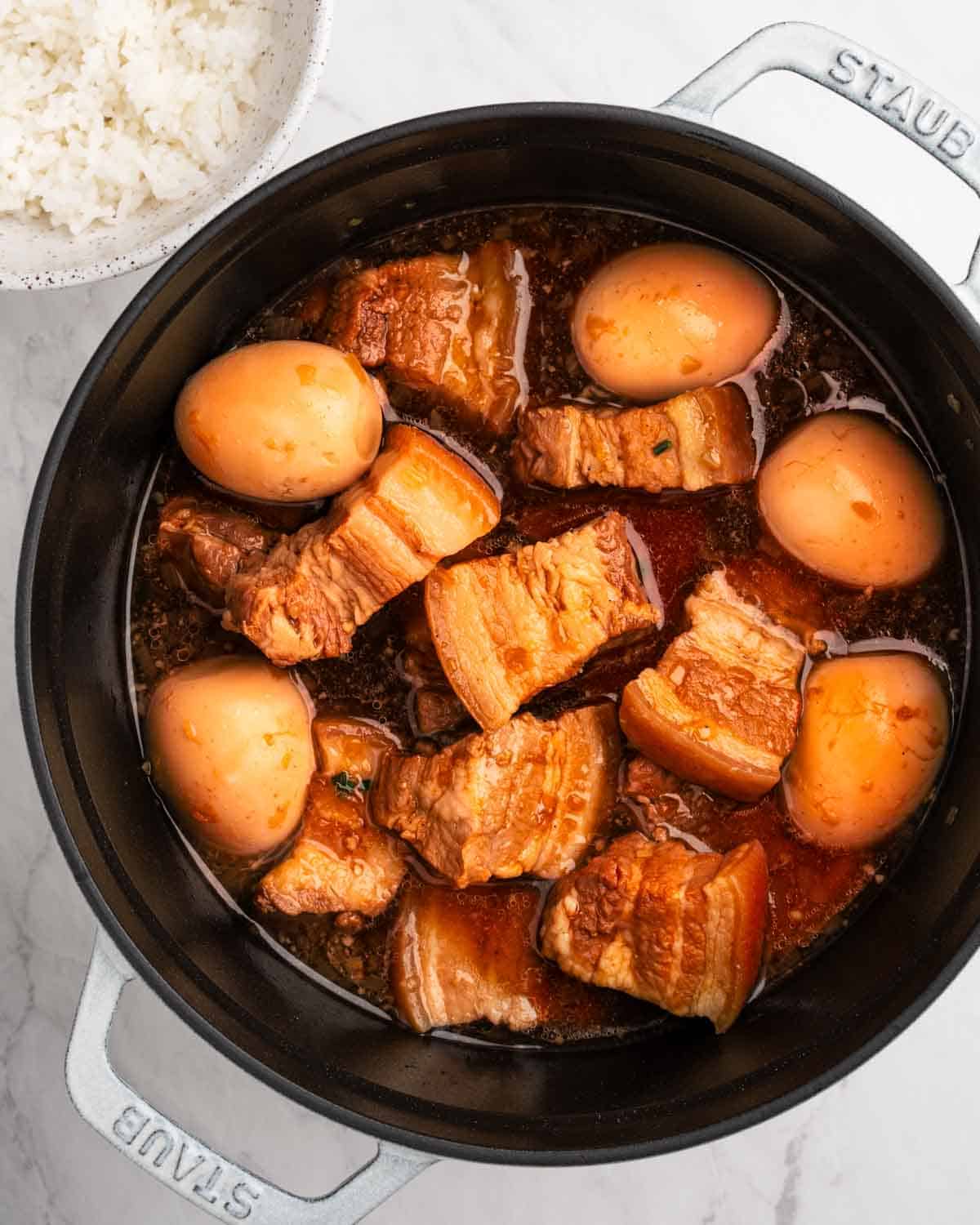
I’ve been making thit kho for more than 20 years, adjusting it little by little until it landed where my family likes it, not overly sweet or salty, with plenty of rich sauce for spooning over rice. I usually make it with pork belly, pork shoulder, or a mix of both depending on how rich I want the finished dish.
This version stays close to the traditional stovetop method while keeping the process straightforward. The pork gets parboiled, marinated and seared before braising with fish sauce, nuoc mau and coconut soda or coconut water. It takes a little time to simmer, but most of that is hands-off.
Short on Time? Try the Instant Pot Version
If you love thit kho but don’t have time to simmer it on the stove, my Instant Pot thit kho is a great shortcut. It gives you the same savory-sweet flavors in less time and works especially well for busy weeknights.
What Is Thit Kho?
In Vietnamese, thit means meat, usually pork, while kho refers to braising. It’s a slow simmering method used in Vietnamese cooking that allows the meat to become tender while the sauce develops a deeper, more concentrated flavor.
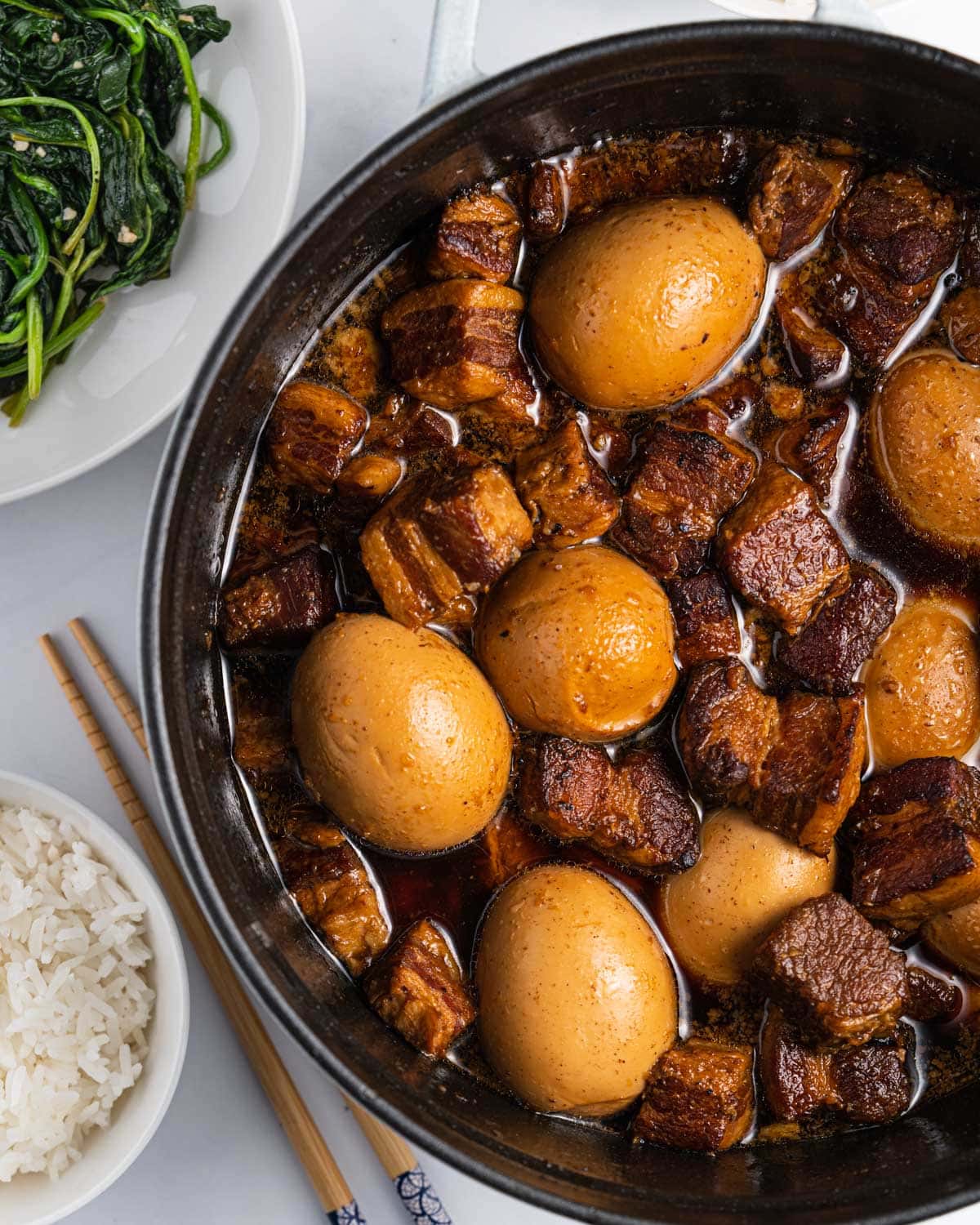
For this dish, chunks of pork are braised with fish sauce, caramel sauce and coconut water or coconut soda, then hard-boiled eggs are added toward the end so they can absorb the sauce without becoming tough.
The result is tender Vietnamese braised pork with a glossy, savory-sweet sauce that’s especially good spooned over hot rice.
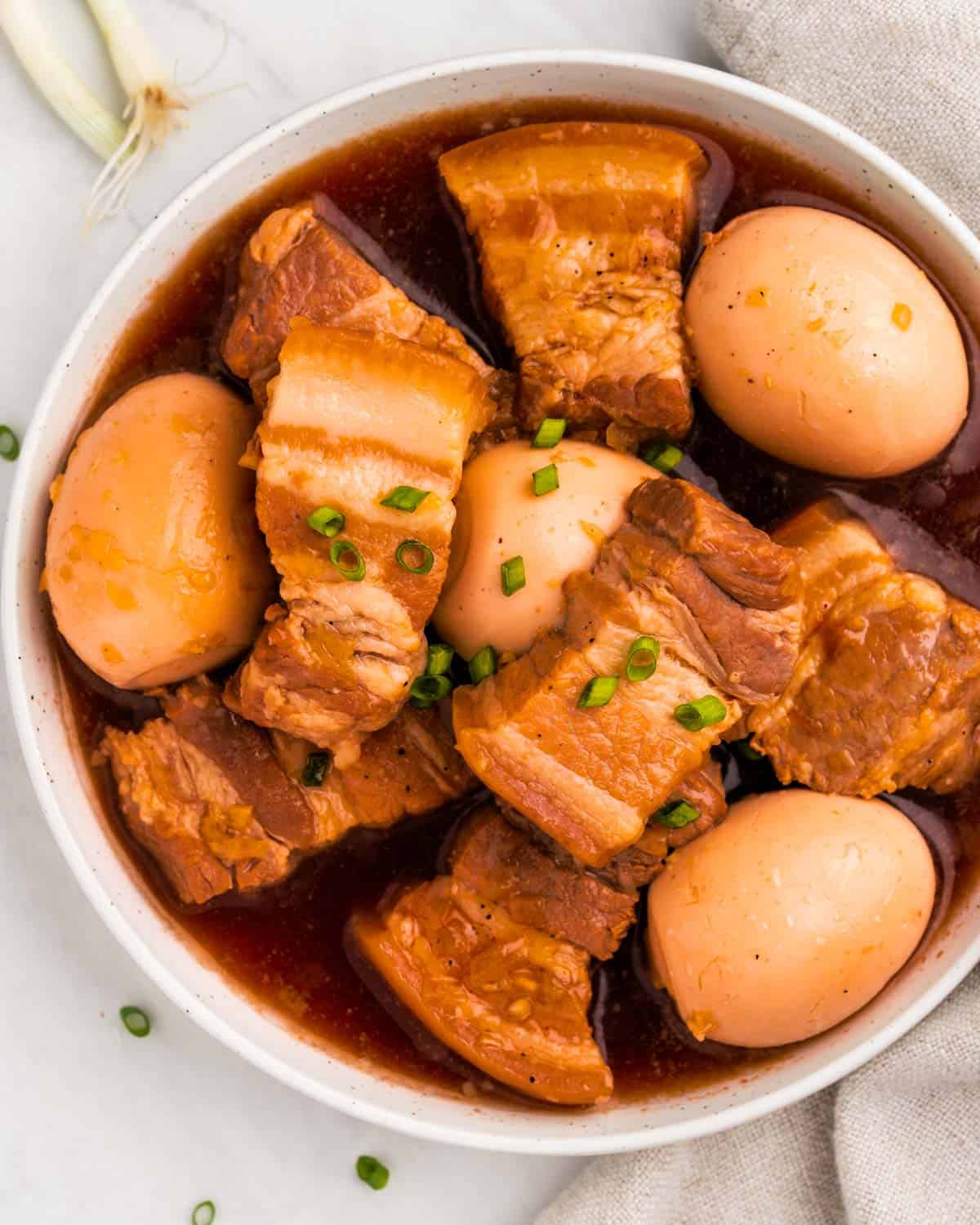
Best Cut of Pork For Thit Kho
Pork belly is the classic choice because the layers of fat keep the meat tender during the long simmer. If you like a rich thit kho with melt-in-your-mouth pieces of pork belly, this is the cut to use.
Pork shoulder is a little leaner but still has enough fat to stay juicy. Look for a well-marbled piece rather than a very lean one.
My favorite is often a mix of pork belly and pork shoulder. You still get the richness of the pork belly without every piece being quite so fatty.
Cut the pork into roughly 1½-inch pieces. Keeping the chunks fairly large helps them stay tender and juicy instead of breaking apart while they braise.
Spare ribs can also work, but I would avoid very lean cuts like pork tenderloin since they can dry out during the longer cooking time.
Fish Sauce Makes a Difference
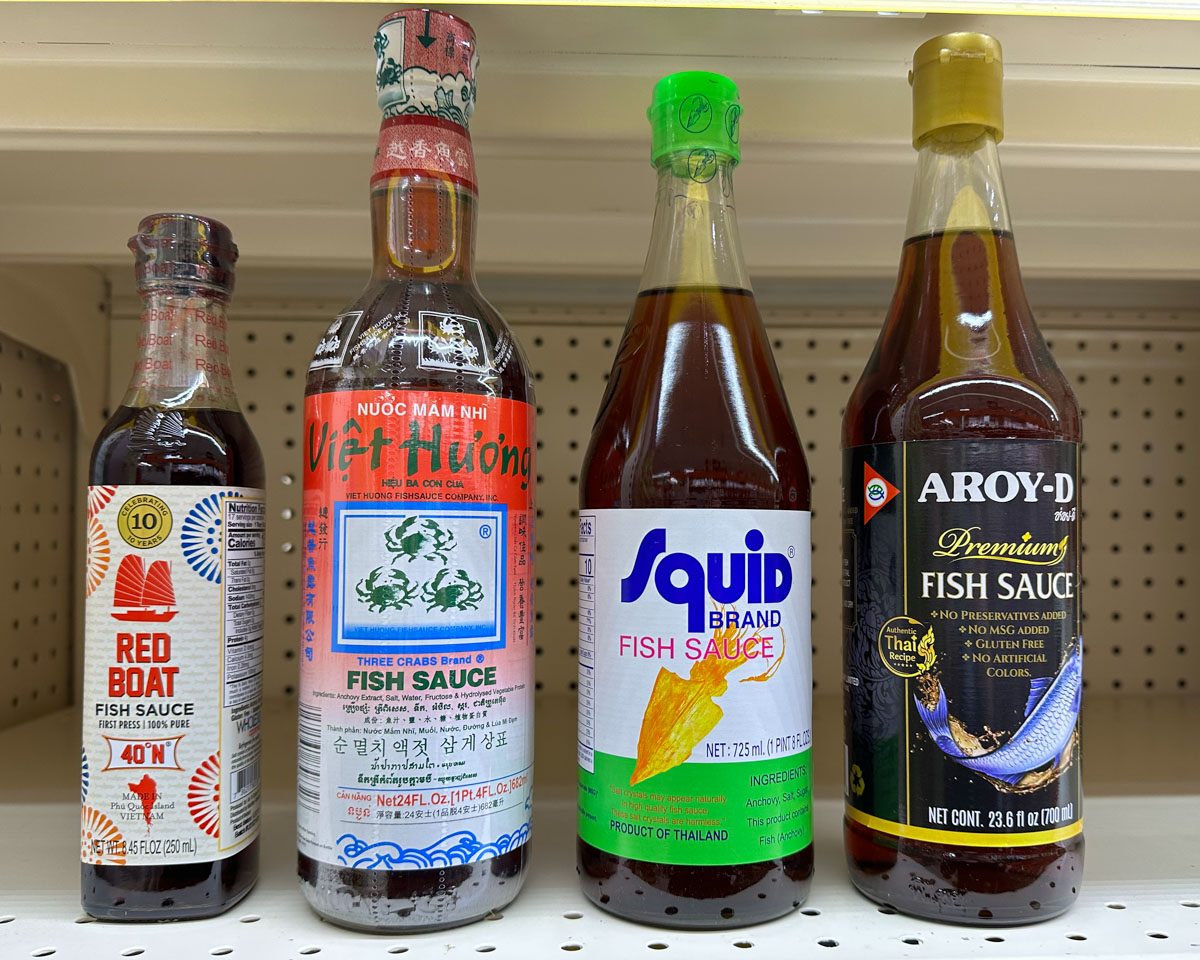
Fish sauce is one of the main flavors in thit kho, so this is one ingredient where the brand really does make a difference.
I usually rotate between Three Crabs and Red Boat. Three Crabs is slightly sweeter and very balanced, while Red Boat has a cleaner, more savory flavor. Either works well here.
I also use Maggi Seasoning in this recipe for another layer of umami, but fish sauce should still be the dominant seasoning.
If you’re new to buying fish sauce, look for one with a short ingredient list and a clear amber color.
What Is Nuoc Mau?
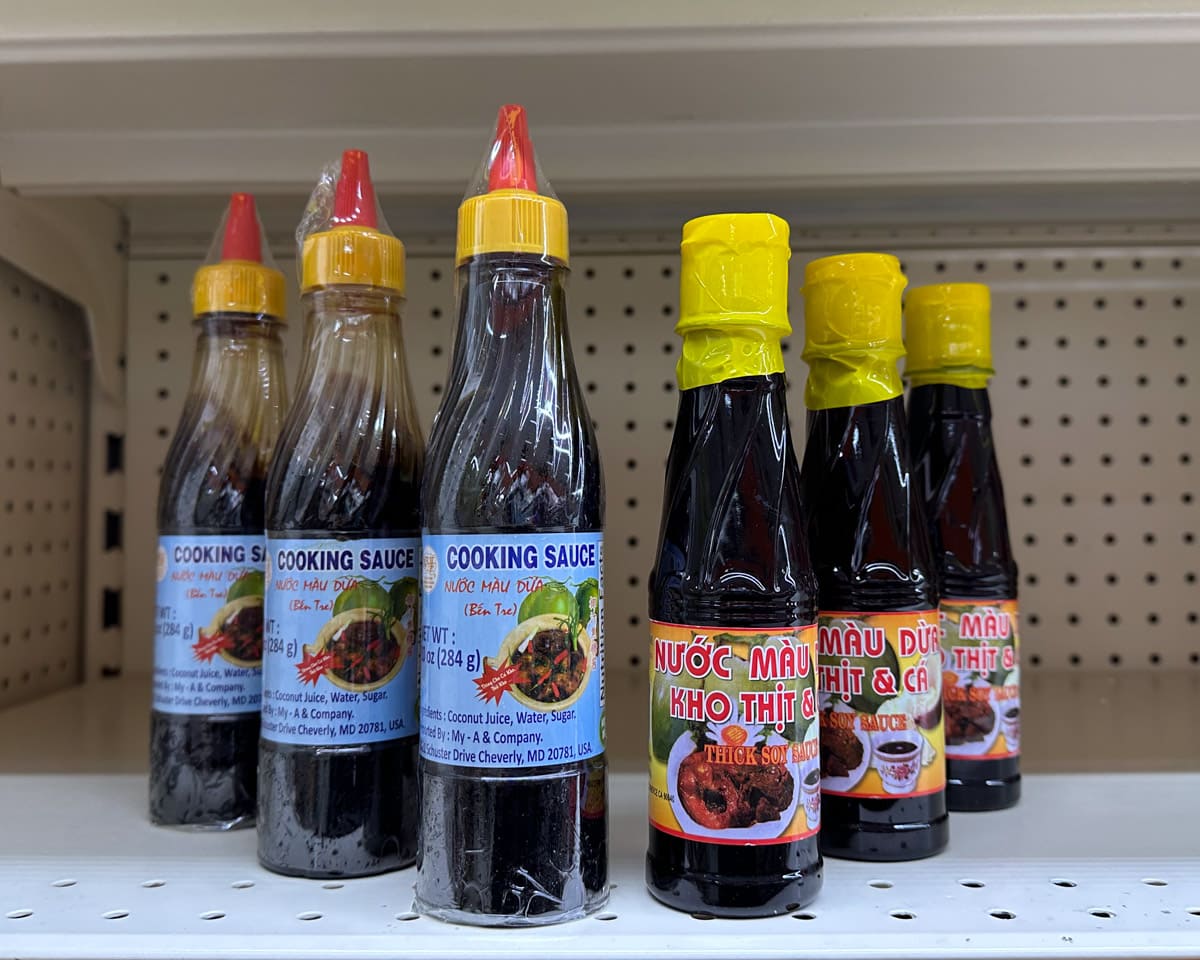
Nuoc mau is Vietnamese caramel sauce used to give braised dishes their characteristic deep color and slightly bittersweet caramel flavor. It isn’t the same type of caramel sauce you would use for dessert.
You can buy bottled nuoc mau at an Asian grocery store, but I usually make it with sugar and water. Once the sugar turns a deep golden color, water is carefully added to stop the caramelization.
The caramel sauce gives thit kho that beautiful dark, glossy color while adding another layer of flavor to the braising liquid.
If you want to make a batch ahead of time, I have a separate nuoc mau recipe with step-by-step instructions.
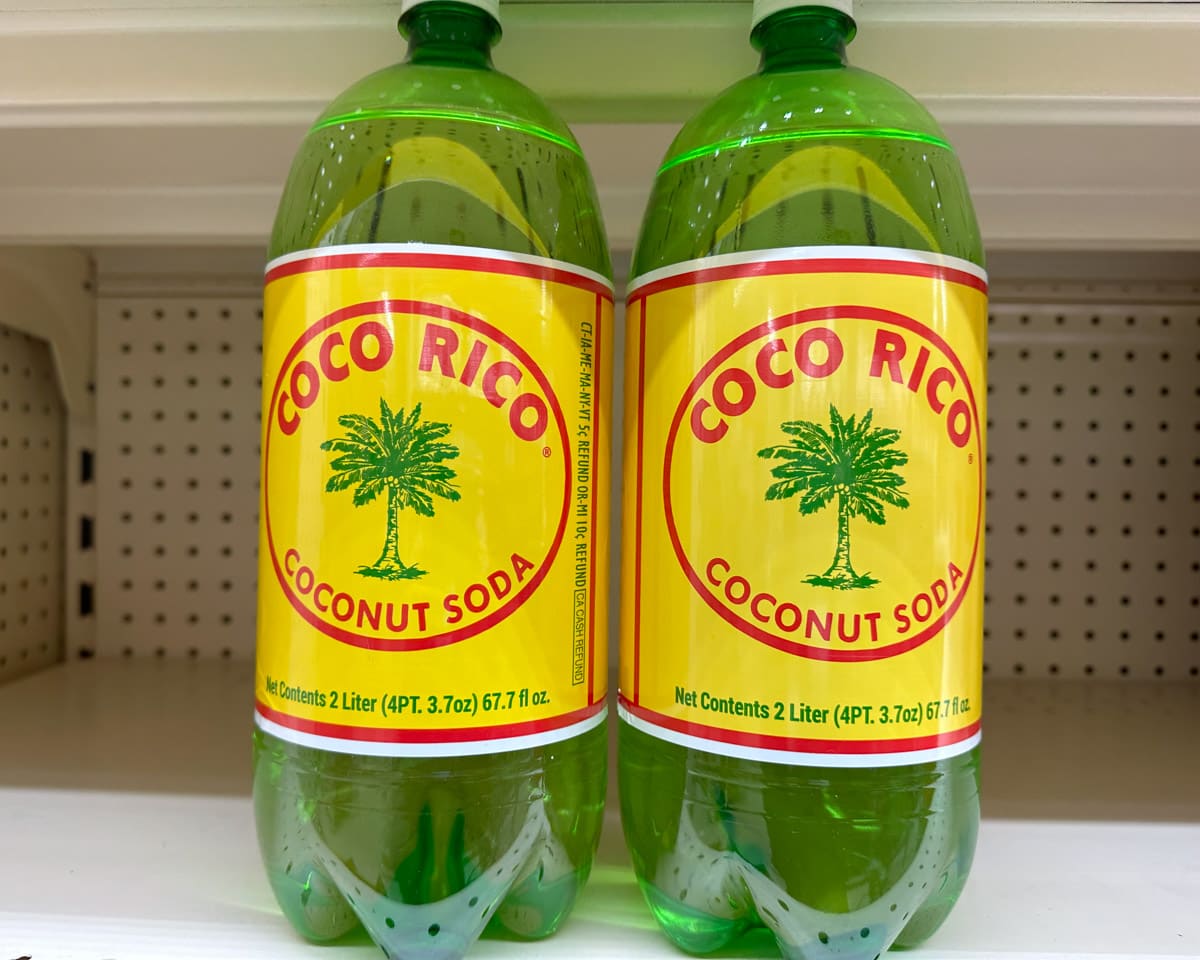
Coconut Water or Coconut Soda?
Both work, and I’ve made thit kho with either.
Coconut water gives the sauce a lighter sweetness and is the more traditional option.
Coconut soda, such as Coco Rico, makes the sauce a little sweeter and is what my family often enjoys. Because the soda already contains sugar, taste the sauce before adding any extra sweetness.
The recipe uses coconut soda, but you can replace it with coconut water if you prefer a less sweet thit kho.
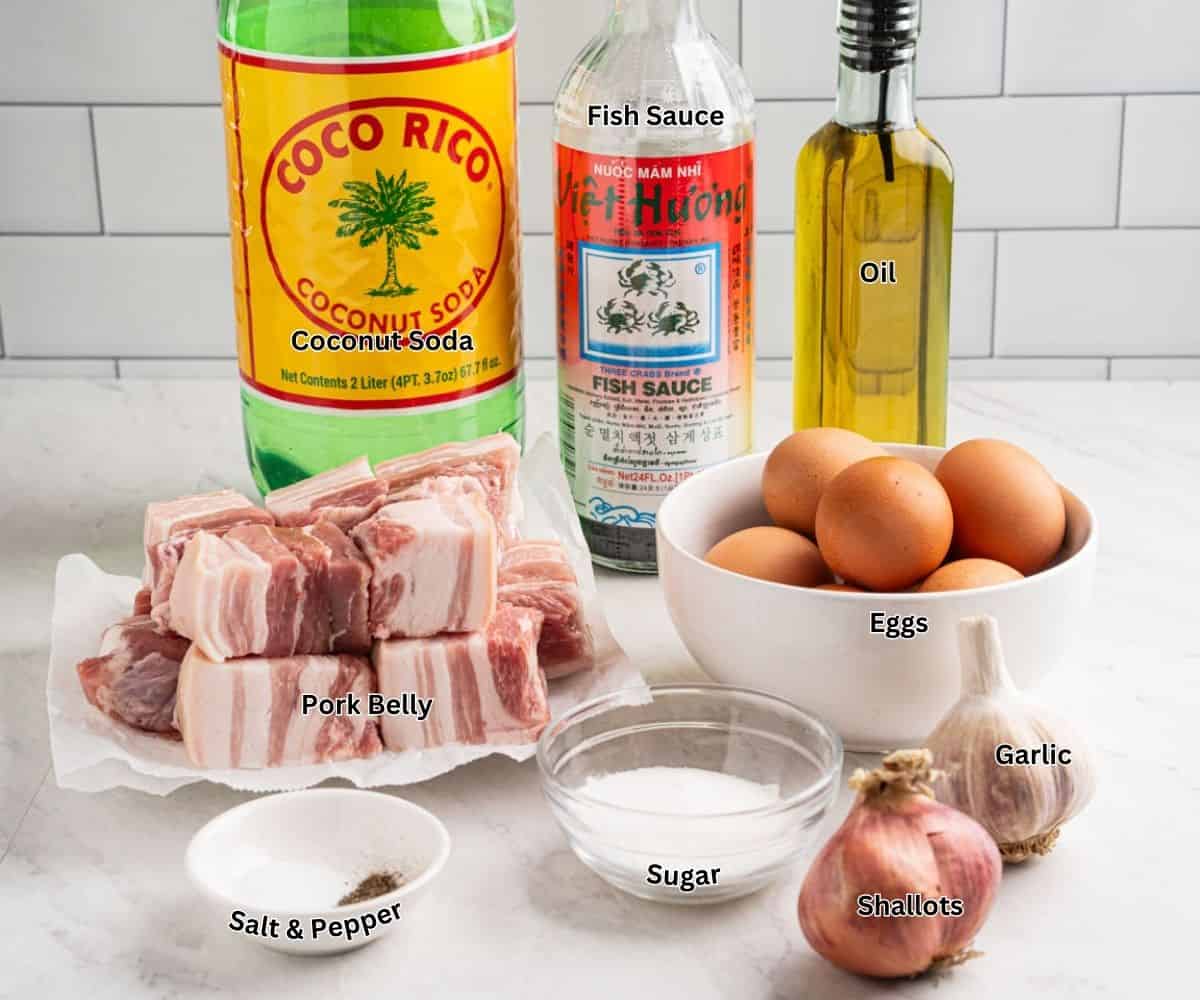
A Few Ingredients That Really Matter
Please scroll ⬇️ to the recipe card for the full ingredient amounts and instructions.
Pork belly or pork shoulder: Use either one or combine the two. Pork belly gives you the richest texture, while pork shoulder makes the dish a little leaner.
Fish sauce: This is the backbone of the braising sauce. Three Crabs and Red Boat are the two brands I use most often.
Nuoc mau: This caramel sauce gives the pork its deep brown color and characteristic caramelized flavor.
Coconut soda or coconut water: Both provide sweetness and form much of the braising liquid. I often use Coco Rico when using coconut soda.
Maggi Seasoning: A small amount adds extra savory depth alongside the fish sauce.
Shallots and garlic: These create the aromatic base of the sauce.
Eggs: Chicken eggs are classic, although duck or quail eggs work too. I personally like soft- to medium-boiled eggs because the yolks stay a little creamier.
How to Make Thit Kho
Start by boiling and peeling the eggs so they’re ready to add later.
Next, make the nuoc mau. Caramelizing sugar happens quickly once it starts changing color, so have the water measured and ready before you begin. Once the sugar becomes golden, carefully add the water and stir until combined.
Parboil the pork for about 5 minutes, then drain it. This is a common extra step in Vietnamese cooking that gives you a cleaner braising liquid.
Season the pork with fish sauce, Maggi Seasoning, salt, pepper and some of the caramel sauce, then let it marinate for at least 15 minutes.
Before adding the braising liquid, sear the pork in batches. Give the pieces enough room to brown instead of steam. If the pork initially sticks to the pot, leave it alone for a moment—it usually releases more easily once that side has developed a good sear.
Add the shallots and garlic, followed by the coconut soda and water. Bring everything to a simmer, cover and braise gently for about 40 minutes.
You’re looking for pork that is tender but still holds its shape and a sauce that has deepened in color and flavor. If the liquid reduces too quickly, add a splash of water.
Add the eggs during the last 5–10 minutes. That gives them time to soak up some of the sauce without cooking so long that the whites become rubbery.
Taste before serving and adjust the seasoning if needed. Fish sauce brands and coconut soda can vary in saltiness and sweetness, so this last adjustment is important.
Substitutions and Variations
If you don’t want to use pork belly, use well-marbled pork shoulder or a combination of the two. Spare ribs are another option.
No coconut soda? Coconut water works very well. You can also use chicken broth or water with chicken bouillon for part of the braising liquid, although the flavor will be slightly different.
Yellow onion can replace the shallots if needed.
For the eggs, chicken eggs are the standard choice, but quail or duck eggs can be used as well.
Tips for Success
✔️ Choose pork with enough marbling to stay tender during braising, and don’t skip searing the meat—it adds much more flavor to the finished sauce.
✔️ Keep the braise at a gentle simmer rather than a hard boil. A slow simmer gives the pork time to become tender without breaking apart.
✔️ Add the eggs near the end instead of simmering them for the entire cooking time.
✔️ And if you can, make enough for leftovers. Thit kho is one of those dishes that tastes even better after it sits and the pork and eggs have had more time to absorb the sauce.
What to Serve It With
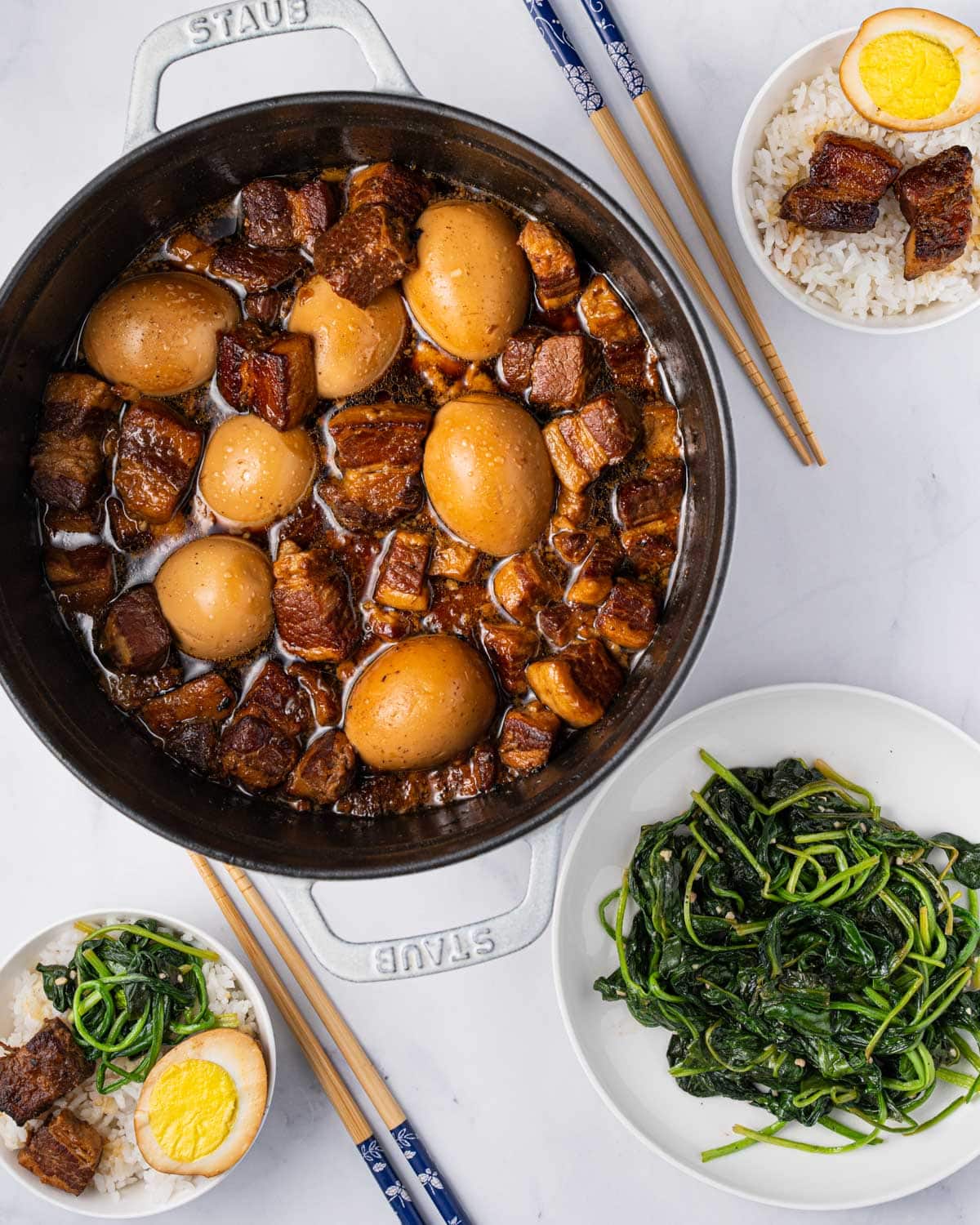
Thit kho is traditionally served with hot steamed jasmine rice, which is perfect for soaking up the savory-sweet braising sauce.
Because pork belly can be rich, I like adding something fresh or tangy alongside it. Vietnamese pickled carrots and daikon, pickled mustard greens or stir-fried water spinach all help balance the meal.
For a larger Vietnamese family-style meal, you can add a vegetable dish or something crisp on the side while keeping the rice and thit kho as the centerpiece.
Storing and Reheating
Store leftover thit kho in an airtight container in the refrigerator for up to 4 days.
After it chills, you’ll probably see a layer of pork fat solidify on top. That’s completely normal. You can remove some of it before reheating or let it melt back into the sauce.
Reheat the pork and eggs gently on the stovetop until warmed through. If the sauce has become too concentrated in the refrigerator, add a small splash of water while reheating.
Thit kho is especially good the next day because the pork and eggs continue absorbing the braising sauce as they sit.
If this is your first time making thit kho, don’t worry about getting every step perfect. Give the pork enough time to braise, taste the sauce before serving, and adjust it until the balance of salty and sweet tastes right to you. Once you’ve made it a few times, it’s the kind of recipe that becomes second nature.
RECIPE

Thịt Kho – Vietnamese Braised Pork and Eggs
Ingredients
For the Caramel Sauce
- 2 tablespoons sugar
- 3 tablespoons water
For the Braised Pork (Thịt Kho)
- 2 pounds pork shoulder or pork belly, skin on or off cut into 1 ½ inch cubes
- 1 teaspoon salt (or chicken bouillon powder or mushroom seasoning)
- ½ teaspoon ground pepper
- 1-2 tablespoons caramel sauce, from above (adjust to taste)
- 3 tablespoons fish sauce (adjust to taste)
- 1 tablespoons soy sauce (Maggi Seasoning Sauce) (adjust to taste)
- ½ tablespoon olive oil
- 2 shallots, finely diced
- 3 garlic cloves, minced
- 3 cups coconut soda
- 1 cup water
- 8 hard boiled eggs
- steamed rice, for serving
Instructions
- Boil the eggs. Place the eggs in a pot of water and bring to a boil. Cook for about 10 minutes, then cool, peel and set aside.
- Make the caramel sauce. Have the ⅓ cup water measured and ready before starting. Spread the 2 tablespoons sugar evenly in a small saucepan over medium heat and let it sit for 1–2 minutes without stirring. Once it begins melting, stir constantly for about 4–5 minutes, or until the sugar is melted and golden. Carefully add the 3 tablespoons water—it may bubble vigorously—and stir to combine. Remove from heat and set aside.
- Parboil the Pork. In a large pot, bring water to a boil. Add 2 pounds pork shoulder or pork belly, skin on or off and parboil for about 5 minutes to remove impurities. Drain and set aside.
- Marinate the Pork: In a large bowl, combine the parboiled pork with 1 teaspoon salt, ½ teaspoon ground pepper, 3 tablespoons fish sauce, 1 tablespoons soy sauce (Maggi Seasoning Sauce), and 1-2 tablespoons caramel sauce, from above you made earlier. Let the pork marinate for at least 15 minutes to absorb all the flavors.
- Sear the Pork. Heat ½ tablespoon olive oil in a large pot over medium-high heat. Add the marinated pork in a single layer, working in batches if needed. Sear each side for 1–2 minutes until browned. Avoid overcrowding—the pork should sizzle, not steam. If it sticks, give it a moment; once it’s seared properly, it’ll release on its own. This step builds a ton of flavor, so don’t rush it.
- Add the aromatics. Add 2 shallots, finely diced and 3 garlic cloves, minced to the pork and cook for 2–3 minutes, stirring, until fragrant.
- Braise the pork. Pour in 3 cups coconut soda and 1 cup water. Bring everything to a simmer, then lower the heat, cover, and let it braise for about 40 minutes. Stir occasionally and add a splash of water if it looks too dry. Once the pork is tender and the sauce has deepened in flavor, give it a taste and adjust the seasoning if needed.
- Add the Eggs. During the last 5–10 minutes of cooking, gently add the peeled 8 hard boiled eggs. Let them simmer in the sauce until warmed through and lightly seasoned by the braising liquid.
- Taste and serve. Taste the sauce and adjust the seasoning if needed. Serve the thit kho with steamed jasmine rice.
Notes
- Pork belly gives you the richest thit kho; pork shoulder is leaner but should still be well marbled. A combination of the two is also a great option.
- Three Crabs and Red Boat are both good fish sauces for this recipe.
- Coconut water can be substituted for coconut soda for a less sweet braising liquid.
- Keep the pork at a gentle simmer so it becomes tender without falling apart.
- Add the eggs toward the end so they absorb the sauce without becoming rubbery.
- Refrigerate leftovers in an airtight container for up to 4 days and reheat gently on the stovetop.



Hi, what about the rest of the caramel sauce? I followed that it asks for 1 -2 tablespoons to marinate but doesn’t explain what to do with the rest. Is it not used?
Hi there! For this recipe, you only need 1–2 tablespoons for the marinade. You can use a little extra at the end to adjust the flavor or color if you’d like, and just save the rest for another batch of thịt kho or another braised dish. It keeps well and comes in handy!